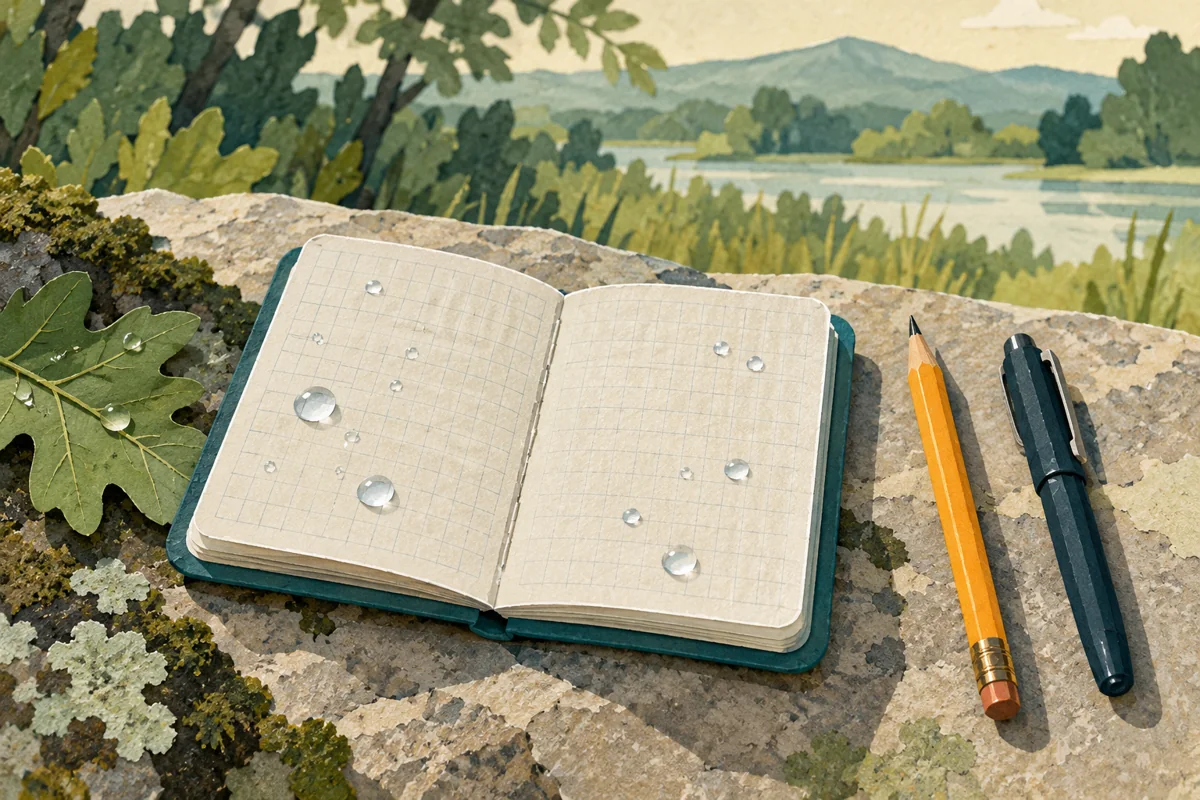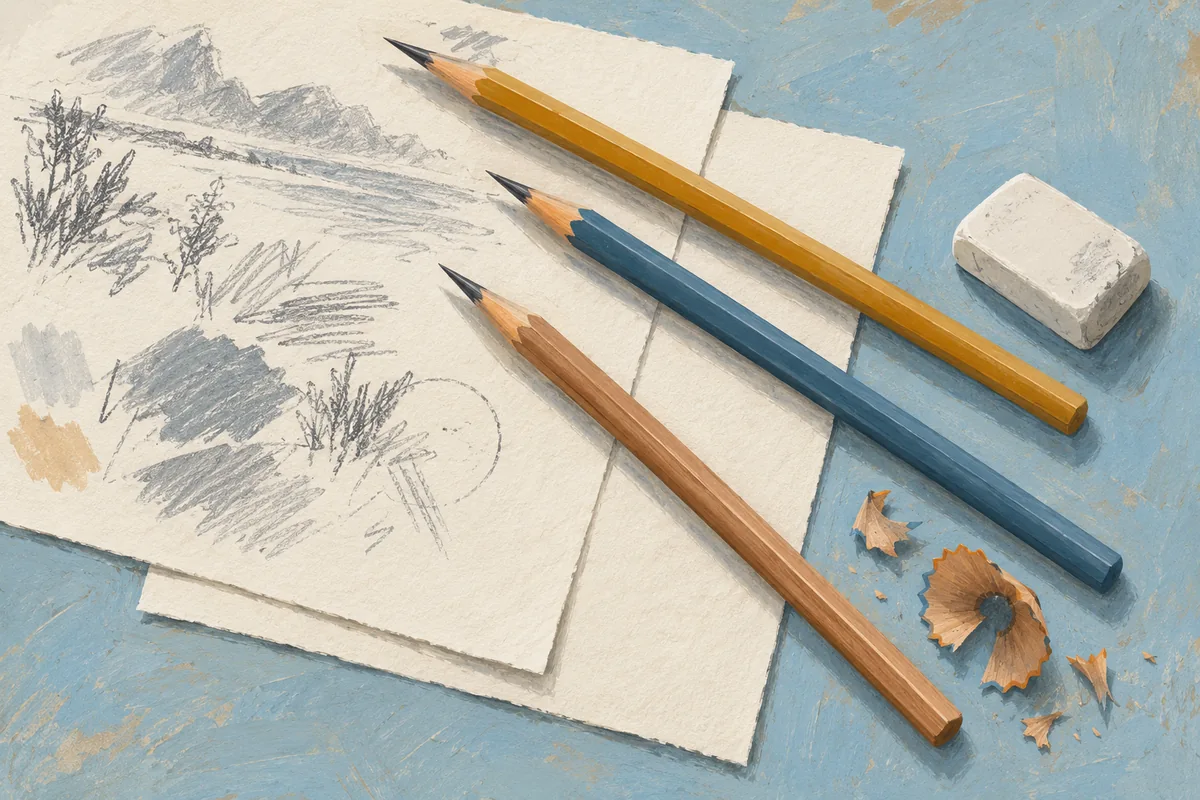
For a branded pencil that will mainly take workshop notes, start by sampling HB. For a sketch-led session, compare it with 2B on the paper attendees will actually use. Neither grade is a quality ranking, and the darker option is not automatically the better giveaway.
A museum education team buying pencils for adult workshops has two different jobs to solve: readable notes during the introduction and expressive marks during the drawing activity. Choose for those tasks before choosing the barrel color.
What HB and 2B tell you—and what they do not
STAEDTLER’s pencil guide describes HB as a medium-soft writing grade. On the B side of the scale, increasing numbers indicate softer leads; on the H side, increasing numbers indicate harder leads. More graphite relative to clay makes the core softer and its marks darker. That makes 2B a useful comparison sample when shading is important, not an automatic upgrade from HB.
The grade does not specify the barrel’s comfort, the quality of the attached eraser, whether the pencils arrive sharpened or how well your logo prints. Treat each of those as a separate purchasing decision.
Also avoid casually translating every label into “No. 2.” Faber-Castell’s hardness guide identifies its B pencil as equivalent to the traditional No. 2. Its guidance also explains that paper texture and the user’s pressure affect the result. Record the actual manufacturer, model and marked grade instead of treating a number-to-letter conversion as a universal specification. For an exam or machine-read form, obtain the organizer’s exact instrument requirements; this workshop selection aid is not exam approval.
Choose the first sample by the session’s hardest task
- Mostly written notes: begin with HB and judge small handwriting, corrections and comfort over a realistic page of writing.
- Mostly sketches and shading: compare HB with 2B. Ask the instructor to try both fine outlines and broad tonal areas; choose based on the activity, not just the darkest swatch.
- One pencil for both: require one sample to pass both jobs. If neither does, separate the note-taking pencil from the drawing materials rather than forcing one branded item to do everything.
This is our proposed selection logic, not a report of product testing. If pencils will accompany a journal, approve the pair together using the paper checks in our company notebook selection guide.
A side-by-side sample card you can reuse
Label each sample with its supplier, exact model and grade. Give the same paper, eraser and tasks to the same reviewers. Keep the marked sheets with the order record.
- Write: copy a short paragraph at a normal size and pressure. Can the reviewer read it comfortably without retracing letters?
- Draw: make a fine outline and a shaded area using the workshop technique. Can the instructor get the intended result without changing the lesson?
- Handle: move a hand over the page as a participant normally would, then close and reopen the notebook. Record any transfer that makes the work difficult to use. Do not label a pencil “smudge-proof” from this informal check.
- Correct: erase a word and redraw a line with the eraser that will be supplied. Inspect the correction and paper surface.
- Maintain: sharpen the pencil with the intended sharpener, then repeat a few lines. Check that the sharpener accepts the barrel and that the point is usable.
- Approve the decorated version: confirm the grade remains identifiable, the logo is legible at actual size and the grip area works for the reviewers. A digital artwork proof cannot verify writing feel.
Set your pass criteria before comparing samples. A useful decision record is: “Readable notes: pass/fail; instructor’s drawing task: pass/fail; handling and correction: acceptable/not acceptable; supplied sharpener: works/does not work.” This is a practical procurement check, not a laboratory standard.
Resolve the handout details before ordering
Illustrative decision, not a customer result: a museum’s workshop includes ten minutes of notes followed by a drawing exercise. The buyer requests HB and 2B samples, lets the instructor evaluate both on the actual handout stock, and orders only after one option passes both tasks. If the winning pencil ships unsharpened, staff must prepare it or provide a workable sharpening station before guests arrive.
Put the approved model/grade, sharpened or unsharpened delivery, eraser arrangement, barrel shape, decoration proof, quantity and destination country in the quote request. Ask whether a substitution would change the grade or construction, and require approval before it happens. Use our logo-file checklist for the separate artwork handoff.
Manufacturer guidance here explains pencil selection; it does not establish Brand Sauce catalog availability or customization rights for those manufacturers. Availability, minimums, decoration options, delivery and pricing remain quote-needed for the actual order.
Image: AI-generated editorial illustration, not a product photograph or a pencil-performance comparison. Primary guidance checked October 7, 2026.