“Microwave-safe lunch box” does not tell you what to do with its lid. Depending on the exact container, the lid may need to come off, stay on with a vent open, or remain in place with its clips released. For an employee lunch-kit gift, approve the base, lid and instructions together—not just the capacity and logo position.
This is a buying checklist for office lunch containers, not a recommendation to heat an unidentified box. If the instructions for a particular component are missing, do not put that component in the microwave while you investigate.
Three different lid instructions can all be legitimate
Even one manufacturer uses different rules across its ranges. Sistema’s US care page says its TO GO containers can reheat precooked food without the lid. Its Microwave range instead uses a lid with a steam-release vent that must be opened. Those are product-specific instructions, not interchangeable ways to use any plastic container. See Sistema’s range-by-range care instructions.
A third arrangement appears in Sistema’s Brilliance care sheet: open the clips for steam to escape during reheating. It also distinguishes reheating from cooking. A lid that looks similar to another lid is not enough evidence to copy its operating method.
These are manufacturer examples that demonstrate the distinction, not a Brand Sauce catalog shortlist or a claim that these ranges are available for branding in every country.
Choose for the lunch routine, then the artwork
- Cold lunches only: choose around portion layout, carrying fit and cleaning instructions. Do not add a microwave claim just because another container in the supplier’s range has one.
- Routine desk-day reheating: require an explicit lid procedure recipients can follow without guessing. A removable lid can be a reasonable choice; a vented lid can be a reasonable choice. The deciding factor is documented use of that exact set.
- A box with several inserts: require separate answers for the main base, inner trays, sauce pot, cutlery and lid. One approved component does not establish permission for the rest.
- A gift for several countries: confirm the actual item supplied in each destination, its care document and the decorated version’s availability. Do not substitute a visually similar regional model without checking its instructions again.
Check the container’s packed dimensions against the bag as a separate step. A suitable reheating container does not resolve the transport questions covered in our lunch-bag cold-storage checklist, or the bag-cleaning questions in whether a branded lunch bag can be machine-washed.
Copy this component-by-component approval card
Send this card with the quote request. Ask the supplier to complete it for the final decorated SKU, not a generic stock photograph.
- Identity: manufacturer, model/SKU, capacity, destination country and exact included pieces.
- Base: microwave permission and limits, supported by the manufacturer’s current instructions. Is the permission for reheating only?
- Lid: remove completely, open a dedicated vent, release clips, or another explicitly documented procedure. Attach the relevant instruction; do not simply tick “microwave-safe.”
- Loose components: name every insert, pot, seal or utensil and record whether it stays in or comes out. Mark unanswered items unresolved.
- Decoration: confirm that the proposed printing, label or other finish is compatible with the intended use and care. Keep operating marks and vent mechanisms unobstructed.
- Recipient handoff: include the complete manufacturer instructions plus a short lid reminder that agrees with them. Check that the instructions describe the supplied version.
- Release decision: approve only when the intended routine is documented for every part involved. Record the reviewer, date, sample identifier and unresolved exceptions.
A hands-on sample review can reveal whether the vent is easy to identify or the lid is awkward to remove. It is not a substitute for the manufacturer’s use restrictions, and a successful trial does not establish that an undocumented component is microwave-safe.
A small wording change can prevent a big misunderstanding
Illustrative approval example, not a product test: an office manager receives a quote for a container described as “microwave-safe.” The supplier’s care sheet permits reheating the base but requires removing the lid. The manager approves it for the lunch kit only after the product description and enclosed reminder say to remove the lid before microwaving. If the supplier cannot identify which instructions apply to the quoted set, approval stays on hold.
Do not invent universal cooking times for the insert card. Preserve the exact product’s restrictions, and leave food-specific heating directions to the food instructions and appliance guidance. Likewise, do not treat a dishwasher claim as proof of microwave suitability.
Bottom line: the useful buying question is not “Does it have a microwave icon?” It is “Which parts go in, in what configuration, under whose instructions?” Keep the answer attached to the product all the way from quote to recipient.
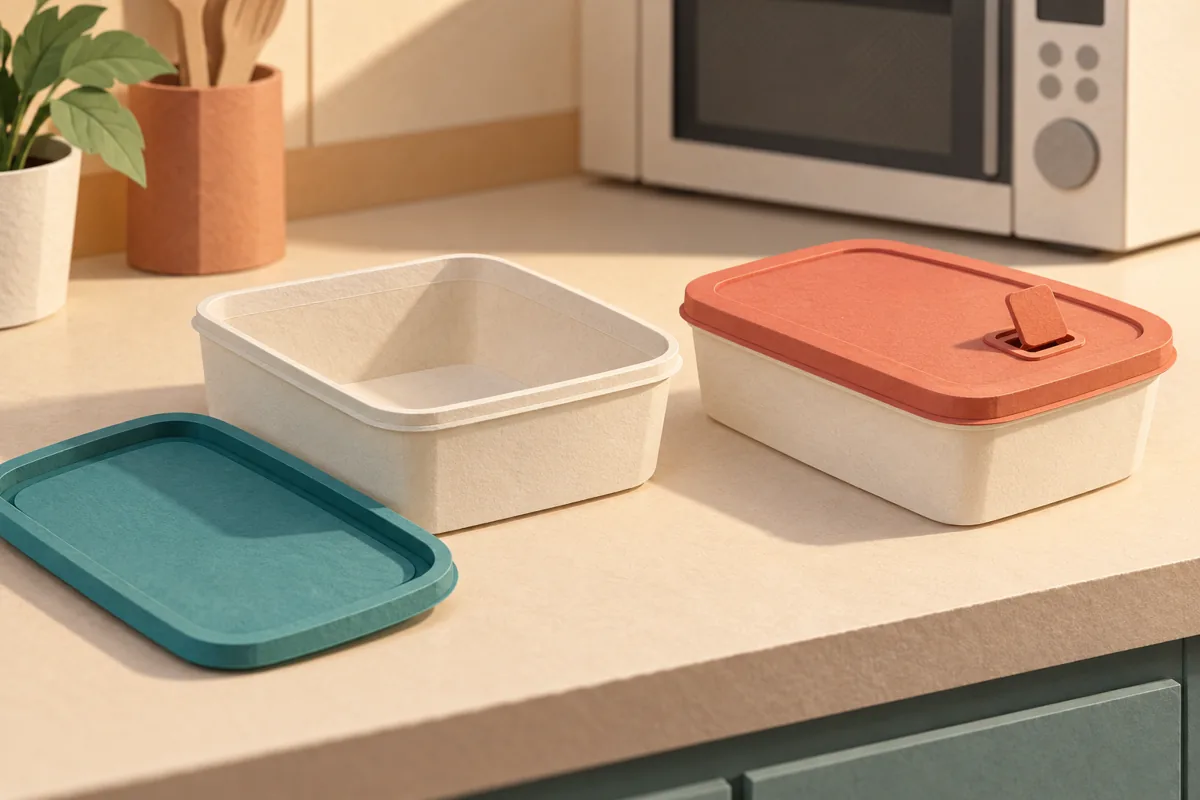
Illustration: AI-generated editorial concept, not a catalog item or evidence of product testing. Manufacturer guidance checked October 17, 2026.