Only if the instructions for that exact bag allow it. A wipe-clean lining, a water-resistant exterior and a washable food container do not establish that a branded lunch bag can go in the washing machine. Before ordering lunch bags for a staff appreciation gift, check how recipients will clean the complete decorated product—not just the fabric named in the listing.
If easy machine washing is a requirement, make it a pass-or-fail buying condition. Do not buy a hand-clean-only bag and plan to suggest a delicate cycle later.
Two manufacturer examples—and their limits
PackIt’s care instructions call for hand washing the interior with mild soap and warm water or using an appropriate wipe, and spot cleaning the exterior with a gentle sponge. The bag must air-dry completely with its flap open before freezing. PackIt explicitly rules out washing machines, dryers and dishwashers.
YETI’s Daytrip Lunch Bag FAQ specifies a cloth with mild dish soap and warm water, recommends unfolded storage after cleaning, and prohibits washing machines, dishwashers, dryers and bleach. Its permission to hose down stubborn stains belongs to that product’s instructions; it is not permission to soak or hose every insulated bag.
These are examples of manufacturer care requirements, not a Brand Sauce catalog shortlist or a claim of decorated availability. Other models can have different instructions. Even bags from the same brand may need different care, so keep the exact model and its current care document together.
Read the care claim part by part
- Interior liner: find out whether the directions permit wiping, hand washing or removal. A removable liner needs its own instructions; “removable” does not automatically mean machine-washable.
- Exterior and handles: check whether they are spot-clean only. Do not extend the liner’s cleaning permission to the shell.
- Containers and cold packs: remove and care for these according to their own labels. A dishwasher-safe container does not make its carrying bag dishwasher-safe.
- Logo: ask the decorator to confirm that the approved bag-care method also suits the finished print, patch or embroidery. If the two instruction sets conflict, hold the order until they are reconciled.
- Drying and storage: record the required open position, drying method and any restrictions before folding or freezing. A cleaning method is incomplete without the next step.
A water-resistance claim answers a different question from a care label. For the broader distinction between fabric and whole-bag claims, see our water-resistant versus waterproof bag guide.
A clean-and-reset sample check
Use this original review card before approving a decorated sample. It is a proposed usability check, not a laboratory hygiene test or a claim that Brand Sauce has tested either manufacturer’s product.
- Identify the sample. Record model, size, liner construction, decoration method and the version or date of its care instructions. Photograph the care label while it is readable.
- Empty it completely. Remove the intended containers and packs. Open every compartment that recipients will use. Can a person see and reach the bottom corners and the area beneath the closure without pulling the bag apart?
- Follow only the approved method. Use the specified cleaner and cleaning tool. Record any inaccessible seams or awkward folds. Do not improvise a harsher chemical or machine cycle to rescue a poor result.
- Set it up to dry. Place the sample in the instructed position in a representative home setting. Note whether the opening stays open without a makeshift prop, how much counter space it occupies and whether pockets retain visible moisture.
- Check the return-to-use window. Record when cleaning ends and when the bag is fully dry under those trial conditions. If recipients need it again before that happens, the proposed routine does not fit their schedule. One observation is not a universal drying-time promise.
- Inspect and document. Check the liner, closures and decorated area for visible changes. Record problems and send them to the supplier before approval. This check cannot establish microbial cleanliness, cooling performance or long-term durability.
Decision: approve when the written instructions agree, the required areas are accessible and the care routine fits the recipient’s use. Request another sample if construction or decoration changes. Reject a hand-clean-only model when machine washing is a non-negotiable requirement; do not relabel it as washable.
What belongs on the recipient care card?
Build a short card from the approved instructions, with separate lines for interior cleaning, exterior cleaning, decoration care, drying/storage and prohibited methods. Add the model name and a direct link to the manufacturer’s current instructions. Keep accessory instructions separate so employees do not transfer a container’s washing permission to the bag.
For example, a card may need to distinguish “wipe the interior” from “spot-clean the exterior.” Treat those as fields to fill from the actual supplier document, not universal copy to paste onto every lunch-bag order. If the supplier cannot give clear directions for the finished item, keep the care claim and purchase approval on hold.
Cleaning suitability is separate from keeping lunch cold. Our lunch-bag packing guide covers the meal-and-cold-source fit question. Before purchasing, also confirm the exact decorated SKU, destination-country supply, included accessories and lead time. Unconfirmed prices remain quote-needed.
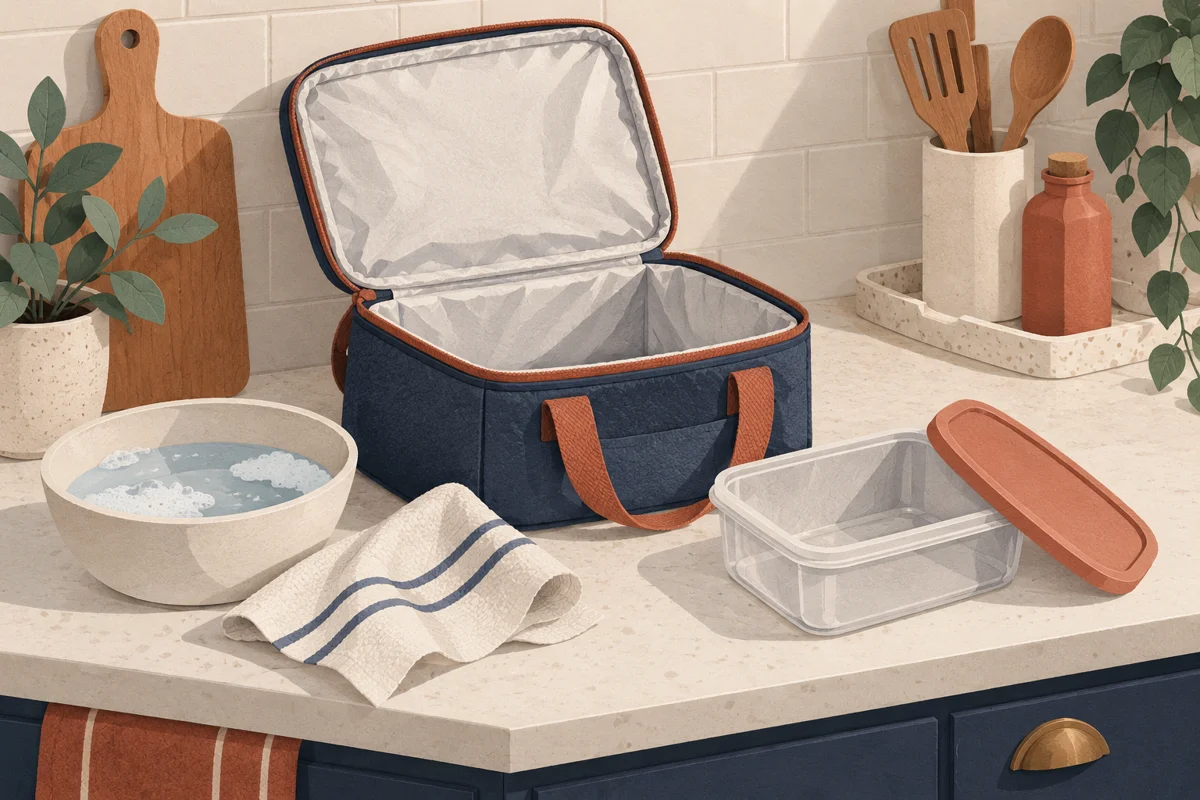
Manufacturer sources checked October 15, 2026. The hero is an AI-generated editorial illustration, not a catalog photograph, customer scene or cleaning-test result.