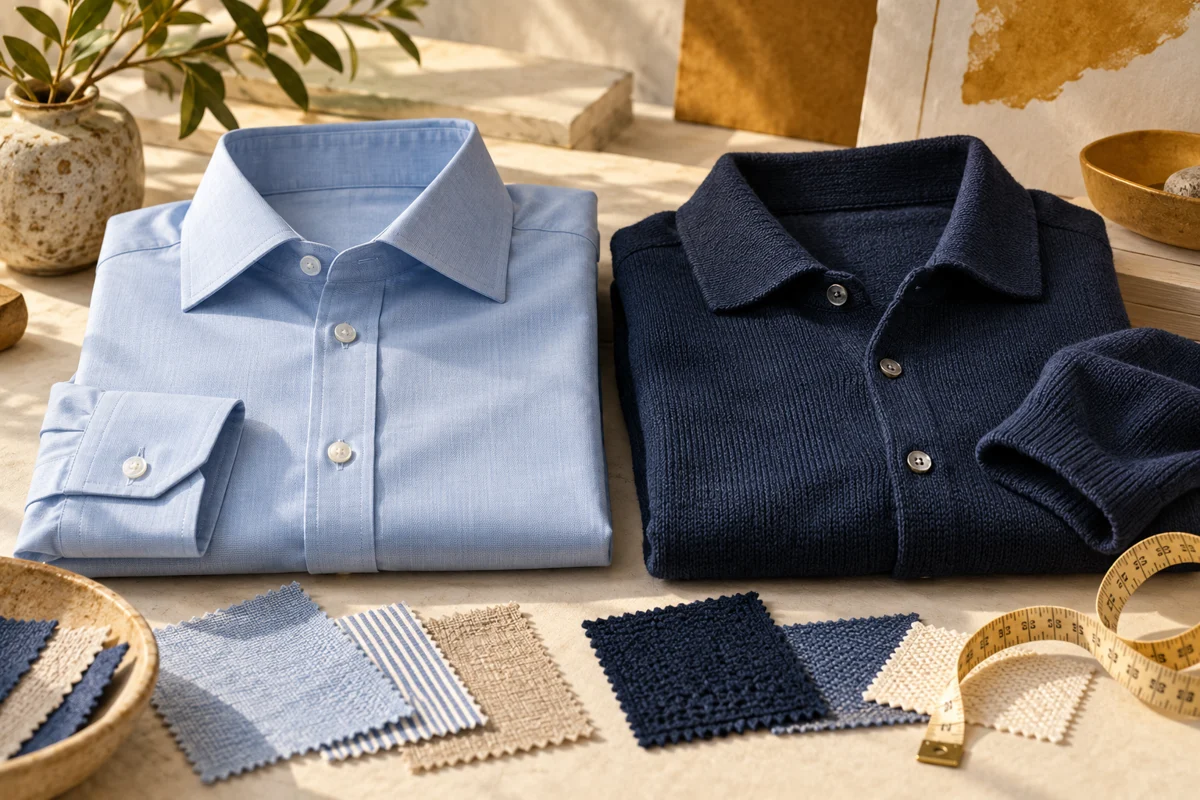
Choose a woven company shirt when the approved look depends on a crisp, structured shape; consider a knit when a softer feel and movement are priorities. But do not choose from those labels alone. A button-front shirt can be knitted, a woven can contain stretch, and neither construction automatically wins on comfort, care or durability. Approve the finished, decorated garment for the work people actually do.
The practical buying decision is whether your program needs one shirt construction, two approved alternatives, or a different garment altogether. This guide focuses on collared workplace shirts for office, reception, sales and event teams—not protective clothing or a claim that one textile is universally more professional.
Publisher perspective: Brand Sauce publishes this guide as a company-store provider. The selection process is our editorial recommendation, not a promise of specific inventory or platform functionality. Manufacturer examples illustrate construction; availability, destination coverage, decoration and delivered pricing require a current quote. Sources checked October 26, 2026.
Separate construction, fiber and shirt shape
Three different decisions often get collapsed into one product description. Construction describes how yarn becomes fabric. Fiber content describes what the yarn is made from. Garment design describes the collar, openings, sleeves, pockets and cut. “Cotton,” “woven” and “button-front” therefore answer different questions.
The National Cotton Council’s fabric-manufacturing explanation distinguishes weaving, which interlaces yarns, from knitting, which interlocks yarn loops. That distinction is useful, but it is not a complete performance specification. It does not establish how a particular shirt fits, feels after washing or looks with your logo.
A useful counterexample is the Port Authority Dimension Knit Dress Shirt K570. SanMar identifies it as 3.8-ounce, 100% micropique polyester tricot, with a button front, collar, chest pocket and adjustable cuffs. In other words, a dress-shirt silhouette does not prove that the fabric is woven. This is a specification example, not a product endorsement or confirmation that it is currently available through your company store.
Build your shortlist with separate columns for construction, fiber, fit and care. If the description omits construction, ask the supplier to identify it rather than inferring it from a photograph. Use the separate cotton-versus-performance polo guide when fiber and moisture-management priorities are the main unresolved issue.
Choose the question you need the sample to answer
| Program priority | Starting shortlist | Approval question |
|---|---|---|
| A defined collar and crisp front for a formal reception team | Structured woven, plus a structured knit if acceptable | Does the shirt retain the agreed appearance while seated and after care? |
| Frequent reaching, presenting and carrying light event materials | Knit and stretch-woven candidates | Can the wearer perform those tasks without pulling at the placket or shoulders? |
| A coordinated team with different comfort preferences | Two constructions in an approved color family | Do both look intentional together, with equivalent logo treatment? |
| A low-maintenance travel rotation | Models with suitable documented care | Can recipients follow the instructions, and is the post-care result acceptable? |
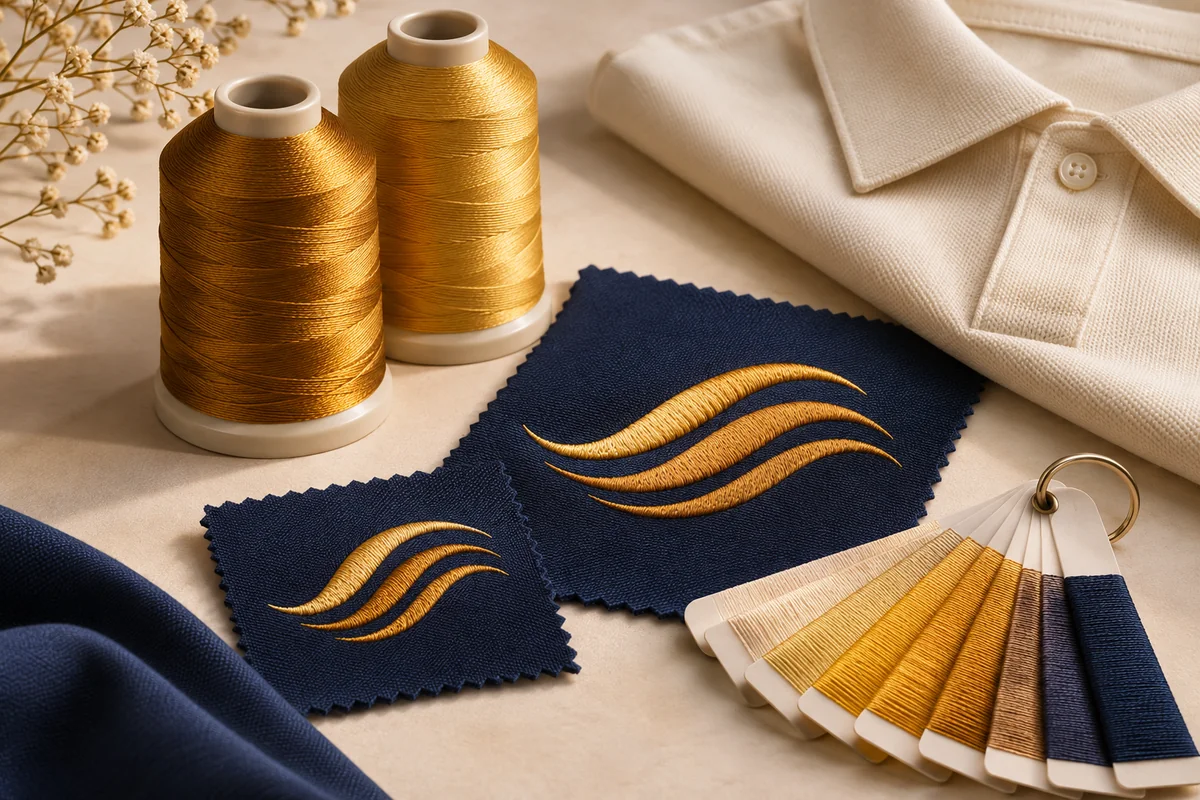
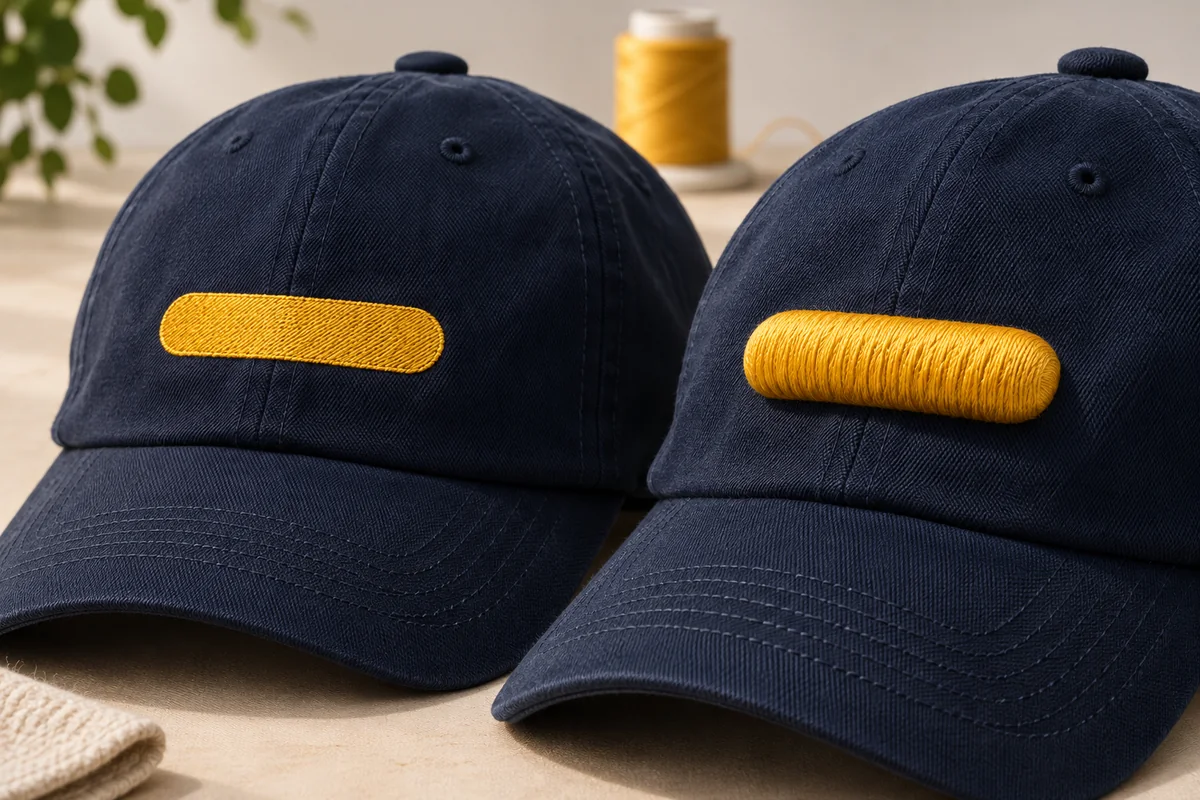
| A large chest logo or detailed embroidery | Specific decorated samples of each candidate | Does the actual decoration remain legible and sit flat without distorting fit? |
These are starting points for evaluation, not textile rankings. A poorly fitting knit can restrict movement. A well-cut woven may work beautifully. The decision should survive an ordinary working day, not just a comparison on hangers.
Define “professional” in observable terms
“Professional appearance” is too vague to be a useful approval criterion. Replace it with a brief that another person could apply: collar lies as intended, front opening stays flat during normal movement, hem works with the required tucked or untucked styling, and the logo is readable at a normal conversational distance.
Specify whether jackets will be worn over the shirt. Review the collar beneath the actual jacket and inspect the shirt again without it. A sample that looks good alone may bunch under a layer; a collar that suits an open neckline may not deliver the intended buttoned-up appearance.
Also decide how exact the team match needs to be. If the expectation is a uniform visual block at a trade-show booth, compare every approved style together under the same lighting. If the expectation is simply “navy collared shirt with this logo,” different constructions may be acceptable. Write down that distinction before employees order. Otherwise, a valid choice can later be treated as a mistake.
Evaluate movement without using stretch to hide poor fit
Ask sample wearers to sit at a desk, reach forward, raise an arm to a presentation screen and put on their usual outer layer. Choose tasks relevant to the role; there is no need to turn a reception-shirt trial into an athletic test. Check chest closure, shoulder comfort, sleeve reach, cuff position and hem coverage.
When a shirt pulls, first determine whether the size or cut is wrong. Do not immediately switch every wearer into a stretchier fabric. A change that fixes the chest may leave sleeves or body length unsuitable. Conversely, do not reject the entire construction category because one model fails on one wearer.
Keep a simple feedback record: task, location of discomfort, size tried, proposed change and result. Let participants report fit privately rather than displaying individual measurements in a shared team spreadsheet. Offer more than one cut where the program can support it, and avoid assigning a style solely from a person’s job title or assumed preference.
For the separate question of where stretch comes from, see our mechanical-stretch-versus-elastane guide. Stretch content and knit construction are not interchangeable purchasing specifications.
Compare the garments after the intended care routine
Before approving either candidate, obtain the current care instructions and the decorator’s instructions for the finished shirt. If they conflict, resolve the conflict with the supplier before ordering. Do not invent a combined routine or assume the blank-garment label covers every decoration method.
The K570 specification above, for example, directs cold machine washing with like colors, no fabric softener or bleach, low tumble drying and a cool iron if needed. Those instructions apply to that documented model; they are not a rule for all knitted shirts. Another shirt may require a different routine.
For an internal comparison, photograph each sample before care, follow its approved instructions, and record the result after your agreed number of cycles. Look at collar behavior, seam alignment, front closure, usable length and the decorated area. Describe this as an internal acceptance check, not a laboratory durability certification or a prediction of service life.
Ask whether the expected routine is realistic. If the program requires a pressed appearance but recipients will not have time or equipment to maintain it, the mismatch is operational. A garment that needs less attention to meet your chosen standard may be a better purchase even if another sample looks sharper straight from its packaging.
Approve the logo on each construction separately
An approved logo file is not an approved shirt. Give the decorator the exact style, color, logo size and placement, then review a finished sample. Do not transfer approval from a woven to a knit merely because the shirts share a color name or supplier.
Inspect the shirt laid flat and while worn. Look for puckering around embroidery, a logo that pulls the front out of shape, uncomfortable backing, lost small lettering and placement that collides with a pocket or button opening. Ask the decorator to propose any artwork, size or process change; record it as a revision rather than silently accepting a different brand treatment.
If one candidate only looks acceptable with a smaller mark, decide whether that is allowed before adding it to the same program. Matching the visual effect may be more useful than forcing identical dimensions onto dissimilar garments. The decorated-apparel sample approval checklist provides a broader release process.
When two approved shirts are better than one
A two-option program can preserve a shared appearance while accommodating preferences. Define the common requirements first: acceptable color relationship, collar style, logo treatment, work setting and care burden. Then let eligible employees choose between the approved woven and knit rather than between an unrestricted catalog of superficially similar shirts.
Keep the operational consequences visible. Two models mean two fit references, two decoration approvals and potentially different replacement availability. If a color or size becomes unavailable, the other model is not automatically a substitute. The employee may have selected the first specifically for its feel, fit or maintenance needs.
Consider an illustrative reception-and-events team: the buyer approves a crisp shirt for people who prefer that structure and a softer button-front for those who prefer its feel. Both pass the same appearance and task checks. This is a hypothetical program design, not a client story or evidence of employee satisfaction gains. If either candidate fails the shared requirements, it should not enter the store simply to create choice.
Match the buying model to demand, not to fabric terminology
Neither woven nor knit automatically implies bulk or on-demand purchasing. Request current quotes for the exact decorated styles, quantities, size mix and delivery destinations. Include sample charges, setup, decoration, shipping and any replacement-order charges. Published blank-shirt details are not a delivered program quote.
Bulk can make sense for a known team, approved sizes and a fixed launch date, particularly when the supplier’s quote supports consolidated production. It also requires a plan for distribution and leftovers. On-demand can suit ongoing hires or individual replenishment when the selected styles and decoration are available in that model; verify minimums and lead times instead of assuming them.
A hybrid can use an approved launch order plus smaller replenishment orders. Confirm whether the same garment and decoration specification can be maintained across both. A lower first-order cost is not helpful if later replacements arrive in a visibly different style without prior approval.
Use a one-page shirt release record
- Purpose: roles, environment, appearance standard and intended layering.
- Identity: supplier, exact style, construction, fiber content, color and approved size range.
- Fit evidence: cuts sampled, relevant tasks tried and unresolved exceptions.
- Decoration: approved artwork revision, method, dimensions, location and finished-sample reference.
- Care: agreed finished-garment instructions and dated internal observations.
- Commercial scope: quote date, destination, minimum order, timing and replacement route.
- Decision: release, revise or reject, with the named buyer responsible for resolving changes.
Use that record when replenishing, not just at launch. If the supplier proposes a replacement style, compare it against the original requirements and approve it as a new candidate. A familiar category label is not continuity of specification.
Frequently asked questions
Is every button-front dress shirt woven?
No. Knit dress shirts exist, including the documented tricot example above. Check construction in the exact style’s specification, not the buttons or product-category heading.
Is a knit always cooler or more comfortable?
Do not make that assumption. Evaluate the exact garment in the intended setting, with its fit, layers and care requirements. “Knit” alone is not enough evidence for a comfort or temperature claim.
Can a team mix woven and knit shirts?
Yes, if both satisfy the program’s appearance and task requirements and each is separately approved. Make color coordination, logo differences and substitution rules explicit.
Which is cheaper for a company program?
There is no dependable category-wide answer. Compare current delivered quotes for approved candidates, including decoration and replenishment. Reject a cheaper option if it fails the requirements that made the shirt necessary.
The useful outcome is not a winning fabric category. It is a small, approved shirt range that employees can wear for their actual work and that the buyer can reorder without rediscovering every decision.