Choose tubular or side-seamed company T-shirts by the fit and decoration you approve—not by treating one construction as a universal quality grade. Side seams join separate body panels; a tubular body has no joining seams down its sides. That difference matters when a particular silhouette, side-positioned graphic or repeat-order consistency is part of the brief. It does not, by itself, tell you which shirt your employees will prefer.
The most useful buying question is: must every delivered shirt have the same body construction, or can more than one approved construction meet the program’s needs? Answer that before ordering samples, approving artwork or opening a company store. A style number alone may not settle it.
Publisher perspective: Brand Sauce provides company-store services and publishes this buying framework. The inspection steps and acceptance rules below are editorial recommendations, not reported laboratory results. Manufacturer examples explain specifications; they are not promises of Brand Sauce stock, decoration availability or destination coverage. Sources checked October 27, 2026; delivered pricing and exact availability require a current quote.
What tubular and side-seamed actually describe
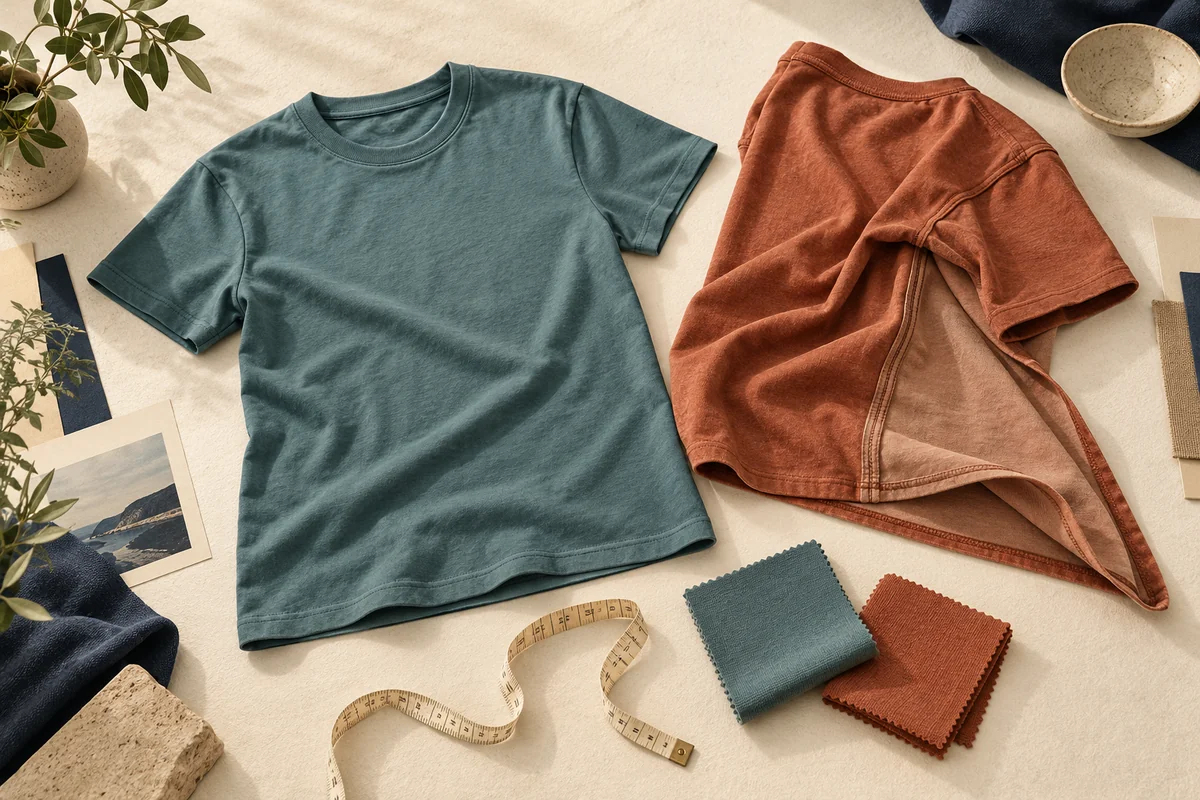
A tubular T-shirt uses a continuous fabric body, with sleeves and neckline components added. A side-seamed T-shirt has body panels joined along the sides. Turning a sample inside out makes the distinction easier to inspect than looking at a front-facing catalog photograph.
BELLA+CANVAS explains the construction difference and argues strongly for side seams because they give its designers control over shaping. That is a manufacturer’s position, not independent evidence that every tubular tee fits badly. Its 3001 product page identifies side-seamed construction and unisex sizing. Neither term replaces the actual dimensions or a wearer’s preference.
Keep three questions separate:
- Construction: are there side seams?
- Pattern and measurements: what are the chest width, body length, shoulder shape and sleeve proportions?
- Wearer experience: does that particular shirt provide the desired room, coverage and feel?
A seam is not synonymous with a fitted waist. “Unisex” is not a measurement. And a comfortable sample for one buyer is not evidence that a whole size range will work for a team.
The same style can allow both constructions
This is not only a comparison between different brands. District’s Perfect Tri Tee DM130 page warns that some colors are made in both tubular and side-seamed versions and that an order may include a mixture. The published specification therefore matters even when a reorder uses the same style name.
For procurement, that creates a choice—not an automatic defect. If both versions meet the approved fit and artwork requirements, a mixed supply may be acceptable. If your design or program depends on one construction, an unrestricted order is not enough. Ask whether the supplier can identify and supply the required version before decoration. Do not assume it can.
Write the answer into the purchase brief: construction required, construction preferred, or either construction approved. Those are different instructions. A preference should not silently become a guarantee, and a requirement should not disappear when stock is allocated.
Match the rule to the job
| Program requirement | What to compare | Recommended buying rule |
|---|---|---|
| Simple front logo; recipients choose their size | Finished fit, available sizes and approved print | Allow either construction only after accepting representative samples |
| A particular shaped silhouette | Actual panel shape and measurements through the needed range | Specify the approved style and construction; do not substitute on fabric description alone |
| Artwork extending around the side | The real print path, seam location and decorator’s process | Require a physical decorated sample and written production acceptance |
| Replacement shirts expected to match earlier issue | Current sample against a retained reference | Confirm construction again at replenishment, even if the style number is unchanged |
| Employees who dislike a particular seam feel | Inside seam finish and wearer feedback | Offer an approved alternative; do not promise universal comfort from either label |
This table is a proposed decision framework, not a ranking of manufacturers. It lets a buyer explain why a construction requirement is necessary—or remove an unnecessary restriction that would narrow otherwise suitable choices.
Compare fit without letting the seam decide the result
Start with the intended use: a roomy event shirt worn over another layer is a different brief from a closer-fitting everyday tee. State that preference before the samples arrive. Otherwise, the team can end up debating “premium” versus “basic” without agreeing on the shape it wants.
Ask for the measurement sheet for each candidate, including how the maker measures chest and body length. Compare like measurements. A body circumference on a size chart is not the same number as the width of a shirt laid flat; our guide to body measurements versus garment dimensions explains that distinction.
Invite a small, voluntary group of wearers with different fit preferences to assess relevant sizes. Let them describe the result in concrete terms: too short when reaching, enough room at the hips, sleeves wider than preferred, or an inside seam they can feel. Keep feedback about the garment, not judgments about bodies. One person preferring a tubular candidate and another preferring a side-seamed one is a useful assortment finding, not a failed test.
If the program keeps two fits, describe them clearly and provide the correct chart for each. Do not imply employees can use the same size in both. Nor should a second option be presented as an inferior fallback simply because its construction differs.
Treat artwork placement as a separate approval
A central chest logo and a large side-running design create different production questions. For the latter, ask the decorator to mark where the artwork sits relative to any seam, armhole and hem on the actual garment. A flat digital mockup cannot demonstrate the finished result across those features.
Use these questions before releasing the design:
- Does the artwork stay on one uninterrupted panel, approach a seam, or cross it?
- Can the proposed process reproduce that placement on the actual construction?
- Will smaller and larger sizes need different artwork dimensions or placement rules?
- If a style may arrive in both constructions, has the decorator approved both?
- What happens if the warehouse supplies a version that differs from the decorated sample?
A tubular body removes a side joining seam; it does not establish that any wraparound print is feasible on any machine. Equally, a side seam does not automatically rule out the design. Make the decorator responsible for confirming the proposed combination and defining the acceptable result.
If the decoration is ordinary front and back placement, avoid turning seam construction into an extra procurement hurdle without a reason. Spend the sample effort on what employees will actually notice: the fit, the visible artwork and the finished garment’s feel.
Use a construction-specific acceptance record
Keep one concise record with the approved sample. It should let a replacement buyer understand the decision without relying on someone’s memory of a meeting.
- Identify the sample: maker, style, color, size, date received and observed construction. Photograph the inside side area and the whole garment.
- State the requirement: required, preferred or either approved. Explain the reason, such as a specific silhouette or side graphic.
- Record fit observations: the measurements checked and the wearer feedback that affected selection. Note which sizes have not been assessed.
- Attach the decoration reference: approved artwork version, placement and photographs of the decorated sample. Record whether approval covers one construction or both.
- Review after care: follow the agreed finished-garment instructions, then look again at fit, shape and graphic position. Record what happened, without presenting a small internal check as a certified test.
- Define the exception: who can approve a different construction, and whether the supplier must pause before decoration.
The care review complements, rather than replaces, a finished-shirt shrinkage approval. Do not assign a universal allowable twist, shrinkage percentage or seam tolerance without a basis. Agree measurable limits with the supplier for the actual application if they are important to acceptance.
Bulk, on-demand and hybrid programs need different controls
Bulk production can be a sensible choice when a defined group needs a consistent issue for one event and sizes are known. It gives the buyer an opportunity to inspect allocated blanks before the batch is decorated. That opportunity must be arranged; buying a larger quantity does not itself guarantee identical construction. Budget for the size mix and any leftover stock.
On-demand production can suit ongoing employee choice and uncertain demand, but recurring orders may draw from later supply. If construction is mandatory, ask how that requirement reaches every fulfillment order and what happens when the approved version is unavailable. A store description that says “side-seamed” should not remain unchanged if the fulfilled item can differ.
A hybrid program may use a controlled batch for a coordinated launch and a separately approved ongoing tee for later orders. Name that difference honestly. Do not promise that a later shirt is identical unless the specification and supply process support the promise.
Compare scoped quotes for all three models when relevant. Product, decoration, inspection, storage and individual shipping can change the decision; no construction type or fulfillment model is automatically cheaper overall.
Illustrative decision: one front logo, two acceptable fits
Imagine a company planning a staff volunteer day followed by an always-on employee store. This is a hypothetical scenario, not a client result. Its artwork is a small front logo, and there is no requirement for a particular side silhouette.
The buyer samples a tubular candidate and a side-seamed candidate. Assume both meet the agreed decoration and care checks, but wearers prefer different fits. The useful outcome is two accurately described choices—not declaring a winner based on the seam. For the event, the buyer can collect selections and order a known batch. For later purchases, it can keep the approved choices available subject to current supply.
Now change one requirement: marketing replaces the small logo with a graphic intended to run around the side. The earlier approval no longer covers the job. The buyer returns to the decorator for a physical sample and a construction-specific release. This is why the record should connect the garment to the artwork, rather than approve “the T-shirt” in the abstract.
A supplier brief you can use
“Please confirm the body construction for the proposed style, colors and sizes, including whether orders can contain both tubular and side-seamed versions. Our construction rule is [required / preferred / either approved] because [reason]. Quote the exact decorated specification and destination. Identify any limits on selecting construction, and do not change a required construction or approved artwork placement without written agreement before decoration.”
Add the acceptance record and a named decision owner. For an ongoing program, ask for a replenishment check rather than assuming the first sample governs all future stock. The broader branded apparel sample approval guide helps connect this narrow construction decision to the complete finished-item release.
Frequently asked questions
Are side-seamed company T-shirts always better?
No. They provide a way to shape separate body panels, but the finished pattern, fabric, size range, decoration and wearer preference determine suitability. Evaluate actual candidates rather than buying a construction label as a quality guarantee.
Does tubular mean the whole shirt has no seams?
No. It refers to the body’s side construction. Inspect the neckline, shoulders, sleeves and hems separately; “tubular body” does not promise a completely seamless garment.
Can the same style number arrive with different construction?
Yes, where the supplier’s specification allows it. District’s DM130 notice is one published example. Confirm the exact current supply and whether the order can be restricted before making construction-specific promises to recipients.
Should a mixed-construction delivery be rejected?
Compare it with the agreed purchase specification. If both versions were approved and meet the requirements, the mix may be acceptable. If one construction was expressly required, pause decoration or distribution and resolve the discrepancy with the supplier; do not quietly redefine the acceptance rule.