Choose a synthetic base-layer top when the recipient's priority is active use and quick drying; consider merino when they value wool's odor resistance and are comfortable with the specific garment's care routine. A merino blend is a third option, not automatically a compromise or an upgrade. For an employee gift program, offer this category by choice rather than assuming everyone wants a close-fitting layer.
The useful buying question is not which fiber wins in the abstract. It is whether a particular top will work against the recipient's skin, underneath their other clothes, and in their laundry routine. A beautiful material description cannot answer those three questions by itself.
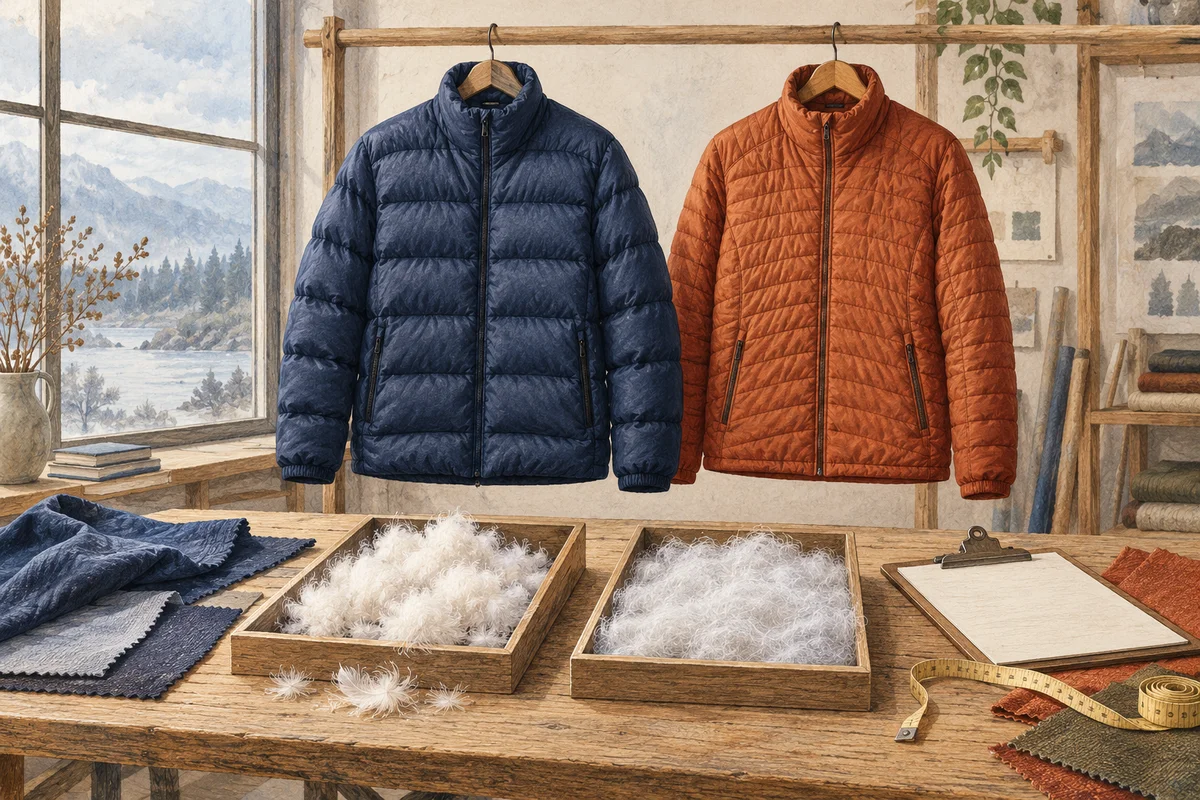
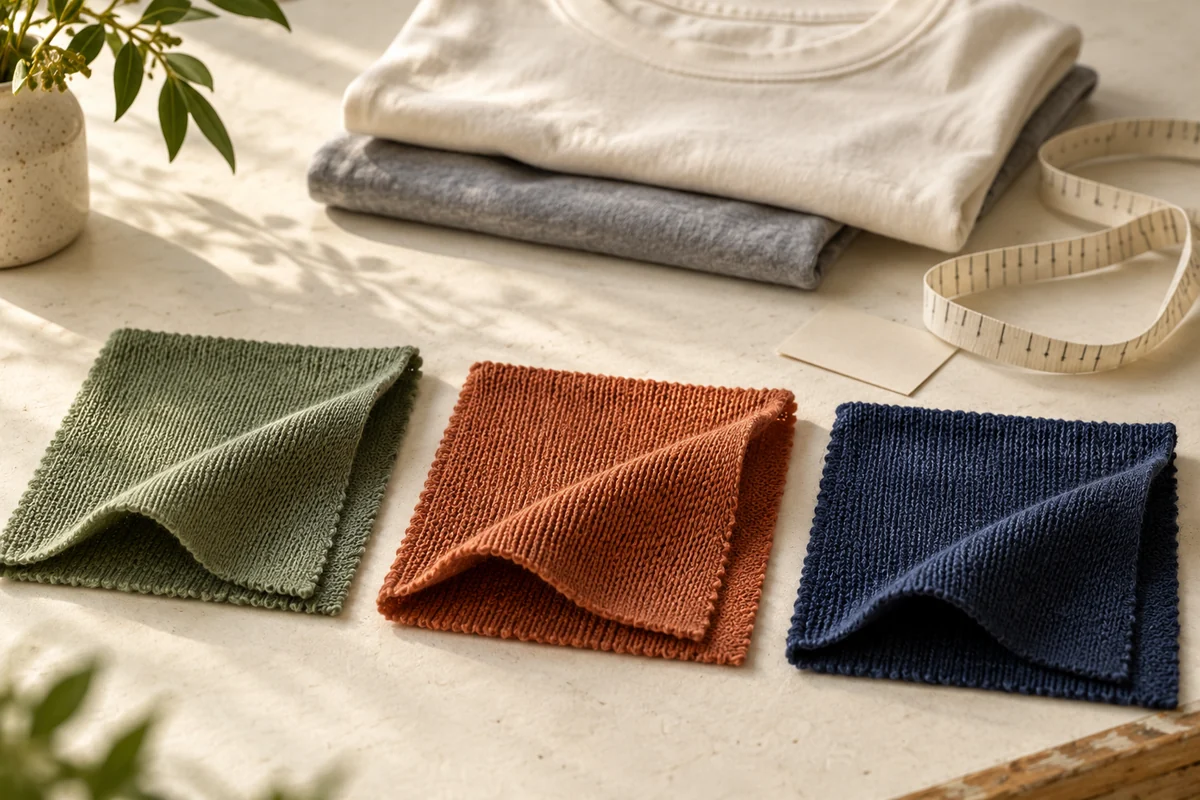
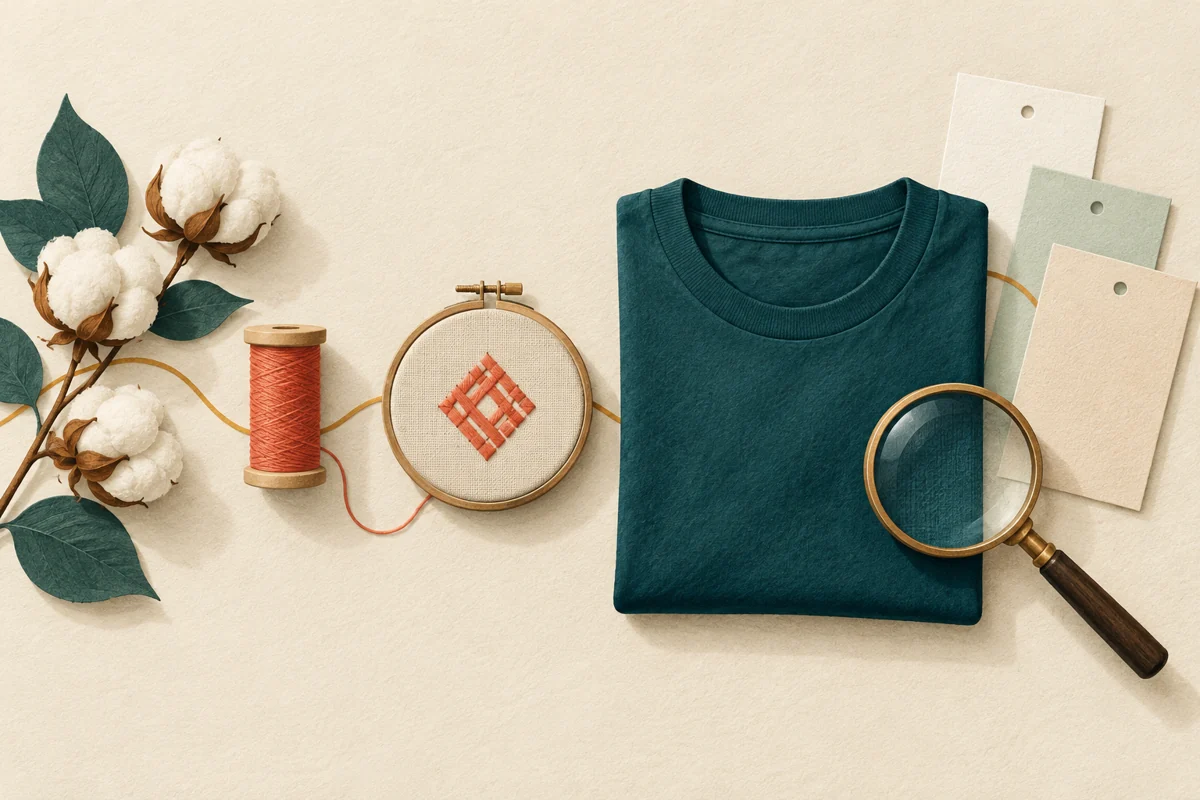
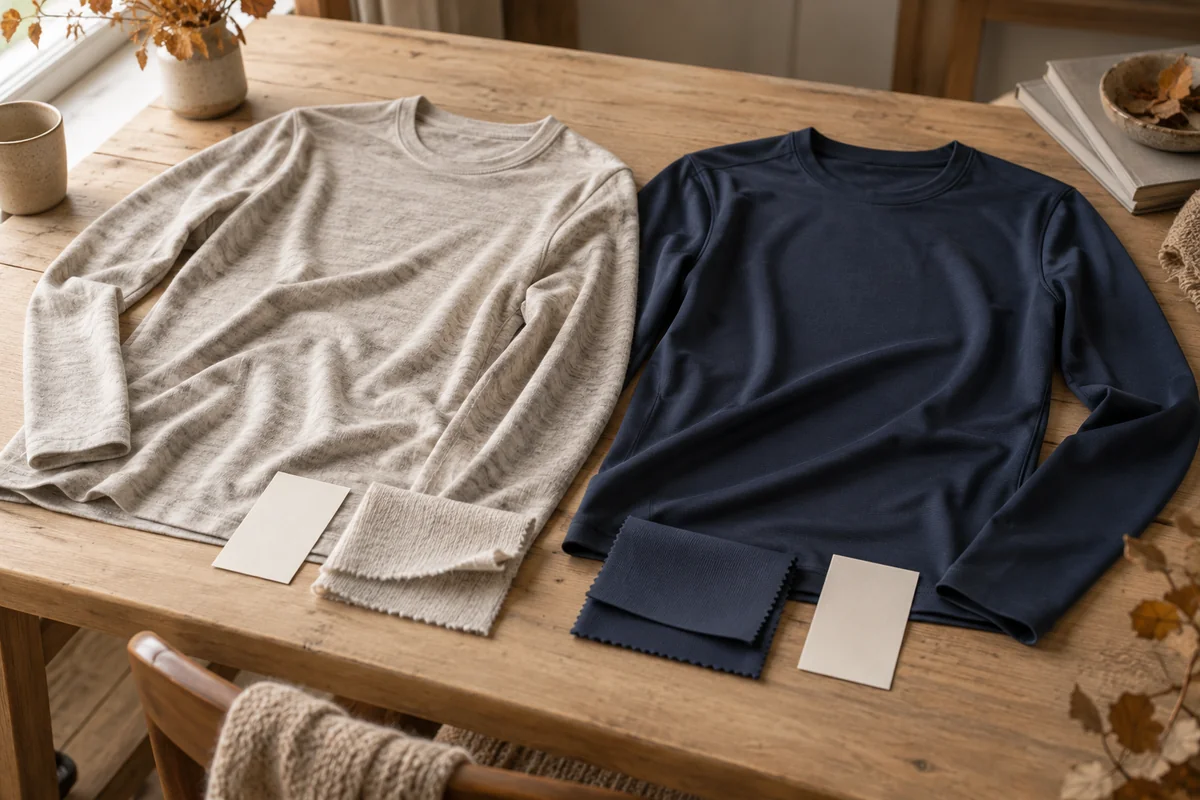
Publisher perspective: Brand Sauce publishes this merchandise buying guide. The selection framework and program examples are our editorial recommendations, not laboratory findings. Official material and care sources were checked October 10, 2026. Named brands illustrate specifications, not confirmed Brand Sauce availability. Decoration permission, exact product and country availability, minimums and delivered prices are quote-needed. The hero is conceptual AI-generated editorial photography.
Start with the layer's job, not the gift tier
A base layer belongs next to the skin. REI's base-layer guidance distinguishes its moisture-management role from the insulation supplied by a middle layer. REI also identifies faster drying as a synthetic advantage and odor resistance as a merino advantage. Those are useful selection directions, not a temperature guarantee for a finished outfit.
Before comparing products, write one sentence describing the intended use: “an optional top for employees who run before work,” “a personal layer for recreational winter trips,” or “a travel garment recipients can choose for themselves.” Avoid a brief as broad as “something warm.” If the actual objective is visible team identification or an easy layer to remove in the office, a jacket or sweatshirt may fit better. Our company-jacket guide addresses that different purchase.
Keep this gift decision separate from required protective workwear. Do not turn a leisure apparel description into an assurance of workplace protection. If the garment is intended for a role with protective clothing requirements, send the specification to the organization's responsible workwear team before offering it for that purpose.
Compare three material routes against the same brief
| Route | Reason to shortlist it | Question that can disqualify it |
|---|---|---|
| Synthetic performance top | Recipient prioritizes active use and quick drying | Does the exact garment feel comfortable, and are its care instructions practical? |
| Merino wool top | Recipient wants a wool layer and values odor resistance | Will they choose to wear this fabric against their skin and follow its care label? |
| Merino blend | A specific blend offers the desired fit, construction and wearing experience | What are the actual fiber percentages, construction and restrictions—not just the word “merino”? |
Do not use this table to assign people a material. Use it to shortlist samples and write honest product explanations. A recipient who dislikes a particular texture has supplied enough information to choose something else; they do not need to justify the preference to a program administrator.
Likewise, do not rank every merino blend above every pure-wool top. A blend label describes ingredients, not a universal performance score. Match candidates as closely as practical by intended activity, sleeve length and fit before comparing their prices. Comparing a lightweight short-sleeve top with a heavier long-sleeve one makes it difficult to tell whether the difference comes from material or garment design.
Read construction and composition separately
“Polyester” does not describe every feature of a synthetic knit. Polartec's official Power Dry fabric explanation describes a two-component knit that moves moisture toward the outer fabric surface. Its account ties moisture management to fabric construction, not merely to a fiber name. This is a manufacturer-specific example, not evidence that every polyester promotional shirt performs the same way.
For merino, read the percentages rather than stopping at the product title. The official listing for icebreaker's Men's Merino 150 Anatomica Short Sleeve Crewe Top, style IB103033000, identifies 83% merino wool, 12% nylon and 5% elastane, exclusive of decoration. It describes a slim fit. That is a concrete example of why “merino top” does not necessarily mean 100% wool or a relaxed T-shirt cut.
Save the specification for each proposed style and color. Record composition, intended layer, fit description, size chart and care instructions in separate fields. If a supplier offers “an equivalent,” compare those fields before approving it. A similar color and sleeve length do not establish equivalent next-to-skin feel.
Ask what any weight number refers to. Is it a fabric specification, the weight of one sample garment, or a brand's warmth-category label? Do not treat the largest number as the best gift. Request an explanation in ordinary language that employees can use, and avoid assigning a universal outdoor temperature range from that number alone.
Make laundry feasibility a pass-or-fail gate
A product can be technically appropriate and still be a poor match for the recipient's routine. Put the care summary beside the selection button, not only in a card discovered after delivery. “Machine washable” is incomplete if the person expects to tumble dry everything.
Smartwool's merino care guidance explicitly tells readers to check individual garment labels and notes that some products require hand washing or air drying. The icebreaker top above specifies a cold gentle wash, no tumble drying and line drying in shade. Those instructions should not be replaced with a generic statement that all merino can go in the dryer.
Synthetic also does not mean unrestricted care. Polartec's Power Dry guidance calls for mild detergent, avoiding fabric softener and following the garment instructions. Obtain the instructions for the finished decorated item: if the blank and the proposed decoration have incompatible requirements, resolve that before launch.
- Can the recipient follow the wash method? State the required cycle and any important exclusions without burying them in marketing language.
- Can they follow the drying method? An air-dry-only garment should be a visible choice, not a surprise.
- Who answers a care question? Give support access to the exact model's instructions.
- What happens after a product substitution? Recheck the care summary; the previous item's instructions may no longer apply.
Do not promise a fixed number of wears between washes or guaranteed odor-free performance. Explain the relevant material feature without making employees feel they are caring for the gift incorrectly if they prefer frequent washing.
Approve skin-contact comfort before logo visibility
For this category, the inside of the garment deserves as much attention as the outside. Ask willing sample reviewers to assess the neckline, seams, cuffs and decorated area during ordinary movement and under their usual outer layer. Let them report privately whether the top feels comfortable. A hand-feel check on a table is not the same decision.
Review garment length when reaching and sitting, how sleeves fit under another sleeve, and whether the intended neckline remains where the wearer wants it. Confirm the exact size chart and allow recipients to choose their preferred cut. Do not automatically import their polo size into a base-layer order.
For branding, start by asking whether customization is permitted on the selected item and what application the supplier will support. Then examine the finished sample for interior feel, restricted stretch, visible puckering or an awkward position beneath a strap. These are proposed buyer observations, not claims that one decoration method always causes a problem.
If a prominent logo makes the top less comfortable or conflicts with the reason it was selected, move the branding objective to another item or choose a different garment. A base layer worn under clothing is not an especially logical purchase when constant logo visibility is the main goal. Use the decorated-apparel sample approval process to retain the exact configuration and its care decision.
Build a small choice menu with a genuine alternative
For a mixed workforce, a useful starting menu is one approved synthetic option, one approved wool or wool-blend option, and a non-base-layer alternative within the intended gift offer. This is a planning suggestion, not a required three-product formula. If you cannot support the sizing, care information or availability of both fabric routes, offer fewer well-explained items.
Write the selection labels around use and care, not prestige. “Choose this if you want a close-fitting active layer” is more informative than “standard.” “Choose this if you prefer wool and are comfortable air drying this style” is more useful than “executive.” Keep any employee contribution visible before they choose.
Illustrative program decision: A company planning a winter appreciation gift has employees who exercise outdoors, employees who want an everyday layer, and employees who do not want close-fitting apparel. Rather than buying one thermal top for everyone, it offers an approved active top, a wool option and an alternative gift. It collects selections and sizes before committing to the group order. This is a hypothetical operating model, not a Brand Sauce client story or a measured adoption result.
The principle behind letting employees choose their gifts matters particularly here: the buyer cannot infer next-to-skin preferences from job title, location or seniority. Publish the exchange rules before ordering, including any restrictions on worn or decorated garments, and arrange an alternative for people the offered size range does not serve.
Choose the order model after approving the garment
On-demand may suit recurring individual selections when the exact garment and decoration can be supplied that way. It avoids guessing the complete size mix up front, but it does not guarantee that a specialist base layer is available one at a time, in every size or destination. Confirm those details for each proposed item.
Bulk can be the better fit for a fixed appreciation event with selections collected in advance, or when the approved product has an order minimum. Reserve time for sampling and a revised choice if the first candidate fails. A hybrid could combine a confirmed launch order with another approved replenishment option for later hires; do not describe different garments as identical.
Request the delivered quote with garment, customization, samples, packaging, freight, applicable taxes and exception handling identified. Leave unknown prices marked quote-needed. Material choice alone does not prove which program will be cheaper, and an attractive unit price is not a reason to remove the recipient's care or fit information.
A compact base-layer approval card
Proposed use: ______
Exact style / color / composition: ______
Fit and offered sizes: ______
Wash and drying requirements: ______
Decoration permitted and sampled: ______
Skin-contact and layering feedback: ______
Alternative for unsuitable fit or material: ______
Confirmed countries / minimum / order model: ______
Delivered quote and exchange rules: ______
Approver / date / reapproval triggers: ______
Approve the named combination, not “merino” or “performance fabric” generally. Reopen the relevant fields when composition, cut, decoration or care changes. That keeps the next reorder tied to the recipient experience you actually evaluated.
Frequently asked questions
Is merino always the premium choice?
No. A higher-priced fiber story is not a substitute for fit, care compatibility and personal preference. Use the actual delivered quote and sample decision; do not make wool the automatic reward for a more senior role.
Should a base layer fit like a regular company T-shirt?
Not necessarily. Read the manufacturer's intended fit and exact chart. Explain the difference before selection, and offer another item if a recipient does not want the intended close-fitting experience.
Can we call any polyester shirt a base layer?
Do not assume that from composition alone. Ask for the garment's intended use and construction information. Evaluate the actual top under the layers recipients plan to wear.
Should we add base-layer bottoms to the gift?
Only as an explicit optional selection with suitable sizing and clear exchange terms. Do not assume that someone choosing a top also wants bottoms. A top-only program can be easier to explain and leaves the recipient in control.