Choose company jackets by the conditions employees will actually use them in, then verify fit, care and decoration on physical samples. For a geographically mixed team, offer a small choice of complementary layers instead of making one heavyweight jacket the universal gift.
The best starting question is not “Which brand looks most impressive?” It is “When would someone reach for this jacket?” A piece that works for a rainy commute may be wrong for a chilly office or an outdoor winter gathering. The logo is important, but it cannot rescue a garment that is uncomfortable or impractical.
This guide helps company-store owners build an outerwear brief, compare samples and approve an assortment. It is about everyday employee merchandise, not selecting protective equipment for hazardous work.
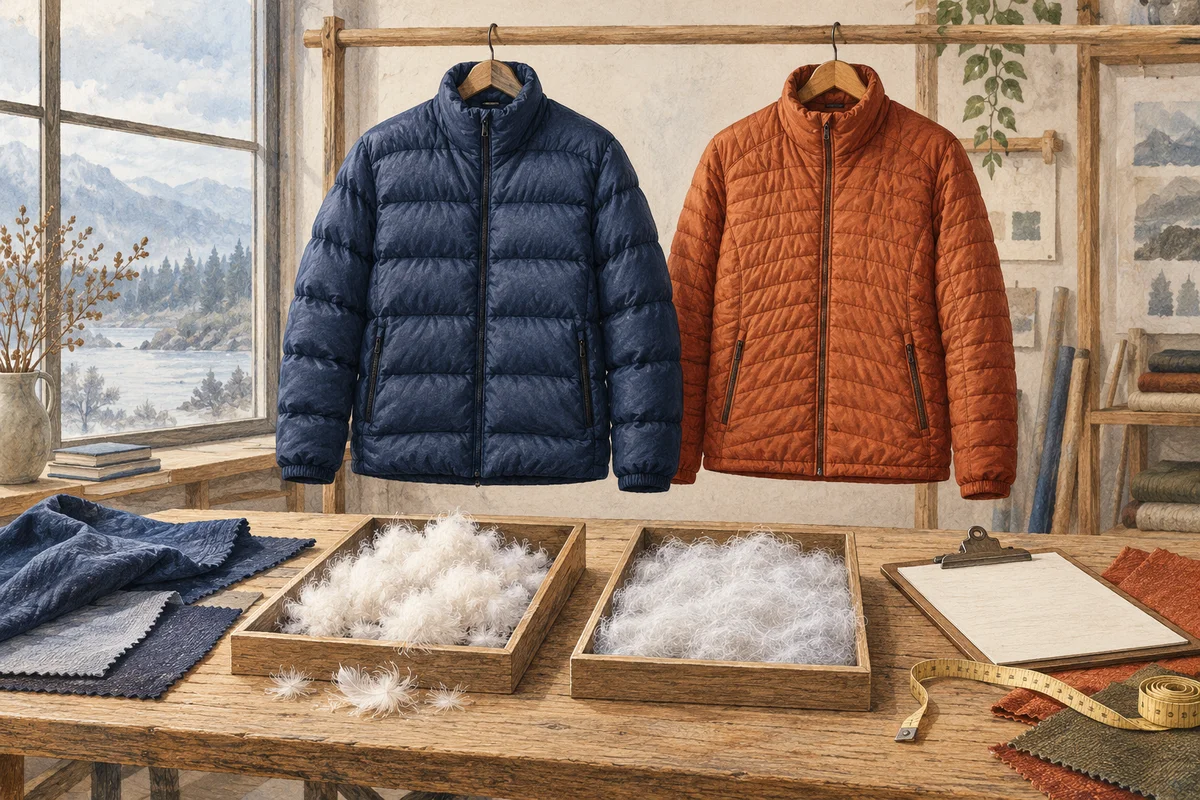
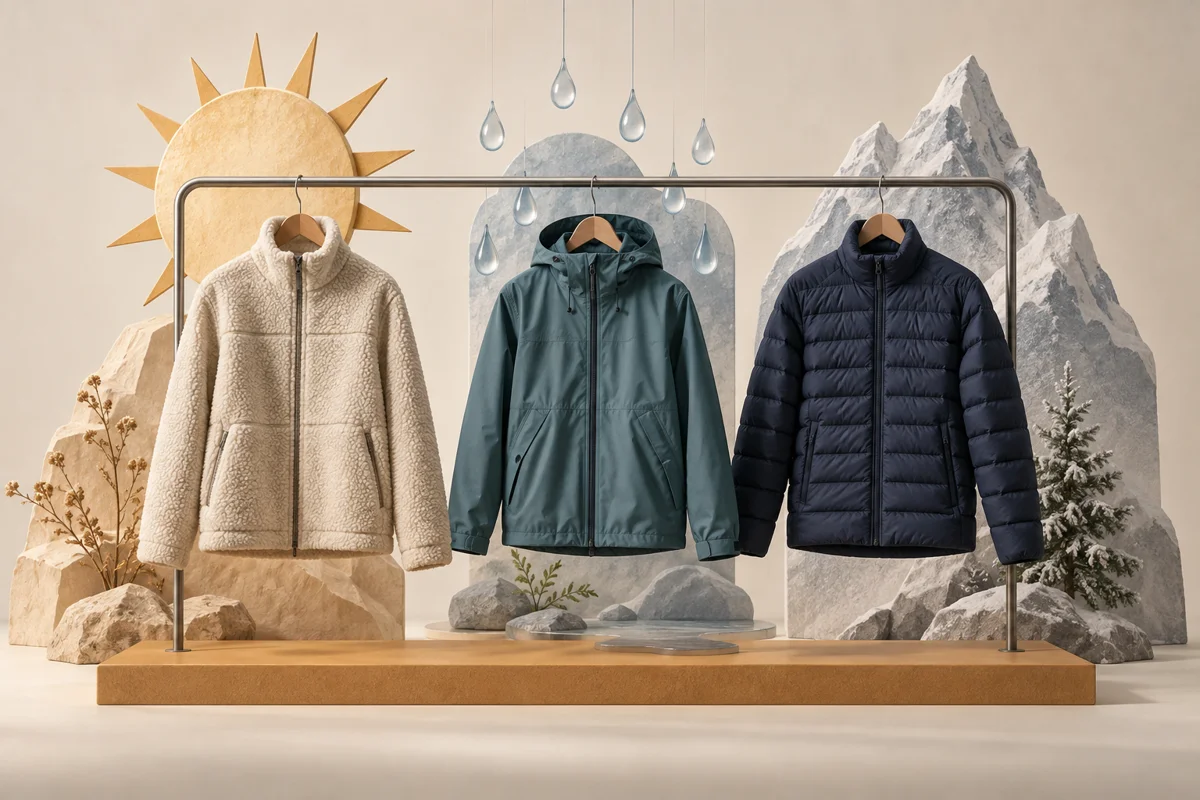
Publisher perspective: Brand Sauce publishes this guide. The selection process and examples below are editorial recommendations, not product testing or measured customer outcomes. Manufacturer guidance was checked September 19, 2026. Brand references are educational and do not establish current Brand Sauce availability or a commercial partnership. The hero is AI-generated conceptual artwork, not a photograph of offered products.
1. Write the use case before the shopping list
Give each candidate jacket a job. “Everyday layer for employees who move between a climate-controlled office and a short commute” is a usable brief. “Premium jacket for everyone” is not: it hides disagreements about warmth, appearance and intended use until after the order.
Ask a small cross-section of recipients three questions: Where would you wear a company jacket? What do you normally wear underneath it? What would stop you wearing it? Invite answers about sleeve length, hood preference, texture and ease of washing—not just color.
Do not turn this into a request for everyone's measurements in a shared spreadsheet. At the assortment stage, you need the range of requirements. Individual sizing can happen privately when recipients choose, with a support route for anyone who cannot find a suitable option.
| Use case | Starting direction | What to test |
|---|---|---|
| Cool office and short, mostly dry commute | Fleece or a light everyday layer | Comfort while seated, sleeve feel and room over normal work clothes |
| Walking commute with frequent rain | Waterproof shell with room for a separate layer | Documented rain protection, hood adjustment and pocket access |
| Mild, changeable weather | Soft shell, if its specifications match the intended exposure | Movement, comfort and the limits of weather protection |
| Cold-weather everyday use | Insulated jacket or a coordinated layering option | Bulk, hem coverage and comfort over the recipient's usual layers |
| Team spread across climates | Two or three approved choices with different jobs | Equivalent program treatment, size coverage and clear choice guidance |
These are starting points, not performance certifications. A product's actual construction matters more than the category name. If the clothing must satisfy a workplace safety requirement, let the responsible safety or procurement owner specify it separately; a company-gift selection process should not make that decision.
2. Separate warmth from weather protection
A warm jacket and a rain jacket solve different problems. Patagonia's layering guide distinguishes the moisture-managing base layer, insulating middle layer and weather-protective shell. For company merchandise, the useful implication is simple: ask which missing function the gift should provide, rather than expecting one item to do everything.
For example, a recipient who already owns a winter coat might prefer a layer to wear underneath it. Another might value a packable outer shell more than additional insulation. These are hypothetical recipient needs, not evidence that any particular jacket will be universally popular.
Be precise about water protection. Patagonia's explanation of hard shells and soft shells describes waterproof hard-shell construction and the different balance of comfort and weather resistance offered by soft shells. A water-repellent finish alone is not proof that the whole jacket is waterproof. Do not upgrade a supplier's “water-resistant” description to “waterproof” in your store copy.
Keep the product description tied to the exact style. Ask for its stated weather-protection features and any relevant limitations. Avoid translating an unfamiliar technical number into a promise such as “keeps everyone comfortable all winter.” A company buyer does not need to invent a temperature rating to explain a jacket clearly.
3. Build a small choice architecture
Start with distinct roles: an everyday layer, a wet-weather option and, where relevant, an insulated option. If two candidates solve the same problem with almost identical fit and price, ask whether both are earning their place. A dozen similar jackets can create more evaluation work without addressing an additional recipient need.
On the other hand, apparent duplication may be useful when the second style provides a different cut or size range. Judge the assortment by who it serves, not by how tidy a three-product grid looks. Do not remove the only suitable option for part of the team merely to simplify the page.
Write a one-sentence “choose this if” description for each approved style. Follow it with the relevant limitation: intended layering room, care requirements or the distinction between water resistance and waterproofing. Use factual, supplier-supported language rather than “best,” “ultimate” or “all-weather.”
Keep funding understandable. If the organization covers one jacket, define whether every approved choice is fully covered, whether an upgrade requires employee payment, and whether shipping is included. An option that unexpectedly requires a personal payment at checkout is not the same experience as a fully funded gift. Our guide to letting employees choose their gifts explains the broader case for recipient choice.
4. Treat fit as a product requirement
Do not copy last year's T-shirt size list into a jacket order. Request the exact manufacturer's size chart for each proposed style, including its measurement instructions. Make clear whether the chart describes body dimensions or finished garment dimensions; those are not interchangeable.
A product-page size menu is only the first check. Ask the supplier to confirm availability in the actual color and sizes you intend to offer. Record any gaps before announcing the program. An inclusive size range on a general brand page does not prove that one particular jacket can be supplied in that range.
Use a try-on process that reflects intended wear. Ask participants to bring the sort of layer they normally wear underneath. Have them sit, reach forward, raise their arms and use the pockets. Record specific observations such as “cuff catches when typing” or “hem rides up when seated,” rather than a general thumbs-up.
Let recipients choose among available cuts without assigning them based on a roster label. Explain the fit differences using the manufacturer's language and offer private assistance. If someone cannot find an appropriate size or silhouette, have an approved equivalent or alternative-gift route ready before ordering opens.
5. Approve the decorated sample, not only the blank
A good blank jacket is not the finished gift. Ask your decorator to confirm that the proposed artwork, placement and application method are suitable for the exact garment. Review a physical decorated sample whenever practical, especially before a large commitment.
Start with the placement employees will actually see and feel. Is the logo balanced on smaller as well as larger garments? Does it compete with a zipper or pocket? Is the inside comfortable? Ask whether the application affects any stated performance or warranty conditions and request a documented answer; do not assume those conditions remain unchanged.
Our embroidery-versus-printing guide covers the method decision in more detail. Here, the approval task is to establish that this particular jacket, artwork and method work together.
| Sample check | Evidence to retain | Decision |
|---|---|---|
| Garment identity | Style number, color, size and supplier specification | Matches the proposed order |
| Fit and movement | Comments from representative try-ons with normal layers | Accept, offer another cut or replace the style |
| Decoration | Approved artwork size, location, method and sample photographs | Approve exact combination or request revision |
| Care | Manufacturer label plus decorator instructions | Instructions are compatible and practical |
| Availability | Current confirmation for the approved size/color range | Launch, limit the offer transparently or substitute before launch |
Keep one decision owner. Feedback from several departments is helpful; five people independently approving different logo sizes is not. Store the approved reference with a date and require a new review if the garment, artwork or decoration method changes.
6. Make care part of the buying decision
Read the care label while comparing candidates, not after employees report a problem. Helly Hansen's shell-jacket care guide emphasizes following the garment label and gives specific cleaning and drying guidance for technical outerwear. It also cautions that excessive heat can damage seam taping on some synthetic garments.
That does not make one set of washing instructions universal. Ask for care guidance that covers both the selected jacket and its decoration. If those instructions conflict or are unclear, resolve the issue with the supplier before approving the item.
Place a short care note on the product page and include a route to the full instructions. Consider whether the maintenance fits the intended audience. A technically sophisticated jacket may be right for one program, while a simpler everyday garment is a more practical appreciation gift for another.
7. Choose on-demand, bulk or hybrid after the product brief
On-demand ordering is worth evaluating for ongoing employee choice, scattered start dates and uncertain size demand. It reduces the need to guess the final size mix in advance. But confirm that each chosen jacket and decoration combination is eligible, what the production estimate covers, and how stock changes are handled.
Bulk can be appropriate when the recipient list, sizes and delivery date are settled, or when the chosen product requires a production minimum. Request the quote for the actual quantity and specification. A lower unit price does not answer what happens to surplus jackets, replacements or late joiners.
A hybrid arrangement might use a confirmed group order for an annual event and an ongoing store for later hires. Check whether repeat orders can use the same style and decoration specification. Do not promise a perfect match indefinitely if the underlying garment may change.
Compare the full order: garment, decoration, samples, shipping, applicable tax, any program fees and the agreed handling of problems. For the broader tradeoffs, see on-demand versus bulk swag. There is no automatic winner without the actual quantities, destinations and service requirements.
8. Use a jacket-specific launch checklist
- Purpose: Each jacket has an identified everyday use and a clear “choose this if” explanation.
- Coverage: The approved options address the team's climates, fit needs and alternative requests.
- Evidence: Specifications, size charts, care instructions and current availability are saved by style.
- Approval: The finished decoration has a named approver and retained reference.
- Funding: Employees can see what is covered before checkout, including any shipping or upgrade charges.
- Exceptions: Wrong size, defect, damaged shipment and unavailable-item policies are explained separately.
- Timing: Order deadlines distinguish production from transit and do not imply an unconfirmed arrival guarantee.
- Support: There is one obvious contact and a process for resolving cases that the standard menu cannot handle.
After the first orders arrive, collect feedback on fit accuracy, usefulness and the clarity of the selection process. Track which issues require a different product versus better instructions. Redemption tells you that someone ordered; it does not establish how often they wear the jacket.
Company jacket FAQs
Is a soft shell the safest all-around choice?
Not automatically. Evaluate its specific weather protection, fit and intended use. It may suit a mild-weather everyday brief, but do not substitute it for a verified waterproof requirement or assume it supplies the insulation someone needs.
Should everyone receive the same jacket?
Only if the common style genuinely fits the program. A coordinated color palette and decoration treatment can preserve a consistent brand appearance across different garments. Decide how much uniformity is necessary before removing useful choices.
Can employees exchange a decorated jacket that does not fit?
That depends on the supplier's terms and your program policy. Confirm size-selection errors separately from defects and incorrect fulfillment. Publish the answer before ordering and avoid borrowing an exchange promise from the retail version of the garment.
Which jacket brand should we choose?
Shortlist exact styles against the brief, then compare samples, fit coverage, care, decoration suitability and delivered cost. Brand preference can be part of employee choice, but a recognized name alone does not establish suitability or current availability.
Planning an outerwear collection? Bring the use cases, required size coverage and timing to a Brand Sauce program conversation. Those details make a useful shortlist possible before anyone falls in love with the wrong jacket.