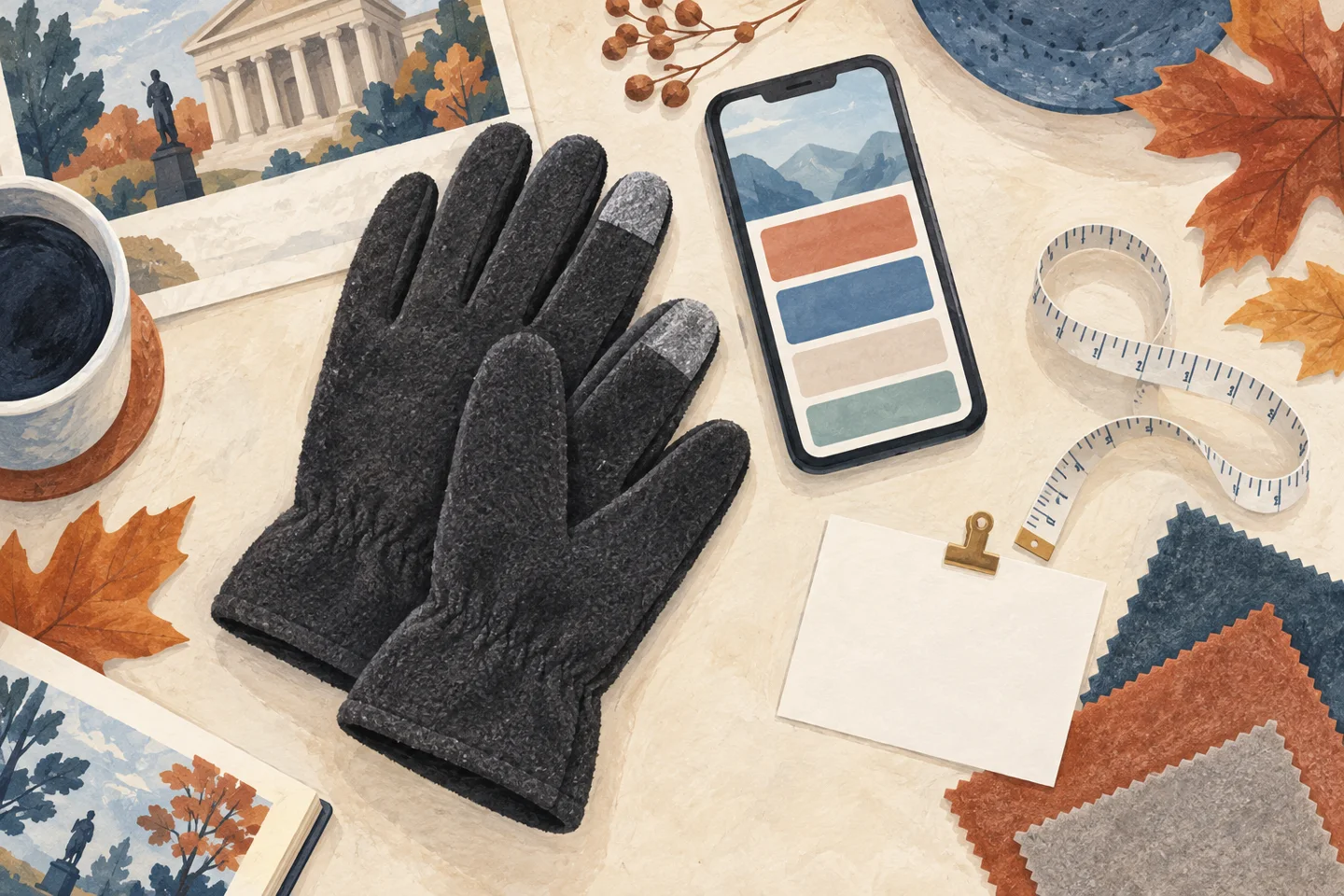
“Touchscreen-compatible” is a starting specification, not proof that a glove will handle your team’s actual phone tasks. Before ordering branded winter gloves, check which fingers are conductive, how the sample fits and whether staff can complete the intended task on their normal devices.
For a museum’s outdoor visitor-services team, opening a weather app and correcting a visitor’s email address are very different jobs. A glove that manages one large button may still be a poor choice for detailed screen work. Make the buying decision around the job—not a generic smartphone icon on a supplier sheet.
First, ask which fingers work
Touch capability is not necessarily spread across the whole glove. For example, The North Face’s Australian Denali Etip specification identifies the thumb and index finger as conductive. That is a model-specific specification, not evidence that every fleece glove or every finger works the same way.
Ask the supplier to identify the conductive areas on the exact model being quoted. Then watch how a wearer naturally uses the device: one-thumb tapping, index-finger tapping and two-finger gestures need different contact points. Do not approve a product description that promises more than its documentation and sample check support.
The Denali page is a manufacturer example, not a Brand Sauce catalog listing or confirmation of decorated availability. Its Australian retail availability does not establish availability for a US team. Country, color, size, decoration permission and delivered pricing all need confirmation in the supplier quote.
Check fit before blaming the phone
Use the selected manufacturer’s measurement instructions, not employees’ shirt sizes. Outdoor Research’s glove sizing guidance, for example, uses both hand circumference around the knuckles, excluding the thumb, and length from the base of the palm to the middle fingertip. Its product page also treats touchscreen compatibility, grip and weather protection as distinct features. Do the same in your selection brief.
For the sample fitting, have wearers bend their fingers, hold their usual device and reach its controls. Record loose fingertip space, uncomfortable tension or seams that make precise contact awkward. Trying another size is a useful diagnostic step; squeezing into a smaller glove solely to make tapping work is not a good acceptance rule.
These are proposed buyer checks, not findings from a Brand Sauce product test. Follow the actual sample’s care instructions and use your normal screen protector and case during the check.
A task trial sheet you can copy
Run this short trial with representative wearers and device models before approving a large order. Use a test account or dummy visitor details. Record the glove model and size, phone or tablet model, case, screen protector, wearer and date.
- Open: unlock the device using an available approved method, then open the required app. Record any point where the glove must come off.
- Tap: select the actual buttons used during a shift, including smaller controls—not just the largest home-screen icon.
- Swipe: scroll a list and stop at the intended entry. Try a two-finger gesture only if the job requires it.
- Correct: enter a short dummy name, deliberately make a typo and correct it. This separates occasional navigation from detailed entry.
- Hold: use the device in the normal working position, checking whether the wearer can keep a comfortable grip while reaching controls.
- Repeat: repeat the required tasks with the final decorated sample. Confirm that branding does not cover conductive areas or interfere with stretch, grip or the cuff.
For each task, mark completed comfortably / completed with repeated retries / glove removed / not required. Add one sentence describing the failure. This is a practical comparison sheet, not a laboratory rating or a universal compatibility certification.
Turn the results into an honest choice
Approve for the stated task when required actions work comfortably across the representative setups you checked. Describe that limited use case rather than claiming compatibility with every phone.
Retest another size or model when one wearer struggles, fingertip fit is visibly poor or the required gesture uses an unsupported finger. Keep the successful and unsuccessful results together.
Choose another gift or workflow when the job involves sustained typing and the samples require frequent removal. A winter accessory can still be a good optional employee gift without becoming mandatory work equipment. Our employee gift preference survey guide helps separate those two needs.
Illustrative decision: a museum tests gloves for outdoor hosts who occasionally open a map, while ticketing staff enter visitor details on tablets. If the trial supports map navigation but not comfortable text correction, the museum can offer gloves to hosts without presenting them as a solution for ticketing. Those are hypothetical results, not customer evidence.
Keep warmth and any required workplace protection in a separate approval decision: touchscreen compatibility alone does not establish either. For the broader cold-weather wardrobe, see our company jacket selection guide. Use the decorated apparel sample approval process to retain the agreed glove model, size range, logo location and substitution rule before orders open.
AI-generated editorial illustration; not a stocked product or a product test. Manufacturer specifications checked October 2, 2026.