A mug’s ounce capacity does not tell you whether it fits under the office coffee machine. Check the vessel’s height in its brewing configuration, its footprint on the support and the space needed to get the filled mug out. Then check that the selected drink actually fits inside it.
For an office welcome gift, “works with the break-room brewer” is a useful requirement. “Large enough for coffee” is not a complete specification. A short, wide ceramic mug and a tall travel tumbler can hold similar amounts while behaving very differently at the machine.
Start with the exact machine and tray position
Record the machine model at each intended location—not just the brand. Find its current instructions and identify the permitted cup-support configurations before measuring.
For example, the Keurig K-Express Essentials Gen2 use-and-care guide specifies accommodation for travel mugs up to 7.25 inches tall with the drip tray removed. Its brewing instructions place the travel mug on the drip-tray base. That is a model-specific arrangement, not a universal Keurig clearance or permission to remove parts from another machine.
The Nespresso Vertuo Plus and Vertuo Next manual identifies an adjustable cup support. The useful buying question is therefore not merely “How tall is the gap?” but “How tall is the gap in the support position people will actually use?”
These official examples were checked October 9, 2026. They illustrate why configuration matters; they are not a recommendation to buy either machine or a verified Brand Sauce product shortlist.
Check three dimensions, not one
- Height: measure from the permitted surface supporting the mug to the lowest obstruction along its insertion and removal path. Compare that with the actual vessel, normally with a removable drinking lid off for filling, subject to its instructions. A supplier’s overall height may include the lid.
- Footprint: check the mug’s base against the usable support area. A mug that clears the spout but rocks, overhangs precariously or cannot sit beneath the outlet is not approved.
- Handle and body clearance: confirm that the handle clears the housing and the person can grasp it. A wide rim or flared body can encounter an obstruction even when the base fits.
Begin with the machine off and cool and an empty sample. Do not force the mug into place, modify the machine or lift the brewer onto an improvised riser. A design that must be tilted to squeeze out while full is a poor match for a shared coffee station.
There is no universal extra-clearance allowance established by this checklist. Treat a paper comparison with almost no room to spare as a reason to obtain a sample, not as a confirmed fit. Ask the mug supplier about dimensional tolerances rather than assuming every unit is identical to a rounded catalog measurement.
Physical fit and drink capacity are separate checks
Once the mug sits correctly, confirm that the intended brew setting leaves appropriate room for additions and handling. Do not equate a vessel’s advertised capacity with the amount an employee should fill it to.
Illustrative example—not a product test: suppose the intended drink is 10 US fluid ounces of coffee plus 2 US fluid ounces of milk. That is already 12 US fluid ounces before allowing any headspace. An advertised 12-ounce mug is not automatically a suitable choice. Request the usable fill guidance for the exact mug and evaluate the intended drink; do not assume that jumping to the next nominal size also solves machine clearance.
If the office has changed a programmable dispense setting, record the actual setting used for approval. A mug approved for one drink size should not be presented as suitable for every button on the machine.
Copy this break-room mug fit card
Use one record per mug-and-machine combination. This is an original purchasing checklist, not a standardized laboratory test or a test Brand Sauce has conducted.
- Identify: location ___; brewer model/version ___; instruction link ___; mug supplier/model ___; sample revision ___.
- Configure: approved tray/support position ___; any permitted adjustment needed ___; mug lid state during filling ___.
- Measure: available height ___; sample height ___; sample base dimensions ___; supplier tolerance or unknown ___.
- Dry-check: sample stands flat ___; outlet aligns over opening ___; handle is accessible ___; empty mug goes in and out without contact or awkward tilting ___.
- Confirm ordinary use: after the dry check passes, follow both manufacturers’ instructions for a normal brew at the intended setting. Record drink size ___; additions ___; acceptable fill level ___; splashing or removal problem ___.
- Decide: approved as normally configured / approved with a stated permitted adjustment / not approved / unresolved. Reviewer and date ___.
Photograph the sample sitting on the approved support and retain the record with the purchase specification. For several offices, do not extrapolate one successful combination to a different brewer.
What to buy when the sample does not fit
If it fits only after an allowed tray adjustment: decide whether that extra step suits a shared station. If you approve it, name the adjustment in the location’s instructions; do not describe the mug as a drop-in fit.
If it fails height or removal clearance: request a shorter vessel and recheck capacity. If it fails the footprint or handle check, changing height alone will not resolve the problem.
If employees want a tall commuting tumbler: offer it as a separate use-case choice, without promising direct brewing at every office. Our employee drinkware guide covers the broader lid, transport and handling decisions.
Send the approved dimensions and machine-fit record with the sourcing brief. Exact branded product availability, destination coverage and delivered price need confirmation in the quote. Approve care requirements separately using the finished-drinkware care checklist; fitting beneath the spout does not establish dishwasher suitability.
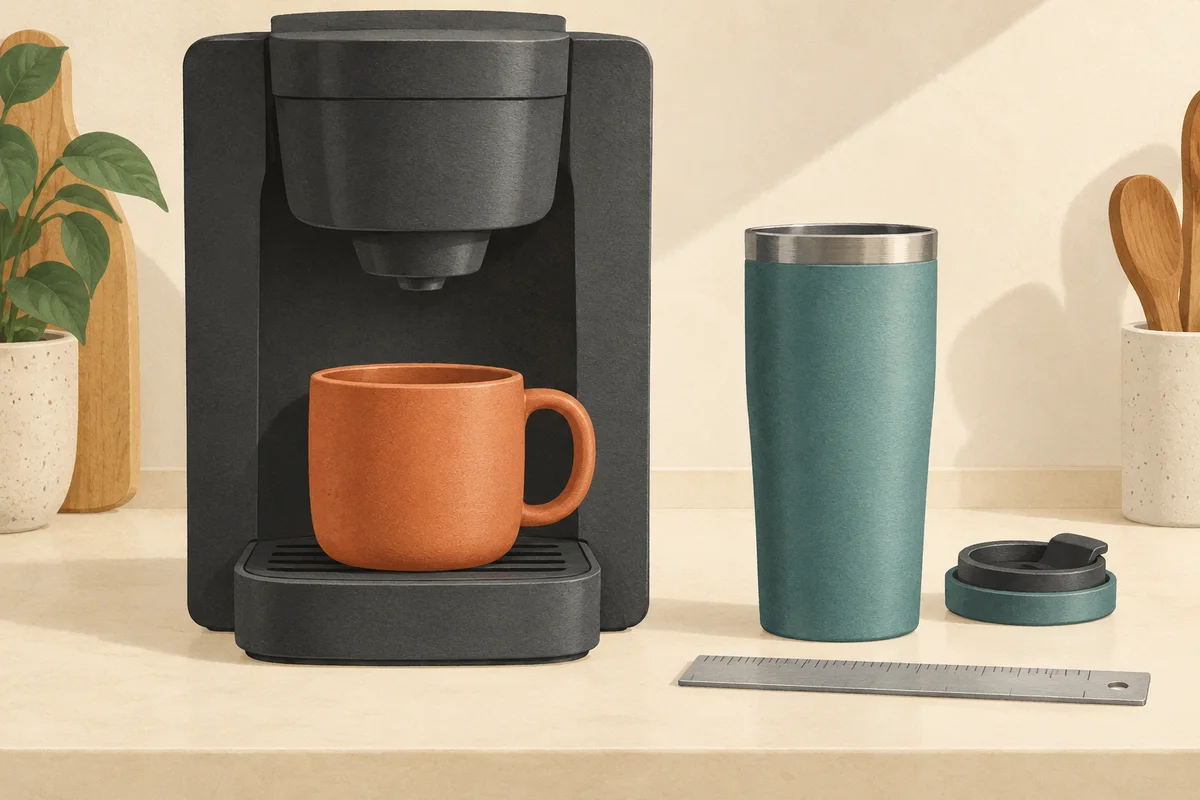
Image: AI-generated editorial illustration of a generic coffee station, not a customer photograph, product recommendation or fit-test result.