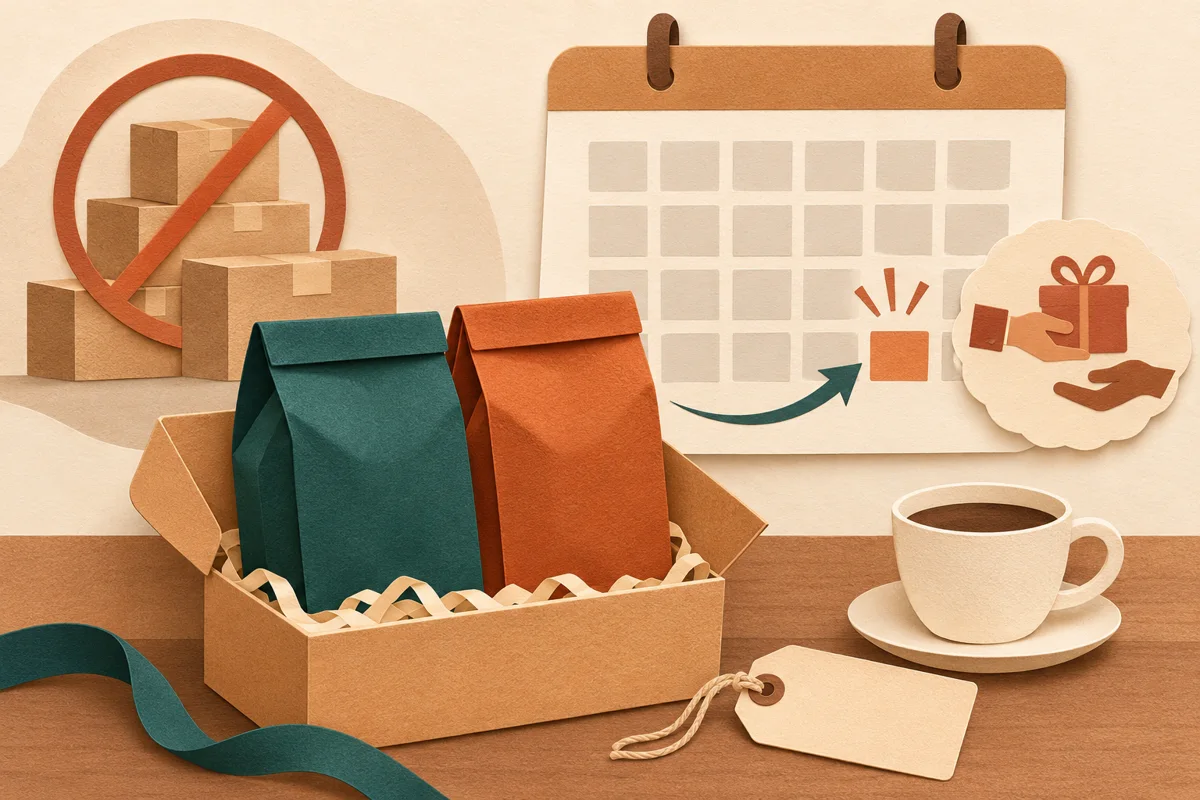
Reserve the gift program early; do not automatically take delivery of all the coffee early. For holiday coffee gifts, work backward from when recipients will open the bags, not just when the cartons must reach your office. A sealed bag’s best-by date and the roaster’s preferred flavor window answer different questions.
This is especially useful for a company handing out gifts across several December events. Coffee arriving in November may fit the supplier’s stated shelf life yet miss the flavor experience you intended by the time the last recipient starts brewing. The buying decision is whether to accept one delivery, split it into batches, or remove coffee from the early-packed kit.
Do not turn one freshness number into a universal deadline
Partners Coffee’s expiration guidance recommends using its beans within four weeks of roasting while separately describing a shelf life of up to six months. It also says direct website or app purchases carry a roast date, whereas third-party retail bags carry a best-by date. Even within one brand, the purchase channel changes which date the buyer sees.
Starbucks’ coffee-storage guidance describes roughly one week of peak freshness after a bag is opened and recommends protection from air, light and heat. That is an after-opening reference, not an instruction to reject every unopened bag more than a week old.
These are manufacturer-specific examples, not Brand Sauce product offers or a universal expiry rule. Ask the supplier to identify the exact coffee, packaging, date meaning and intended flavor window for your order. Do not derive a roast date by subtracting an assumed number of months from a best-by date.
Build a three-date handover check
- Supplier date: what roast or best-by date will the actual delivered batch carry? If the batch has not been produced, agree a written acceptance condition rather than accepting a sample bag’s date as a promise.
- Recipient date: when will the last person receive and realistically open the gift? Include office closure, travel, onward shipping and delayed collection. Arrival at your packing desk is not handover.
- Use-through date: how much time should the recipient have to enjoy the bag? A large bag is not automatically the more thoughtful choice if it creates pressure to finish it.
Keep format selection separate: use the whole-bean versus ground gift checklist to confirm the recipient’s brewing setup. Choosing whole beans does not solve an overly long storage plan, and choosing ground does not justify guessing a universal shelf life.
Worked example: the last handout controls the order
Illustrative planning example, not a product test: assume a supplier confirms a 28-day roast-to-use quality target for the selected bag. The planned roast date is November 23. One group will open its gifts on December 4; a second group will open them on December 18. You want to leave each recipient seven days to use the coffee.
- First group: 11 days from roast to opening, plus 7 days to use = 18 days. This fits the assumed 28-day target.
- Second group: 25 days from roast to opening, plus 7 days to use = 32 days. This does not fit the same target, even if the unopened bag remains within a longer stated shelf life.
The remedy is a later confirmed batch for the second group, a different supplier-supported product plan, or a non-coffee alternative—not relabeling the old bags. Actual transit and roast scheduling must be confirmed before committing. The 28-day and seven-day inputs are planning assumptions here, not Brand Sauce guarantees.
Choose the delivery route
- One fixed handout: one batch can work when the supplier’s confirmed dates cover storage, distribution and the intended use period. Arrange receiving space before shipment.
- Several handout dates: ask for separate dated batches. Confirm minimum quantities, freight, packing costs and whether a later dispatch actually means a later roast—not merely later release of the same stock.
- Uncertain collection or long kit assembly: prepare the nonfood components early and add the coffee later, if the packing operation supports it. Otherwise offer a separately fulfilled choice or a nonfood gift. Do not promise split fulfillment until a provider confirms it.
Copyable coffee-batch acceptance note
Exact coffee / format / bag weight: ___
Supplier and recipient country: ___
Original packaging and date label: ___
Confirmed quality guidance for this product: ___
Acceptable delivered batch dates: ___
Office arrival / last handout / likely opening: ___
Recipient use period allowed in the plan: ___
Storage location and responsible person: ___
Action if the delivered batch misses the agreed dates: ___
Later-batch quantities, dispatch dates and quoted costs: ___
At receiving, compare the actual bags with that note before assembling the kits. Keep original packaging intact and date information readable; use an outer gift sleeve rather than transferring beans into decorative jars just for presentation. Follow the product’s storage directions. If dates fail the agreed condition, hold the affected batch and resolve it with the supplier.
For colleagues who do not want coffee, keep a genuine alternative available through your food-versus-nonfood gift plan. Coffee sourcing, country availability, packaging services and all unconfirmed costs remain quote-needed. The useful approval is a dated handover plan, not a promise that every sealed bag is equally fresh.
Illustration: AI-generated editorial artwork, not a photograph of an available coffee gift or a freshness test.