A lapel pin that stays attached can still turn sideways. Before buying a stronger clutch, check whether the design needs a second post—and whether the intended garment can support the pin. Holding on and staying upright are two different approval questions.
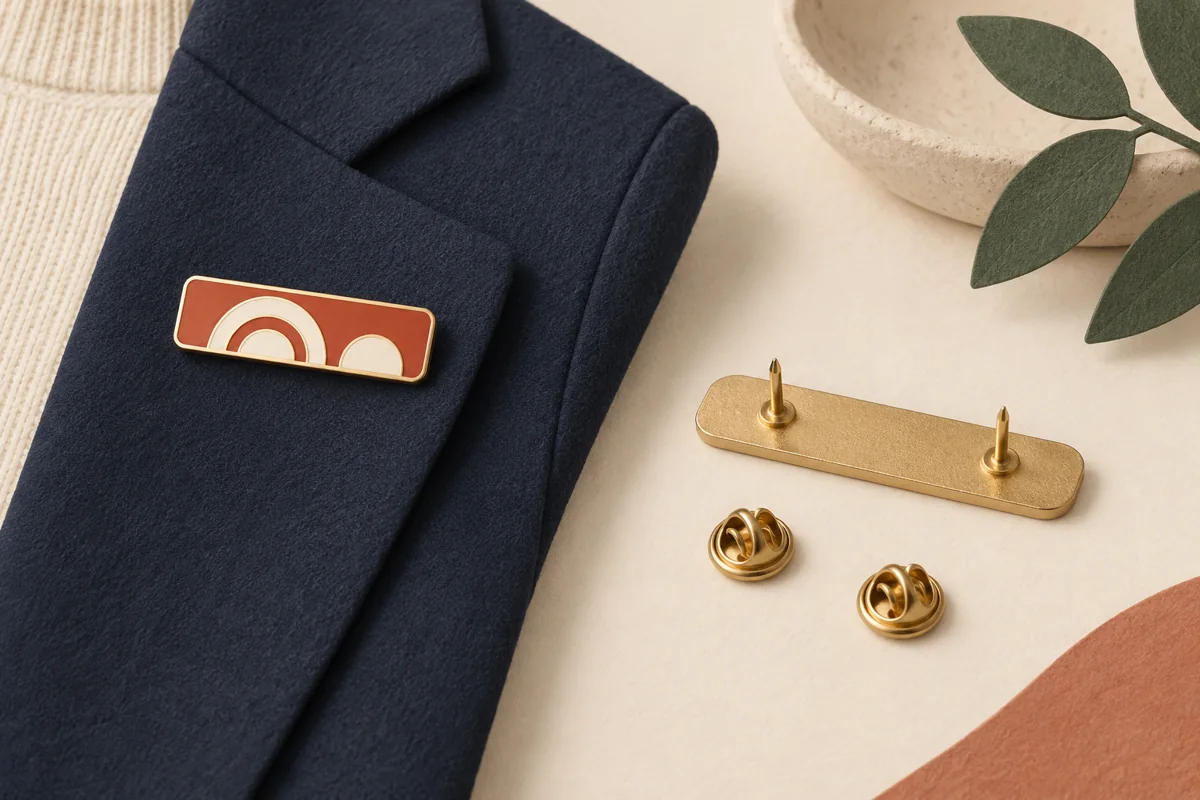
For a museum’s volunteer-recognition pin, a wide wordmark may look perfect on a flat artwork proof but read poorly when it tilts on a cardigan. Approve the back of the pin with the same care as the front.
Is it rotating, sagging or coming loose?
- Rotating: the pin remains against the garment but the design turns around its attachment point. Ask about a two-post construction before changing only the clutch.
- Sagging: the pin pulls the fabric downward or tips away from it. Try the sample on the actual garment; a different support arrangement or a smaller, lighter design may be needed.
- Coming loose: the clutch slips off or does not engage correctly. Ask the supplier to check the post-and-clutch combination and demonstrate proper attachment and release. Adding a second post is not a repair for faulty hardware.
These are sample-review categories, not a remote diagnosis of a particular product. More than one problem can occur at once.
When should you request two posts?
Signature Pins’ attachment guide recommends a double butterfly clutch for large or custom-shaped pins and explains that a single post can allow drooping or spinning. It separately describes a deluxe clutch with a locking mechanism. That distinction matters: a locking closure addresses retention, while the position and number of attachment points affect how the design is supported.
Our buying recommendation is to request a two-post sample when a wide logo, horizontal lettering or an asymmetric shape must maintain its orientation. Do not assume every small round emblem needs two posts. Ask the maker to propose post positions for the exact outline, then evaluate the finished sample.
The trade-off is tangible: two posts mean two punctures and two closures to handle. Confirm that both fit within the intended lapel or garment panel. A drawing of the pin’s front cannot establish that.
Check the garment before approving the hardware
The manufacturer’s current attachment options page also distinguishes post-and-clutch fasteners from safety-pin-style attachments, which it suggests for dense fabrics such as heavy sweaters and outerwear. This is a supplier’s construction recommendation, not evidence that any backing works with every fabric.
For a mixed volunteer wardrobe, include the thinnest and thickest permitted garments in the review. If holes are unacceptable, stop evaluating piercing attachments for that garment. Choose a different display location or ask for a separately assessed non-piercing option; do not quietly substitute one and assume the original approval still applies.
These manufacturer pages were checked October 9, 2026 for attachment guidance. They are not a verified Brand Sauce catalog shortlist. Sourcing, destination availability, final hardware and delivered pricing for a custom order remain quote-needed.
Copy this upright-pin approval card
Use one card for each design-and-garment combination. This is a proposed buyer check, not a standardized durability test or a test Brand Sauce has performed.
- Record the sample: design revision, finished dimensions, supplier reference, number and position of posts, and clutch type. Photograph front and back.
- Attach as instructed: use the intended garment and location. Confirm that each closure fully engages without forcing or bending a post.
- Set the orientation: take a straight-on photo with the wearer standing naturally. Agree what “upright enough” means for this artwork before evaluating it.
- Try ordinary movement: have the wearer sit, stand and reach as they would during the event. Check orientation again without straightening the pin first.
- Check handling: ask the wearer to remove and refit it using the supplier’s instructions. Record discomfort, difficult closures, fabric pulling or visible marking.
- Make the decision: approve for this garment, request a revised sample, or choose another format. Keep unresolved combinations out of the approved order.
Release record: Sample/revision ___; garment/location ___; orientation acceptable ___; closures engage ___; wearer can remove/refit ___; fabric condition acceptable ___; decision ___; reviewer/date ___.
If the front artwork changes after approval, ask whether the new outline, dimensions or post layout needs another sample. Use our logo-file handoff checklist to identify the exact artwork revision. If the real goal is a permanent uniform mark rather than a removable recognition gift, compare patches and direct embroidery before committing to pins.
Image: AI-generated editorial illustration, not a supplied-product photograph or evidence of a wear test.