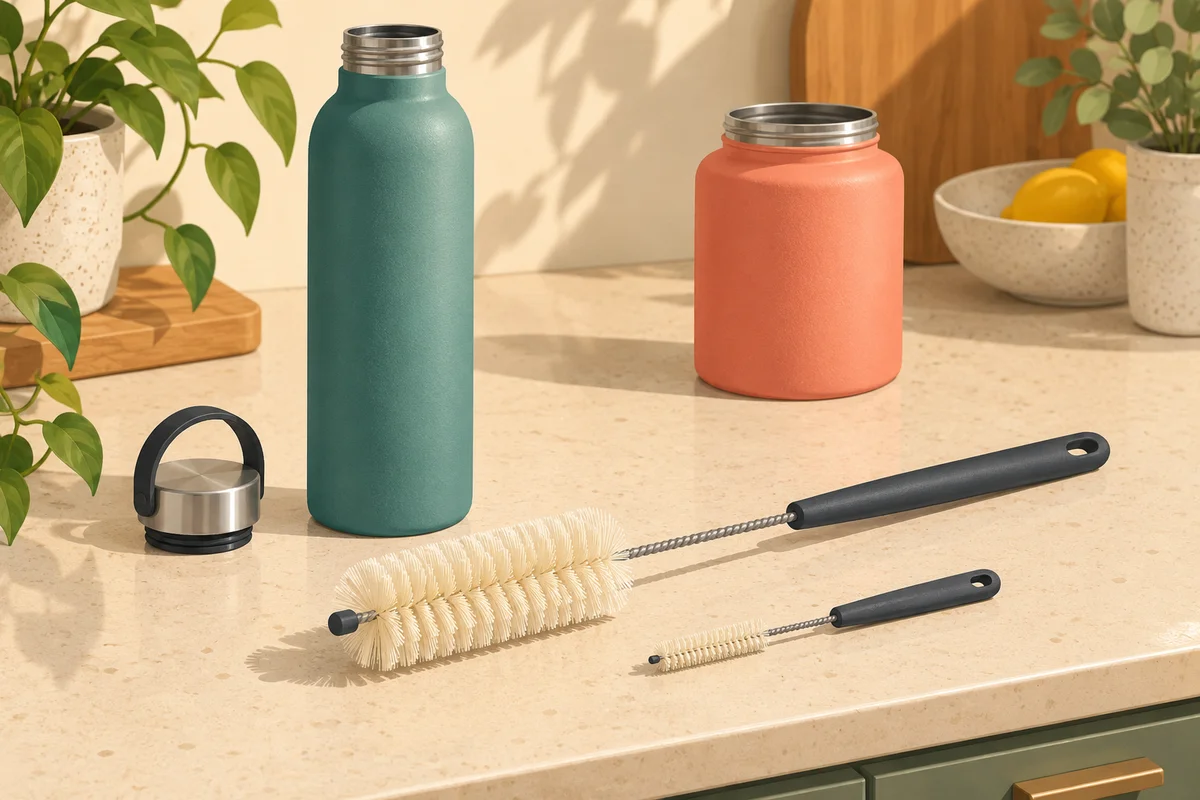
If you add a cleaning brush to a branded bottle gift, approve the pair together. A brush can pass through the opening yet fail to reach the base, or reach the base while leaving the shoulders untouched. Overall brush length alone cannot settle the choice.
For a cycling club's volunteer thank-you bottle, the useful extra is a tool recipients can actually use—not simply another item that fits in the gift box. Here is a purchasing check for matching the brush to the vessel before committing to the bundle.
Three fit questions, not one measurement
- Entry: Can the bristle head and its rigid core pass through the narrowest part of the opening and come out again without force? Compressible bristles do not make an oversized core smaller.
- Reach: Can the cleaning end contact the bottom while enough handle remains outside for a comfortable grip? The quoted overall length includes the handle; it is not necessarily usable cleaning reach.
- Coverage: Can the head contact the bottom edge and the underside of a shoulder, rather than only the straight sidewall? A slim brush that enters easily may still miss those surfaces.
Measure the bottle's clear opening and internal depth as an initial screen. Then request the brush's head/core dimensions and usable reach. Do not invent a universal clearance allowance: bristle flexibility, head shape and bottle geometry change the result.
What manufacturer specifications can—and cannot—settle
Hydro Flask's Bottle Brush page describes nylon bristles, a non-slip grip and bristles that fit its vessels. That is a manufacturer-specific compatibility statement, not proof that the brush fits every other brand's bottle. The page also marks the brush dishwasher safe; this does not establish the care instructions for a decorated bottle paired with it.
OXO's Good Grips Bottle Brush page describes a flexible neck, a shaped head for corners and bottoms, and a dishwasher-safe brush. Its feature and specification sections currently show different dimension sets. Ask which measurements describe the actual brush before using either to approve a bundle. Neither a product photograph nor a package dimension is a substitute for checking the pair.
These are examples of how to read supplier claims, not a verified Brand Sauce product shortlist. Confirm the chosen model, destination-country supply and any decoration separately; bundle pricing remains quote-needed.
A paired-sample approval card
Use this proposed checklist with the actual production bottle and brush. It is a fit review, not a validated hygiene test or a report of testing by Brand Sauce.
- Identify both items. Record bottle model, capacity, lid version, brush model and approved care instructions. Photograph them together.
- Try entry and withdrawal. With the cap removed, insert and remove the brush gently. Stop if the rigid core catches or the bottle rim is scraped. Do not force a fit.
- Check reach and control. Following the bottle maker's cleaning instructions, confirm that the head can reach the base while the reviewer maintains a useful grip outside the neck.
- Check the awkward surfaces. Review the bottom edge and shoulders. If contact cannot be established, mark it unresolved and request a different head shape or manufacturer confirmation—not an assumed pass.
- List the separate lid job. Identify straws, spouts and permitted removable parts using the exact lid instructions. A large bottle brush should not be treated as a universal tool for small passages. Do not pry out components the maker does not identify as removable.
- Record the decision. Approve the pair, change the brush, add the specified detail tool, or omit the accessory. Retain the sample and repeat the fit check if either model changes.
Our drinkware lid selection guide helps choose the drinking format first. The decorated drinkware care guide addresses the separate question of whether the finished bottle can go in a dishwasher.
When the brush fits but the kit is incomplete
Illustrative decision: a club chooses a tall bottle with a straw lid. The proposed brush enters comfortably and reaches the base, but its head cannot enter the straw. The purchasing decision is not “brush approved, cleaning covered.” It is “bottle-body fit approved; lid care unresolved.” Check the lid instructions, source a compatible straw tool if called for, and confirm how recipients should clean and dry each component.
If the extra tool complicates the bundle, reconsider the lid format or leave the brush out and provide accurate care instructions. An accessory earns its place by solving the actual maintenance task.
Image: AI-generated editorial illustration, not a product photograph or evidence of testing.