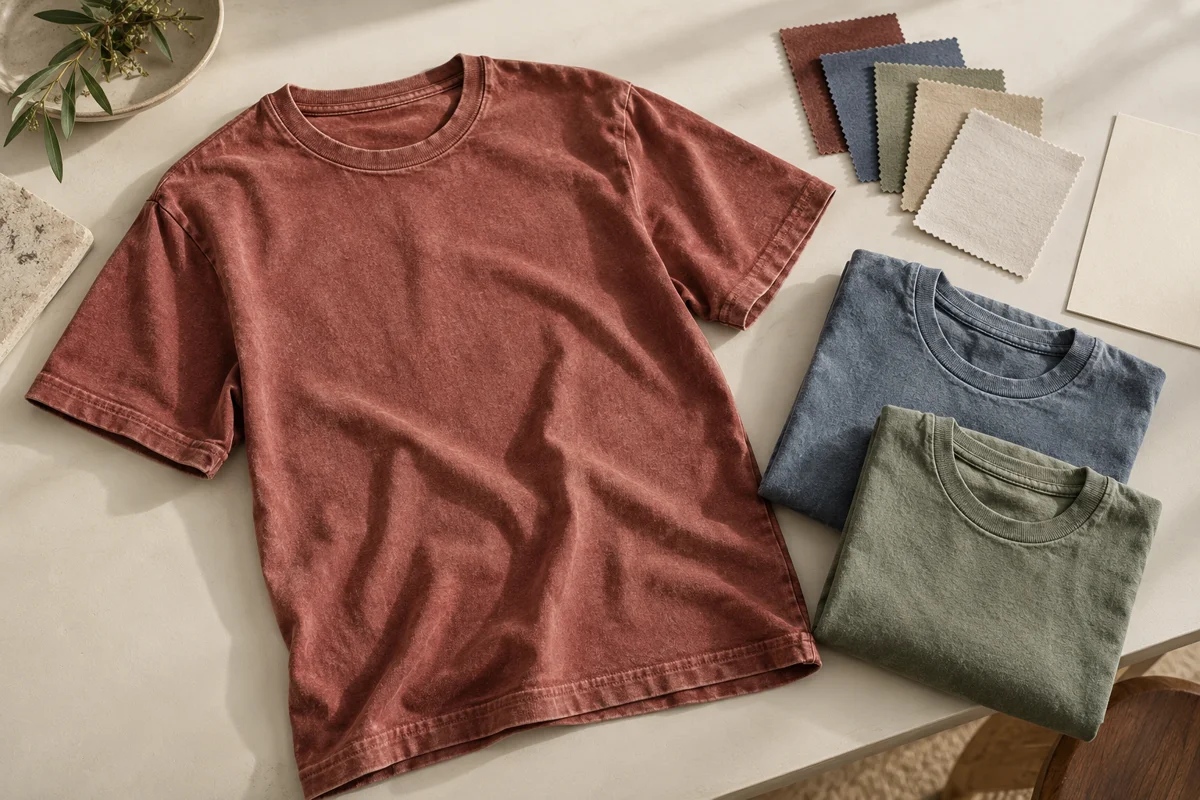
Choose garment-dyed company shirts when a relaxed, washed appearance is part of the gift—not when every new hire’s shirt must look identical to last year’s issue. The buying decision is less about whether garment dyeing is “premium” and more about whether your program can accept the exact product’s appearance, decoration behavior and care requirements.
A vintage-style employee tee and a tightly coordinated front-desk uniform have different jobs. Both can be well made. Start with the job, then approve a finished sample and a repeat-order plan. Do not buy a dye-process label as a substitute for those decisions.
Publisher perspective: Brand Sauce provides company-store services. This is our purchasing framework, not a claim that every garment, color or decoration method discussed is available through our stores. Exact availability, destination coverage, production minimums and pricing are quote-needed. Sources checked October 7, 2026.
Garment-dyed, pigment-dyed and washed describe different things
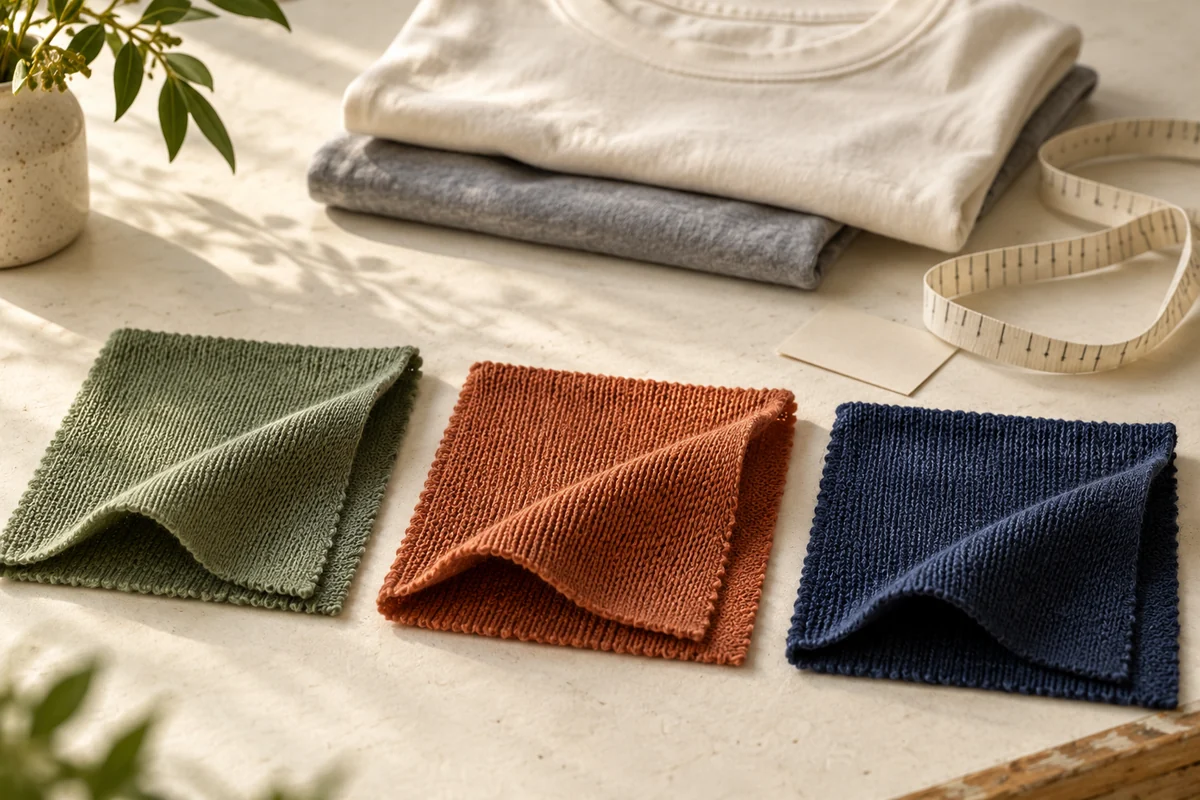
Garment dyeing identifies the production stage: color is applied to an assembled garment. Piece dyeing colors fabric before it becomes the finished shirt. Pigment describes a kind of colorant, not the stage when it is applied. “Washed” describes a treatment or appearance and does not, by itself, identify either the colorant or the production sequence.
Cotton Incorporated’s Textile Dyeing reference distinguishes dyeing at fiber, yarn, fabric and garment stages. It also explains that pigments need a binder to attach them to textile fibers, unlike dyes with affinity for the fiber. These distinctions matter because two shirts described as garment-dyed need not use the same coloration system.
Ask the supplier to identify the exact style and color’s treatment. Do not infer chemistry from a faded-looking photograph or assume every shade within a brand uses the same process. A catalog’s “vintage” description is useful aesthetic direction; it is not a complete technical specification.
Keep three questions separate: Do we like the blank’s appearance? Can our chosen decoration work on it? Can we operate the program around its care and reorder conditions? A yes to the first question does not answer the others.
Use the recipient’s job to choose the finish
| Program need | Starting direction | Approval condition |
|---|---|---|
| Optional lifestyle tee for employee appreciation | Consider a washed garment-dyed style | Recipients understand the intended appearance and have a suitable fit option |
| Customer-facing team expected to look closely coordinated | Start with a product specified for your consistency requirement | Supplier agrees to the appearance standard and replenishment process |
| One-time creative campaign or team gathering | Either approach can work | Approve the group’s finished look before committing to quantities |
| Always-on store with individual replacement orders | Favor products whose normal variation the program can accept | Future orders are not promised to match worn garments exactly |
| Workplace with a defined laundering process | Let the care requirement eliminate unsuitable candidates first | Finished garment and decoration support the required process |
This is not a claim that piece-dyed shirts are automatically uniform or garment-dyed shirts are automatically inconsistent. It is a selection rule: an intentional washed aesthetic should be an approved feature, while strict matching needs an explicit supplier commitment. If the buyer cannot accept a product’s documented variation, select another product rather than hiding the caveat.
For optional gifts, a second silhouette or a non-apparel alternative may be more useful than adding five similar colors. Fabric finish does not solve fit, sizing or personal preference. Keep the selection understandable enough that recipients can choose for themselves without needing textile terminology.
What a real product specification tells you—and what it does not
SanMar’s current Comfort Colors 1717 specification describes a 6.1-ounce, 100% US ring-spun cotton tee with soft-washed, garment-dyed fabric and a relaxed fit. It explicitly allows slight color variation in production and washing and flags special consideration when printing white ink on garment-dyed cotton.
Those statements make this a useful example of why the finished treatment needs approval. They do not establish that the style is available in every size, color or destination today, that every decoration method will work, or that Brand Sauce currently offers the exact combination. Check those commercial details separately.
Comfort Colors’ own brand story positions its pigment-dyed shirts around weathered, nature-inspired hues. Treat that as an aesthetic proposition, not proof that every employee prefers the look. A product can fit a casual appreciation collection and still be the wrong choice for a uniform program.
Do not transfer one product’s specification to an entire category. Garment weight, yarn, fit, finishing and decoration all deserve their own entries in the purchasing brief. “Make it like that soft vintage tee” leaves too much of the order undefined.
Approve the shirt and decoration as one product
Send the decorator the exact blank SKU, color name and artwork before requesting a production recommendation. Ask which method it supports on that combination and what limitations it expects. Do not prescribe a universal press temperature, ink formula or pretreatment from a generic internet guide.
A white logo can be visually simple while still needing technical consideration. The supplier warning above is a reason to request a finished sample, not a reason to conclude that white ink is impossible. Let the decorator explain the proposed process and how it will evaluate the result.
Review the logo’s opacity, edge definition and feel on the actual garment. Then ask how the decoration and fabric should be assessed after care. An attractive blank and a sharp digital mockup do not demonstrate that the completed product will meet your expectations after washing.
Write down the approved artwork revision and method. If a later supplier changes the blank, process or decoration materials, request reapproval of the affected combination. Our broader branded-apparel sample approval guide covers fit and construction checks; the additional issue here is how the dyed base behaves with the chosen finish.
A practical sample plan for a washed-look shirt
Use a small, documented comparison rather than a vague “looks good” approval. The following is a buyer screening procedure, not a laboratory certification or a claim that we have tested these products.
- Identify the samples. Record supplier, style, color, size, decoration method and date received. Ask whether the samples represent the stock intended for your order.
- Keep an untouched reference. Retain one approved finished sample away from normal wear. A repeatedly washed shirt should not become the sole standard for new production.
- Inspect the unwashed finish. Check the shirt and logo together, including seam appearance and any areas the supplier says may vary. Photograph observations, but keep the physical sample.
- Confirm care before washing. Obtain instructions for the decorated product, resolving any conflict between the blank’s label and decoration guidance with the supplier.
- Run the agreed care check. Record the actual washing and drying conditions and number of cycles. Compare appearance, measurements and decoration with the reference.
- Make a bounded decision. Approve the exact combination, request a change, or reject it for this program. Specify what remains unverified.
Agree in advance what would cause rejection: for example, an unreadable logo, an unacceptable change in dimensions or an appearance outside the supplier-approved range. Do not invent a universal fading allowance or shrinkage percentage. Ask the supplier for supported tolerances when your program needs them.
A satisfactory small sample is not proof that an entire future order is defect-free. It establishes a reference and reveals obvious incompatibilities before the commitment grows. For a high-consequence uniform order, ask about the supplier’s production inspection and dispute process as well.
Make the care instructions part of the selection
The 1717 specification cited above calls for washing inside out with like colors at a maximum of 30°C, low-temperature tumble drying, and no ironing or dry cleaning. Follow the current label and confirmed instructions for the actual decorated garment; do not reuse these directions for unrelated shirts.
The practical question is whether that care routine fits the recipient’s use. If a location has a prescribed laundry process, send that process to the supplier before choosing the blank. A soft gift tee should not quietly replace a work garment with a different care requirement.
Put essential care guidance where recipients can find it before ordering, not only on an insert after delivery. Explain any supplier-confirmed appearance changes plainly. Avoid promising “never fades” or “will not shrink” unless the exact finished product’s documentation supports that promise.
Choose bulk, on-demand or hybrid around the reorder promise
On-demand ordering can avoid committing to decorated sizes before employees choose. It does not make repeat-order appearance identical. Ask how the provider handles changed blanks, unavailable colors and reapproval when a product specification changes.
Bulk can be preferable for a coordinated group needed at one time, particularly when the supplier can inspect the collection together and confirm the production arrangement. Ordering in bulk alone does not guarantee one dye lot or identical color. Ask what will actually be controlled, and account for the cost of reserve sizes and leftover stock.
A hybrid can separate optional apparel from coordinated workwear: keep the washed-look appreciation tee in an employee-choice collection while purchasing a controlled uniform assortment through a separate replenishment process. The two products can share approved artwork without promising the same appearance or care routine.
Illustrative scenario: a visitor center wants a relaxed souvenir-style staff gift and matching shirts for weekend guides. The gift collection can accept the supplier’s documented washed variation. The guide shirts need a defined coordinated appearance and an approved replacement route. Splitting those jobs is a hypothetical purchasing decision, not a client story or measured result.
Compare quotes on the same scope: blank, decoration, sample work, shipping, inventory responsibilities and remedies. Do not assume a garment-dyed option costs more in every program or that on-demand is always cheaper. Use our on-demand versus bulk guide for the wider commitment decision.
The six-line brief to send before requesting a quote
- Use: optional appreciation tee, coordinated team apparel, or another defined purpose.
- Appearance: washed character welcomed, or a documented matching requirement; identify the approver.
- Product: exact style, color, size coverage and acceptable alternatives, with current availability confirmed.
- Decoration: artwork revision, placement, proposed method and finished-sample requirement.
- Care: intended laundering routine and agreed sample evaluation, including who resolves conflicting instructions.
- Reorders: expected ordering pattern, substitution rules, reference sample and remedy process.
If matching the garment to other merchandise is the real challenge, use the separate brand-color consistency framework. The decision here comes earlier: is a deliberately washed base appropriate for this shirt’s job at all?
Frequently asked questions
Does garment-dyed mean pigment-dyed?
No. One identifies when coloration occurs; the other identifies a colorant approach. Ask about the exact style and shade rather than treating the terms as interchangeable.
Is a vintage finish a defect?
Not when it is the documented, approved characteristic of the product. But a variation disclaimer should not excuse an unrelated flaw or an order outside the agreed specification. Keep the approved reference and supplier remedy terms.
Can we print a crisp company logo on a washed shirt?
Ask the decorator to demonstrate the exact combination. A washed base does not require distressed artwork, and a digital mockup does not establish production suitability. Approve the completed sample and agreed care check.
Should we offer these shirts in an always-on company store?
Yes, if the fit, appearance, care and replenishment conditions match your program. Describe the product honestly and keep substitutions controlled. Choose a different style when the recipient promise requires a level of repeat-order matching the supplier cannot support.
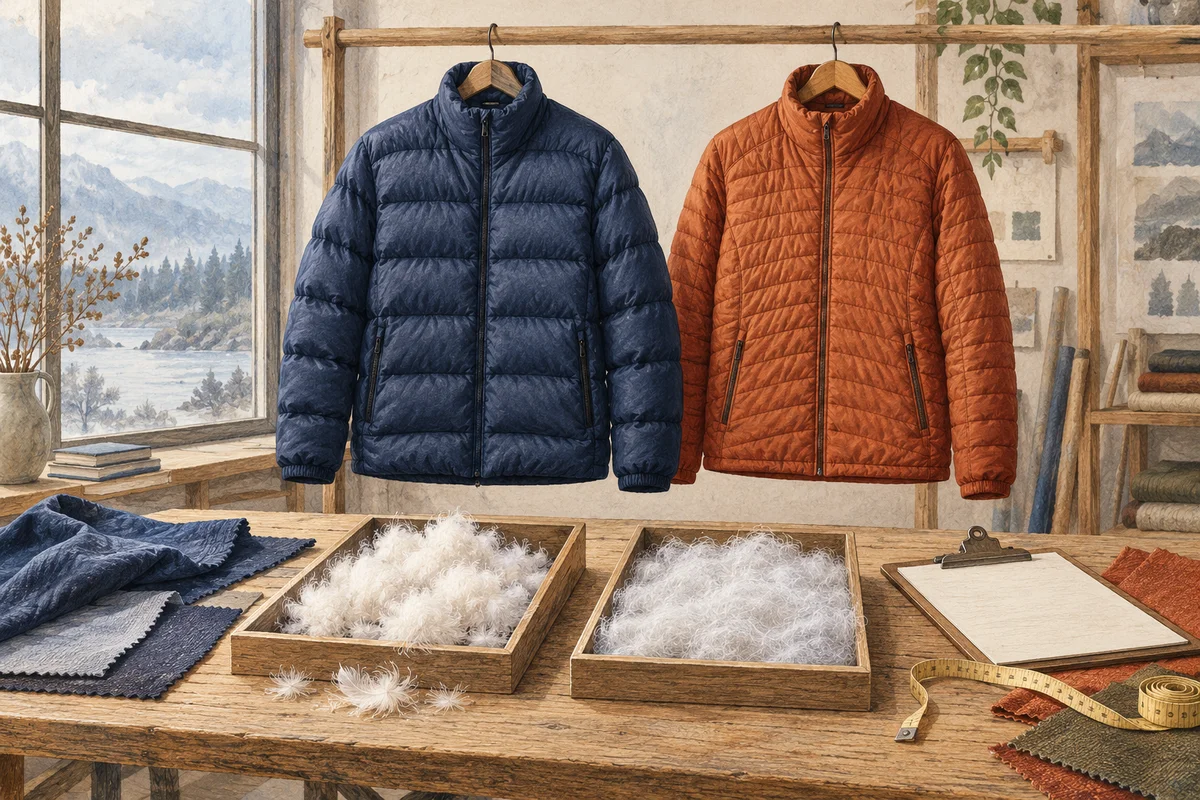
The hero is a custom conceptual textile photograph, not an image of a verified SKU or evidence of physical product testing.