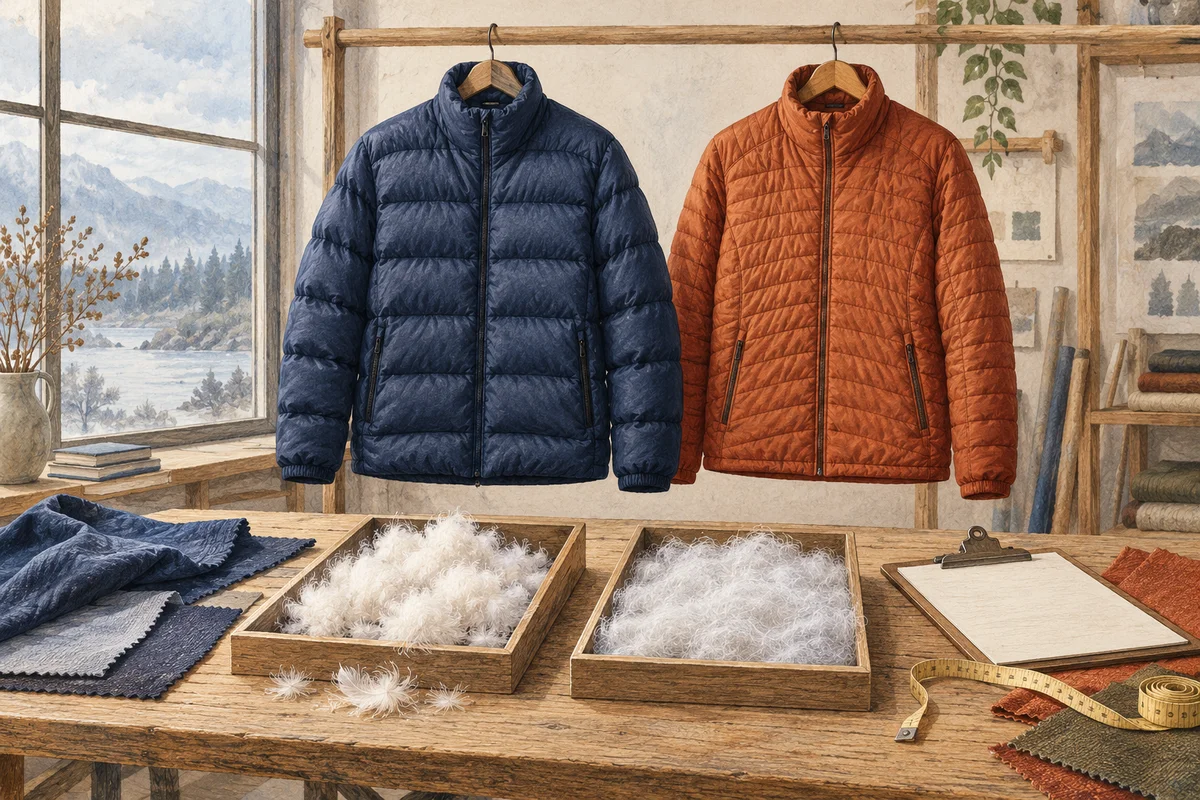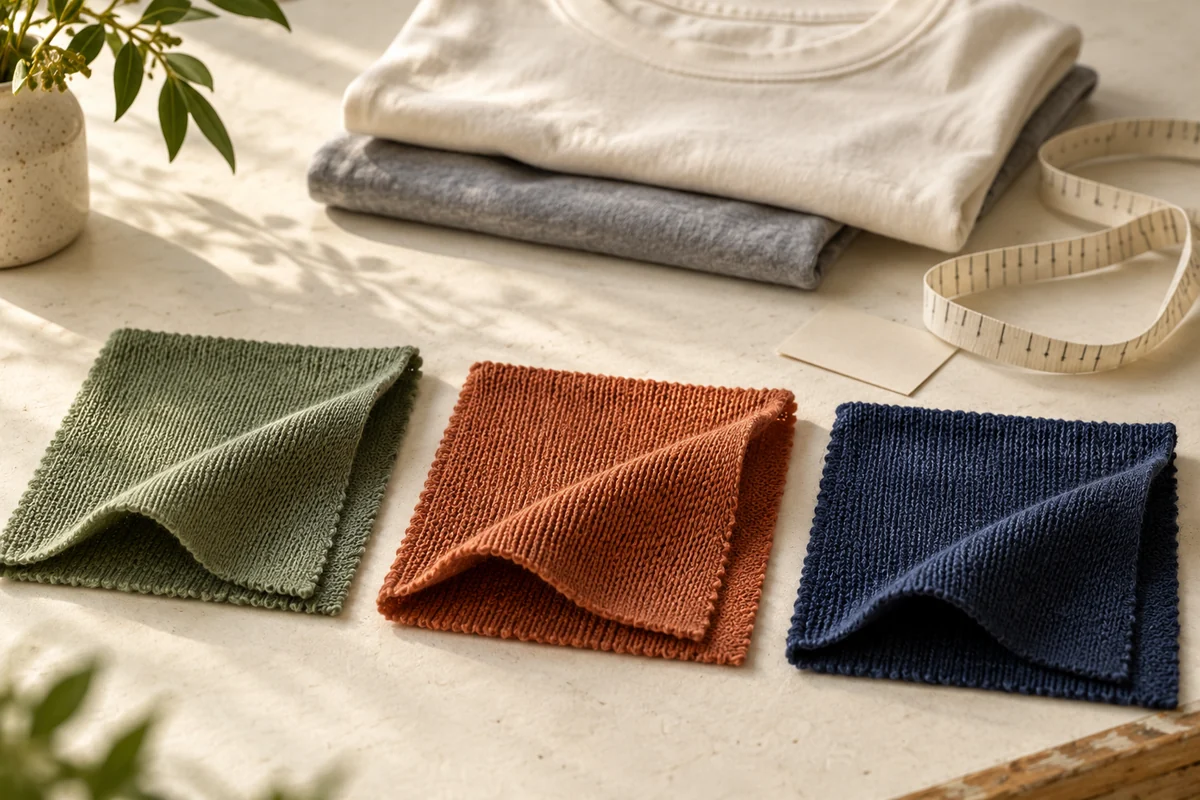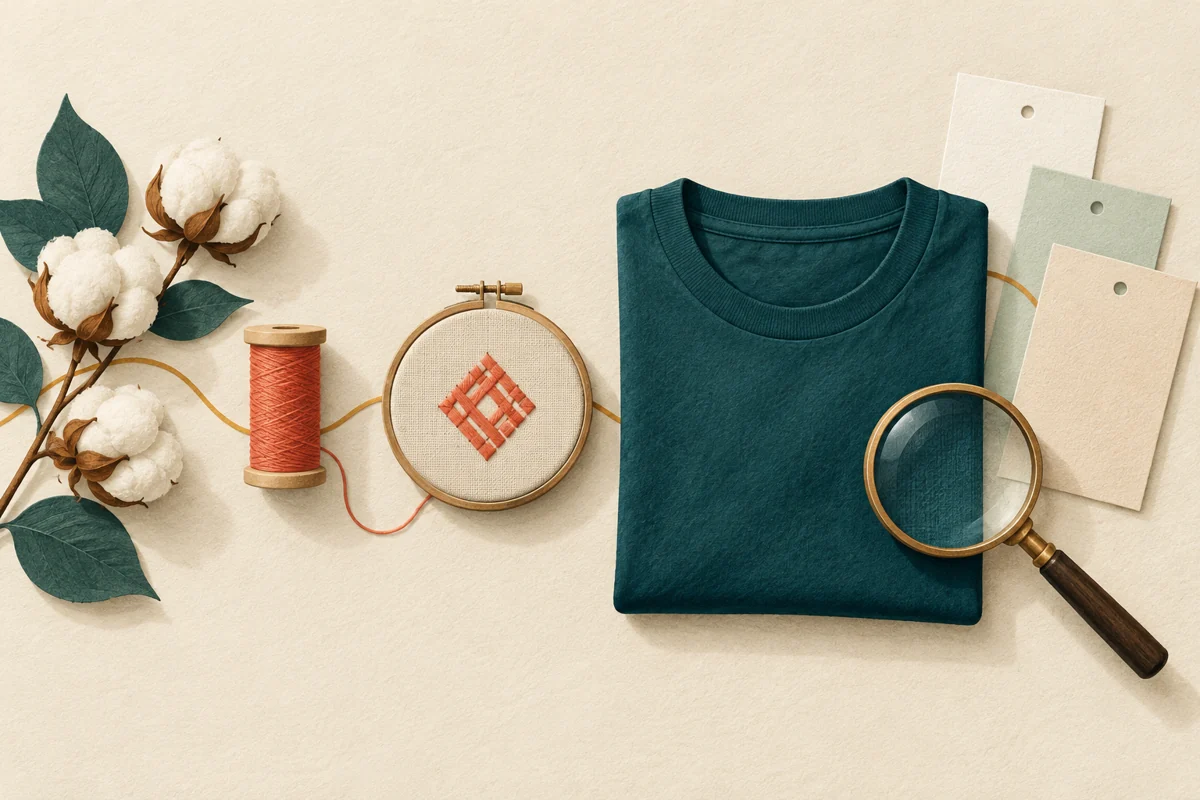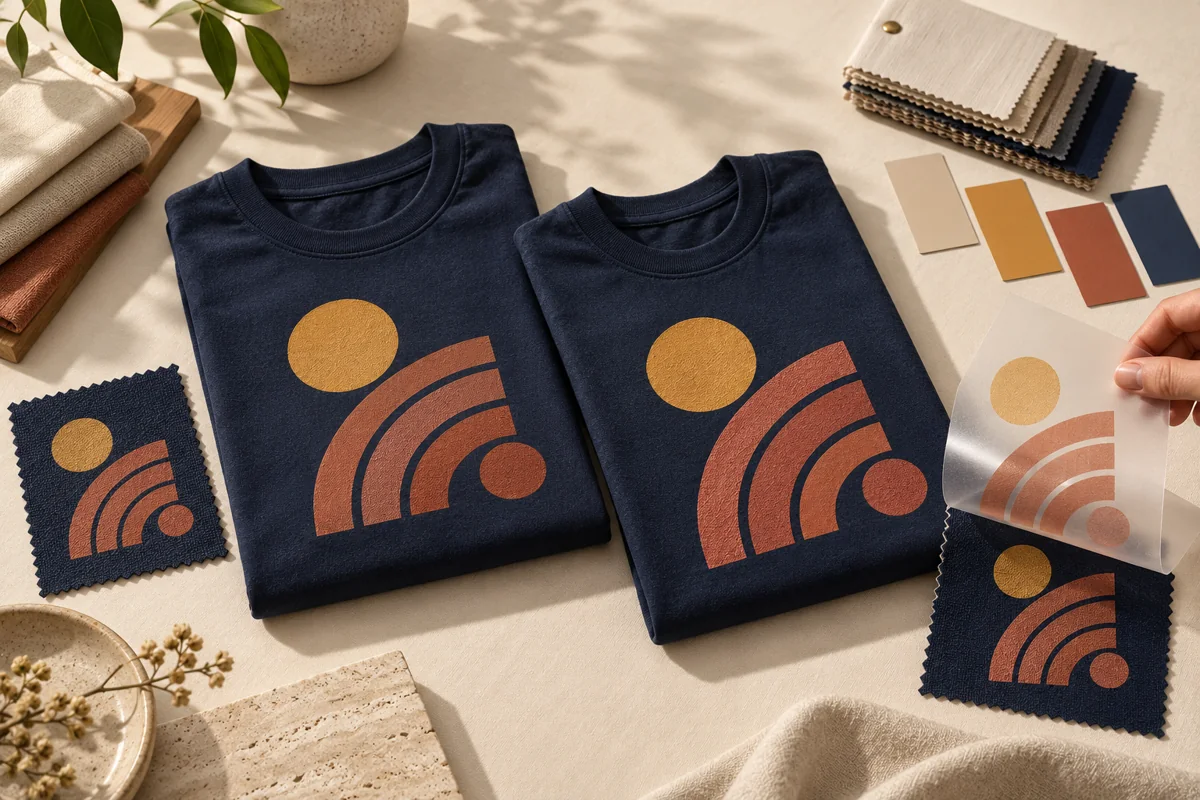
For a cotton company T-shirt where print feel is the priority, start by sampling direct-to-garment (DTG). For a mixed-fabric assortment or a design you want to apply across several approved garments, start by sampling direct-to-film (DTF). Neither acronym guarantees a softer shirt, a more durable logo or a lower delivered price. Choose the actual decorated garment, then make that combination the reorder specification.
The important buying decision is not which printer your supplier owns. It is whether the finish employees receive matches the design, garment and repeat-order expectations you approved. A supplier can offer both processes; a company store can use different methods on different items.
Publisher perspective: Brand Sauce publishes this decision guide. The sampling framework below is our recommendation, not a laboratory test or a promise that either process is available on every Brand Sauce product. Confirm the exact garment, method, destination and commercial terms by quote. Manufacturer sources checked October 13, 2026. The hero is an AI-generated conceptual illustration.
What actually changes between DTG and DTF?
DTG prints the design directly onto the garment. DTF prints onto a carrier film, uses an adhesive system and transfers the design to the garment with heat. Epson describes these distinct routes in its DTG and DTFilm overview. The film is a production carrier, not a clear rectangle that should remain attached to the finished shirt.
Epson positions DTG around cotton apparel and a soft finish, while describing DTF as a route to a wider material range. Treat that as a starting point for sampling, not a universal quality ranking. Your finished graphic’s size and coverage still matter. A small, open design and a large solid panel are different wearing experiences even when produced with the same method.
If you are still deciding between a stitched mark and a printed graphic, start with our broader embroidery versus printing guide. This comparison begins after you have decided that a full-color print is worth evaluating.
Choose the sample route around the real job
| Buying situation | Useful starting point | Question that can change the choice |
|---|---|---|
| Cotton employee tee with a large illustration | Request a DTG sample; compare DTF if offered | Which finished print feels better at the approved graphic size? |
| One campaign spanning cotton and performance shirts | Evaluate a compatible DTF system on each style | Does each fabric and color pass appearance, movement and care checks? |
| Small multicolor mark on several approved garments | Compare both methods where supported | Are detail, placement and repeatability acceptable on every item? |
| One-at-a-time orders over the year | Ask which process the supplier supports for the exact SKU | Is that process retained for individual reorders? |
| Known event quantity with one simple design | Include a screen-print quote as another option | Does the batch economics and finished feel outperform either digital route? |
| Brand color that cannot drift unnoticed | Physical proof before either method is approved | Who accepts the achievable color and monitors subsequent changes? |
Do not ask a decorator to prove that one method wins everywhere. Ask which method they recommend for your artwork on your garment, and what evidence would make them reject that recommendation.
Require a garment-specific compatibility answer
“DTG only works on cotton” is too absolute. Epson’s SureColor F1070 polyester guidance describes DTG with pretreatment for 50/50 cotton-polyester and tri-blend garments, while directing users to the DTFilm process for 100% polyester. That is guidance for a particular equipment workflow, not an all-printer rule. It demonstrates why your supplier should identify the process they actually use.
DTF is not an automatic approval for every polyester garment either. On its UltraColor MAX product page, STAHLS’ lists cotton, polyester and several blends as compatible materials, but explicitly notes that the product does not act as a dye blocker or prevent dye migration. A broad fabric-compatibility list and protection against garment dye affecting the decoration are separate questions.
Give the decorator the brand, style number, color, fabric composition and intended placement. Ask about heat sensitivity, discoloration, adhesion and stretch where relevant. Require confirmation for the selected garment rather than accepting “we print polyester all the time.” If a supplier proposes changing the blank to make the decoration work, compare the replacement’s fit and feel as well as its print.
For a store with several shirt colors, decide which combinations need separate samples. The easiest light-colored cotton option should not stand in for a dark performance fabric. Have the decorator identify the higher-risk combinations and explain the sampling plan in writing.
Evaluate print feel at final size—not from a sample logo
The term hand refers to how the decorated area feels. Make that judgment on a wearable sample, not a tiny transfer swatch. Our recommendation is to ask reviewers to compare three things separately: the blank fabric, the printed area and the transition between them. Otherwise, a nicer blank can make the decoration method seem better than it is.
Use the same artwork dimensions when comparing processes. A decorator’s small demonstration mark cannot answer whether employees will enjoy your much larger chest graphic. Include the actual solid areas, fine lines, small lettering and gradients that matter to your design.
Ask for two artwork treatments if the first sample feels too substantial: the original and a brand-approved version with less solid coverage. This is a design experiment, not a claim that reducing coverage solves every process limitation. Do not remove important logo elements without approval.
- On the table: inspect edges, small text, color and unwanted marks around the design.
- On the wearer: check how the graphic sits when the shirt drapes, bends and moves normally.
- At normal distance: confirm the design still reads without judging solely from a close-up phone photograph.
- After agreed care: compare the same areas against dated photos of the unwashed sample.
A supplier’s “soft” or “premium” description is not a substitute for that decision. Record which sample was approved and why. A simple note such as “small chest mark accepted; large solid back panel not accepted” gives future buyers something they can use.
Run a controlled A/B sample comparison
Where both processes are supported, request a matched pair: same garment style, color, size, artwork, printed dimensions and placement. Mark the samples A and B for an initial wearer review, keeping the production details in your own record. This helps avoid choosing an acronym before choosing a finish.
If the supplier cannot produce a matched pair, the comparison can still inform a buying choice, but it cannot isolate the printing method. Write down the differences. Choosing a DTG cotton shirt over a DTF polyester shirt may reflect a fabric preference, a fit preference or the decoration—not just DTG versus DTF.
| Approval item | Evidence to retain | Reason to pause release |
|---|---|---|
| Garment identity | Style, color, size and fiber specification | Sample uses an unapproved substitute |
| Design identity | Artwork version, dimensions and placement | Proof and sample do not match |
| Appearance | Photos plus named color/detail approval | Important detail or acceptable color is unresolved |
| Wearer experience | Notes on drape, print feel and ordinary movement | Reviewers reject the intended graphic’s feel |
| Care check | Instructions, cycle count and before/after observations | Visible change needs explanation or rework |
| Repeat production | Named method and change-control agreement | Supplier cannot confirm what later orders will receive |
Agree the care check with the supplier. STAHLS’, for example, specifies cold washing and low-temperature tumble drying or hanging for the cited UltraColor MAX product. Obtain instructions for your entire decorated garment; that example is not universal care guidance for all DTF or DTG shirts. A small internal wash check is an approval aid, not evidence for an advertised lifetime or a certified durability claim.
Our branded apparel sample approval guide covers the wider approval record. Here, the extra discipline is keeping the comparison controlled enough to answer the printing question.
Compare finished-shirt costs at two order sizes
Ask for a launch-order quote and a realistic reorder quote. Match garments, artwork size, print locations, packing and delivery destinations. Separate one-time preparation from recurring charges, and ask whether a changed design or a second location changes the price. Use quote-needed wherever a cost is not known.
For DTF, confirm whether the offer is for loose transfers, decorated garments or a complete delivered order. A transfer-only price excludes work the employee still needs someone to do. Likewise, a printer’s output speed does not establish your delivery date: blank availability, scheduling, inspection and shipping remain part of the job.
Illustrative calculation—not supplier pricing: suppose two otherwise equivalent delivered-shirt proposals have different structures. Proposal A charges $80 in one-time preparation plus $18 per shirt. Proposal B charges $22 per shirt with no preparation charge. At ten shirts, A totals $260 and B $220. At forty shirts, A totals $800 and B $880. They meet at twenty shirts. These invented figures do not represent DTG or DTF market rates; they show why the quantity and treatment of repeat setup fees can reverse a decision.
For a known event batch, compare screen printing too, especially when the artwork is simple and all shirts are needed together. For uncertain individual demand, an approved digital process may fit ongoing ordering well. A hybrid program can use a separate event batch and an individually ordered employee-store range. On-demand is not inherently cheaper, and DTF does not necessarily mean buying stored transfers. Our transfer inventory versus finished-shirt guide addresses that separate ownership decision.
Put a no-silent-substitution rule in the store specification
After approval, keep the printing method alongside the garment and artwork record. Ask the supplier to notify you before switching DTG to DTF, changing the transfer system, substituting the blank or materially changing the production specification. A method change may be sensible, but it should not inherit approval merely because the logo file is unchanged.
For a hypothetical company assortment, you might approve DTG on a cotton graphic tee and DTF on a separately sampled performance shirt. That is a coherent program if the product descriptions and photos reflect the actual finishes. It is not evidence that either method is available on any particular Brand Sauce item.
Start with one or two important garments, complete the comparison, and retain a reference sample. Expand only after the supplier confirms how each additional combination will be approved. The goal is not process uniformity at any cost; it is a predictable product employees can confidently reorder.
Frequently asked questions
Is DTF always less comfortable than DTG?
No blanket ranking is useful. Compare the actual fabric, print coverage, size and finish. A small DTF mark and a large DTG graphic are not a controlled comfort comparison. Request matched samples when possible.
Which method lasts longer?
There is no universal winner established by these process names. Ask for evidence specific to the proposed garment and decoration system, obtain the finished-item care instructions, and agree on an approval check. Do not turn a component manufacturer’s test claim into a guarantee for your entire shirt program.
Can we change methods for later orders?
Yes, if the replacement combination is approved. Review appearance, feel, care and price again, retain the new specification, and decide whether existing store photos or descriptions need updating.
Does either method guarantee one-shirt ordering?
No. A process may support small runs while the supplier’s service, garment availability or commercial policy imposes other conditions. Confirm the minimum, price and delivery terms for the exact item and destination before adding it to the store.