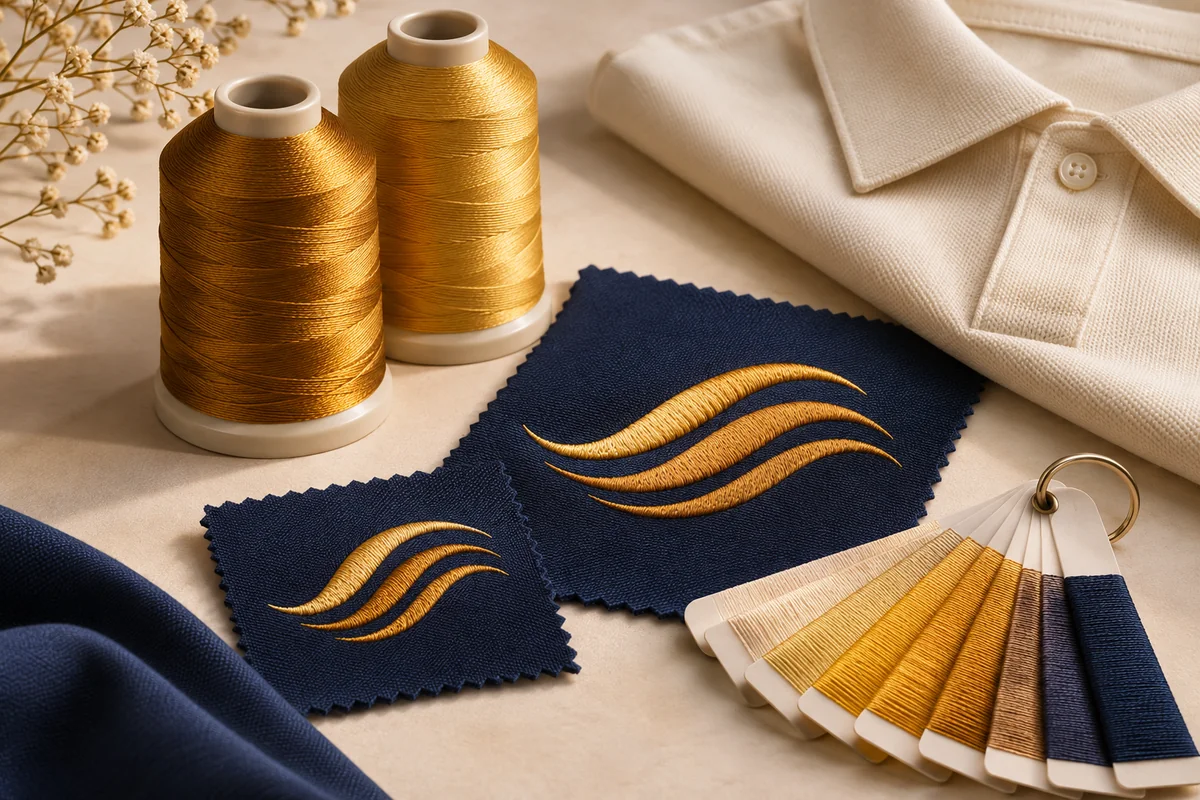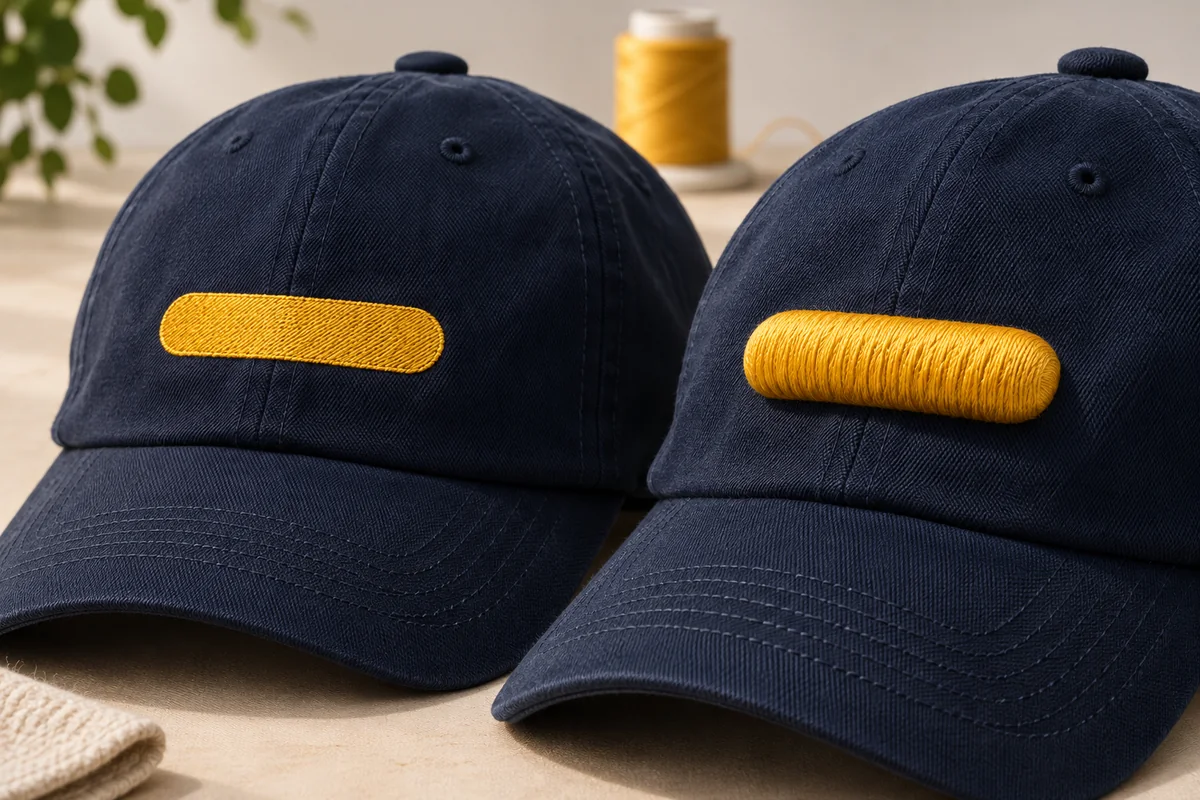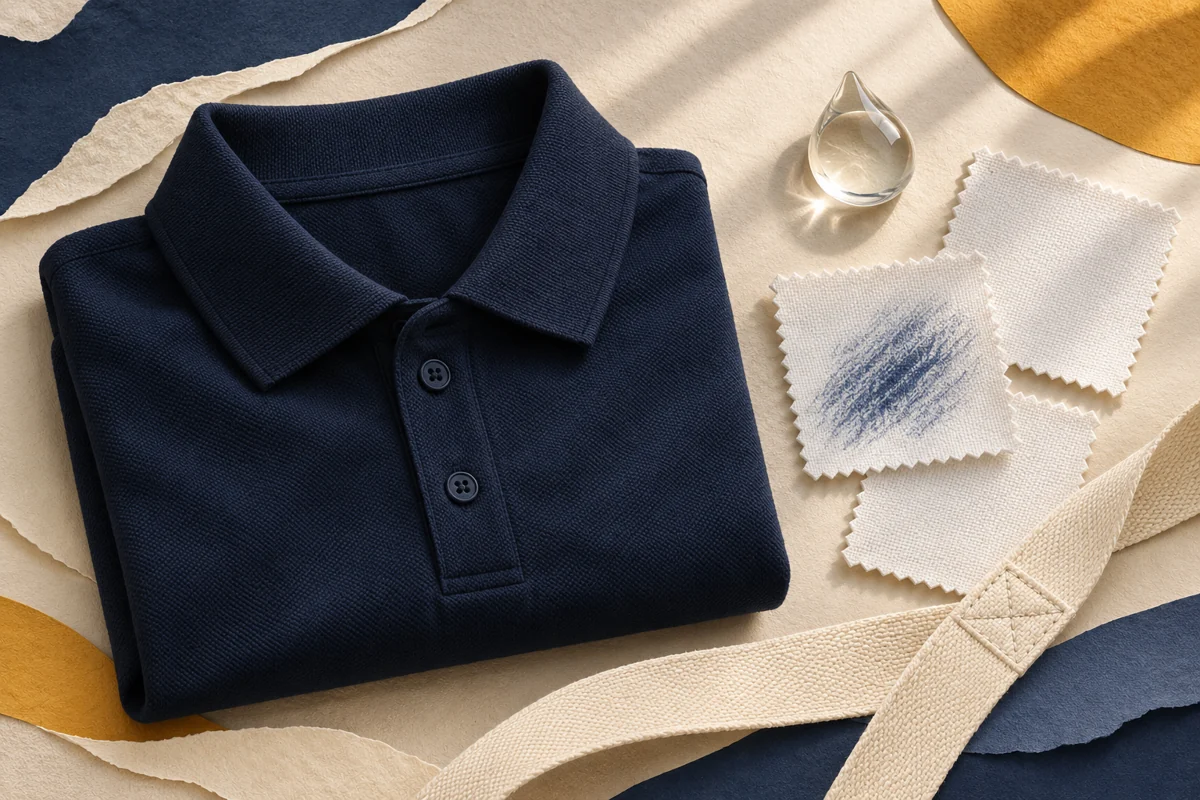
Approve dark company apparel for color transfer separately from its appearance. A navy shirt can match the brand palette perfectly and still need evidence about what happens when it rubs against a pale undershirt, bag strap or seat. Ask for dry and wet rubbing results tied to the exact fabric and color, agree on acceptance requirements before ordering, and review the decorated garment in the condition employees will receive it.
The buying decision is not “dark colors are bad.” It is whether the selected garment fits the intended contact conditions and whether the supplier can support that choice. This guide provides a purchasing workflow, not a laboratory procedure or a claim that any particular Brand Sauce product has passed testing. Primary references were checked November 2, 2026.
Color match, fading and transfer are different questions
A visual approval asks whether the garment and decoration look right. A transfer assessment asks whether color moves onto another surface. Neither answer substitutes for the other. Keep the approved brand-color reference, but add a separate record for the intended wearing conditions. Our brand-color consistency guide covers the appearance side of that decision.
AATCC’s public summary of TM8 describes a controlled rubbing assessment using white cloth in dry and wet conditions, with transferred color evaluated against a reference scale. It also notes that treatments such as washing or finishing can affect transfer. Those details explain why “tested for colorfastness” is an incomplete answer: buyers need to know which test, which condition and which specimen.
Do not treat a good rubbing result as proof of every other color property. AATCC lists separate methods for rubbing, perspiration, light and water exposure. For purchasing purposes, ask the supplier or testing laboratory which evidence addresses your actual concern. A shirt losing its shade in sunlight and a shirt marking a bag strap require different questions, even if both arrive as a complaint about color.
Start with a contact map, not a universal score
Before requesting reports, write down where the garment will be worn and what it will touch. This is a short operational exercise that the program owner can complete with a location manager. It prevents an expensive evidence request that still misses the use case.
| Intended use | Contact to discuss | Purchasing action |
|---|---|---|
| Reception shirt over a white base layer | Inside surface against the employee’s clothing | Identify the interior fabric and ask whether the evidence represents it |
| Event shirt worn with a pale crossbody bag | Repeated strap contact during a long shift | Include the shirt color and likely damp conditions in the supplier brief |
| Uniform worn around light upholstered seating | Garment contact with workplace furnishings | Escalate suitability before approving the color, rather than relying on a care warning afterward |
| Optional off-duty recognition gift | Unknown personal clothing and accessories | Provide accurate care information and a genuinely different product choice |
This table is a planning tool, not a prediction that transfer will occur. Record whether the garment is mandatory or optional, whether employees can wash it before first wear, and whether an alternative color would still satisfy the brand. A mandatory uniform needs an operationally usable answer; giving staff a warning is not the same as resolving a mismatch.
Also separate the visible face of the fabric from the inside, trim and decoration. The question is about the surfaces that actually meet other materials. Let the qualified supplier or laboratory decide the appropriate sampling approach rather than assuming one small fabric piece represents every component.
Ask for evidence that can be connected to the order
Send a compact evidence request before signing off on decorated production. The aim is traceability, not accumulating impressive-looking certificates.
- Product identity: manufacturer, style, fabric description, exact color name and supplier color code.
- Sample identity: what was tested, when, and how it relates to the proposed production or replenishment stock.
- Method: the named test and version, with separate dry and wet results where relevant.
- Condition: as supplied, after laundering, or another stated treatment; include the treatment details in the report.
- Scope: blank fabric, finished blank garment or decorated garment, and the surfaces represented.
- Decision: the agreed requirement, whether the evidence meets it, and who is accountable for acceptance.
A report for another color is useful background, not automatic approval of the dark color you selected. Similarly, a report on the undecorated fabric does not answer every question about a completed garment. Ask what further review is warranted for the actual decoration process; do not declare every old report worthless or every finished item identical.
If a supplier will not share a full report, ask whether it can supply a traceable summary or arrange an appropriate review. If it has no evidence, mark that field “not provided,” not “failed” and not “passed.” The next decision is commercial: obtain testing, select a better-supported alternative or restrict the proposed use. Testing costs, turnaround and sample availability are quote-needed.
Be careful when borrowing acceptance numbers from another industry. The Association for Contract Textiles’ voluntary guidance gives different dry and wet requirements for woven upholstery and explicitly identifies its indoor furnishing applications. That is a useful illustration of application-specific criteria—not a ready-made apparel specification. Agree apparel requirements with the supplier or a qualified laboratory before results arrive.
Use three approval outcomes, not an ambiguous “looks good”
The general branded apparel sample approval process should include a separate color-transfer decision. Assign one of three outcomes to each proposed style/color combination:
| Outcome | What it means | Next action |
|---|---|---|
| Approved for named use | Evidence and sample review satisfy the written brief | Release the identified specification and retain the approval record |
| Pending evidence | A material question remains unanswered | Hold release, name the missing information and assign a deadline |
| Change the selection | The proposed product or care conditions do not fit the program | Review another color, fabric or garment using the same brief |
A casual rub with a cloth can reveal a concern worth investigating, but it is not a standardized test result. Do not assign it a laboratory grade or advertise it as certified performance. Avoid using employees’ personal furniture, bags or clothing as test surfaces. If a practical wear review is appropriate, agree its scope and materials beforehand and keep it separate from formal testing.
Review the garment as delivered. If approval depends on a specified wash before wearing, confirm that this follows the manufacturer’s instructions and that the program can actually perform or communicate it. An item handed out five minutes before an event cannot depend on employees laundering it overnight. Do not assume washing fixes a transfer issue; request evidence for the relevant condition.
A worked example: a dark polo for a reception team
Illustrative scenario, not a client story: a company is choosing navy polos for 60 reception employees. The team wears pale base layers, works around light seating and receives uniforms on its first shift. Two suppliers offer visually acceptable options. Supplier A has provided relevant dry and wet results for the proposed color in the as-supplied condition. Supplier B has provided only a general “colorfast” statement.
The purchasing team should not conclude that Supplier B’s polo is defective. It should conclude that the two offers are not yet equally supported. Ask B for the missing evidence and set a decision deadline. Meanwhile, check whether A’s results meet the agreed requirement and whether the sample, current stock and proposed decorated order are properly connected.
Suppose B later supplies evidence only after a specified wash. The practical issue is now the issuing process. Can uniforms be washed appropriately before handout, with sufficient sizes ready for new starters? Who pays and who checks the decorated result? If that process is unrealistic, another color or garment may be the better purchase even if B’s unit quote is lower.
The decision record should explain the accepted use, the evidence reviewed and the operational conditions—not “A is premium” or “B is cheap.” A future buyer can then repeat the reasoning when a style is discontinued without mistaking the original brand name for the requirement.
Bulk, on-demand and hybrid orders need different controls
Bulk: identify the approved specification before decorating the full run, and ask how the delivered stock connects to the reviewed sample and evidence. Bulk can suit a fixed uniform rollout with known quantities and a planned receiving inspection. It also commits more units before real-world feedback, so resolving open suitability questions before release matters.
On-demand: small orders reduce the quantity committed at one time, but they do not establish color-transfer performance. Ask what happens when blank suppliers, colors or production arrangements change. An always-on store needs a reason to reopen approval when the approved specification changes, rather than treating the first sample as permanent authorization.
Hybrid: use a reviewed core uniform for required workplace wear and a separately curated assortment for optional gifts. This can preserve consistency where the job requires it without forcing every recognition item through the same workplace-use brief. Compare the service and administrative costs with actual quotes; none of these models is automatically cheaper or technically superior.
For any route, prohibit silent substitutions where color or material is part of the approval. The out-of-stock substitution workflow is useful here: a replacement must be acceptable for the same intended use, not merely available in a similar shade.
Close the loop after the first order
Keep the approval record accessible to the people handling replenishment and complaints. A useful record contains the exact item, color, decoration, evidence reference, intended use, care instructions, decision owner and conditions that trigger review. Record the date and any order or lot identifiers the supplier can actually provide; do not invent batch traceability that the fulfillment process lacks.
If a recipient reports transfer, capture the order identity, affected surfaces, whether the garment was wet, and what care had occurred. Preserve the garment and photographs where practical. Pause the affected selection while the supplier assesses the issue if continued use would repeat the problem. Do not prescribe improvised chemical stain treatments or promise compensation before the responsible party has reviewed the facts.
Separate resolution for that recipient from the purchasing correction. Replacing one shirt does not decide whether the store should keep offering that color. Close the case with a documented outcome: resume the approved item, add a supported operating condition, obtain further evidence or replace the selection.
Frequently asked questions
Does “wash separately” mean the garment will rub color onto other items?
Not by itself. It is care information, not a complete rubbing assessment. Ask the supplier what concern the instruction addresses and whether the item suits your intended contact conditions.
Can we accept dry results without wet results?
Only if that evidence scope genuinely answers the agreed use case. If damp contact is relevant, an unanswered wet-condition question should stay open rather than being assumed to match the dry result.
Does the darkest color always perform worst?
Do not rank specific products by shade alone. Request evidence for the actual selection and compare it against the same written requirement. A lighter alternative still needs to fit the program.
What is the most useful sentence to add to a quote request?
“Please identify the evidence supporting dry and wet color-transfer suitability for this exact style and color in the supplied condition, state any required care before first wear, and flag substitutions or production changes that require renewed approval.” It turns a vague quality claim into an answerable purchasing question.