Not necessarily. “Polarized” describes a glare-reduction feature, not proof of UV protection. For branded sunglasses gifts, check the exact model’s UV specification first; decide whether polarization is useful second. A dark lens, mirrored finish or premium-looking frame cannot answer the UV question.
This matters when a retreat organizer is comparing two quotes that both say “outdoor sunglasses,” but only one includes a clear lens specification. Treat missing information as a purchasing hold, not a reason to assume the two options are equivalent.
Keep UV protection and glare reduction in separate boxes
The FDA’s sunglasses guidance recommends looking for UV400 or 100% UV protection on the label. It also explains that lens darkness does not indicate UV protection and that a higher price does not guarantee more protection. Those are useful buying checks before you discuss frame colors or a logo imprint.
ZEISS distinguishes glare protection from UV protection: tinting and polarization address visible light, including distracting reflections, while UV protection addresses invisible ultraviolet radiation. A pair can offer both, but the glare feature does not establish the UV specification.
Our recommendation is to put two separate fields in the purchase brief: documented UV protection and polarized: yes or no. Never combine them into a vague “sun protection” checkbox.
A three-route selection rule
- The listing says only “polarized,” “mirrored” or “dark lenses”: hold approval and request the UV specification for that exact model and lens variant. Do not rewrite the listing as UV400 in your gift invitation.
- UV protection is documented, but lenses are not polarized: keep the option in consideration. Lack of polarization alone is not proof of inadequate UV protection; evaluate whether glare reduction is important for the planned activity.
- UV protection and polarization are both documented: move on to fit, recipient preference, decoration and delivery checks. The extra feature does not remove those decisions.
This is a selection rule, not a certification test. Ask the supplier for the product-specific specification and supporting documentation, including which model and lens colors it covers. A generic brochure about the supplier’s entire eyewear range leaves the actual order unresolved.
Copyable sunglasses gift approval card
Use this record before releasing artwork or accepting a substitute:
- Identity: supplier, manufacturer, model/SKU, frame color and lens color.
- UV claim: exact wording on the product label and specification; supporting document reference and date reviewed.
- Polarization: yes/no, with the supplier’s source—not an assumption based on lens appearance.
- Recipient fit: sample reviewed for comfort and coverage; a different gift available for people who cannot use the selected frame or already rely on prescription eyewear.
- Decoration: approved location and artwork; original lens information and care instructions remain available to the recipient.
- Order scope: destination country, quantity, confirmed availability, delivery requirement and quoted total. Unconfirmed pricing stays quote-needed.
- Substitution rule: a different model or lens variant returns to the UV-documentation check before acceptance.
The sample review helps with physical suitability; it does not measure UV transmission. If protection is uncertain, the FDA notes that an eye care professional may be able to check it. Do not turn an informal office demonstration into a published product-test claim.
Worked example: a waterfront team retreat
Illustrative scenario, not a customer result: an organizer has two proposed sunglasses options. Option A is described as polarized but has no model-specific UV information. Option B has documented UV400 protection but is not polarized. The organizer holds A pending documentation and keeps B under consideration, then asks whether a documented polarized option is available for the reflective waterfront setting. Neither quote wins merely because it sounds more premium.
Before ordering for everyone, offer an alternative through a short employee gift preference check. People should not need to disclose a prescription or medical history to select something else.
Finally, keep the approved model information with the order. If stock changes, use the same documented review for the replacement rather than accepting “similar sunglasses”; our gift substitution guide explains that handoff. The buying principle is simple: verify UV protection, then choose features and presentation.
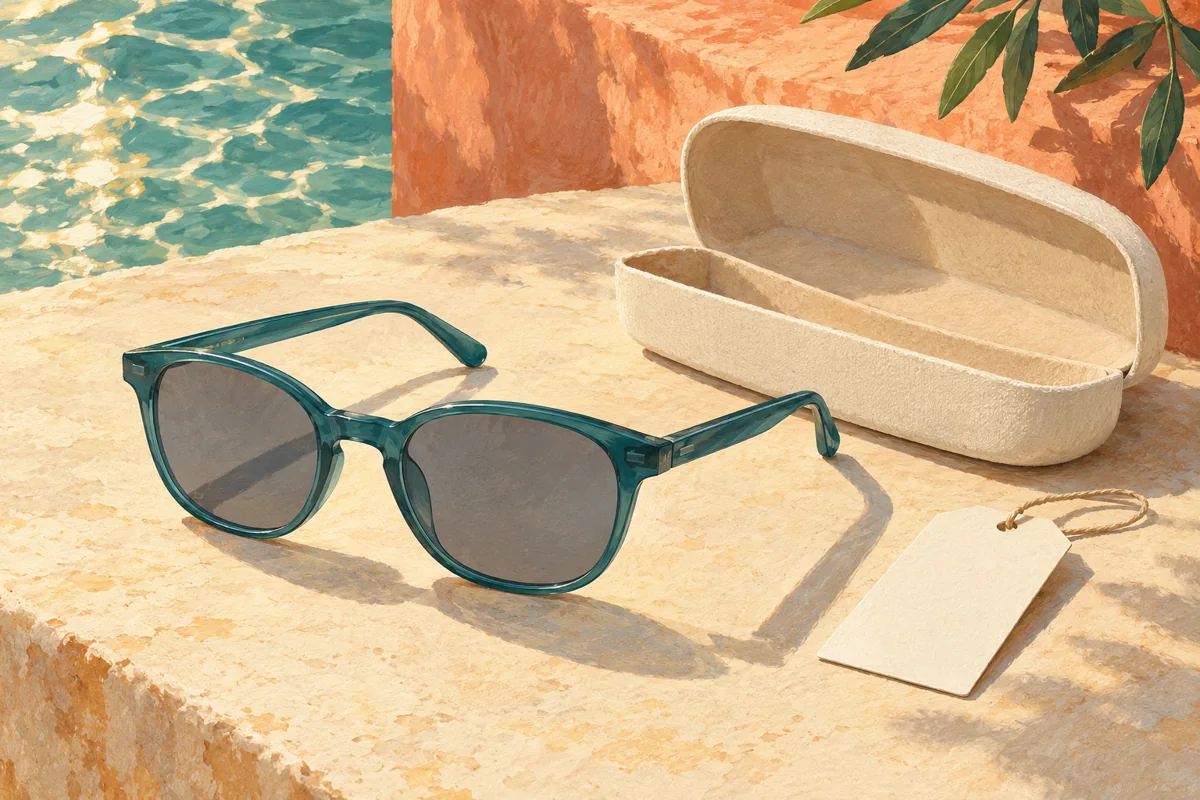
Editorial illustration: AI-generated conceptual artwork, not a photograph of an offered product or evidence of testing.