For a gift-wrapping station that cuts tape or sticky labels, ask for an explicit non-stick or adhesive-resistant blade specification—not just “titanium.” A premium-sounding blade treatment does not, by itself, tell you how the scissors will handle exposed adhesive. Match the tool to the actual wrapping materials before ordering a branded volunteer kit.
This is a narrow buying check for adult packing and craft activities. It is not a recommendation for children's scissors, heavy packaging cutters or specialist fabric shears. If the job is only cutting ordinary paper, an adhesive-resistant coating may not be a requirement at all.
Separate the coating claim from the cutting task
Westcott's model 14851 specification describes titanium bonding followed by a non-stick coating, and identifies tape and other adhesives as intended uses. That is useful because the page identifies the adhesive-resistance feature separately from the titanium treatment. Do not assume a different model with “titanium” in its name includes the same coating.
Fiskars' scissors overview likewise identifies titanium non-stick scissors for sticky materials such as tape and glue. Its broader range includes task-specific scissors and multiple blade and handle options. A family name or handle color is therefore a poor substitute for the exact item's specification.
These are manufacturer descriptions, not independent durability tests or a verified Brand Sauce catalog shortlist. We have not tested these scissors. The Westcott page showed sold-out wording when checked; neither reference establishes decorated stock, destination-country availability or a Brand Sauce price. Those remain supplier-confirmation and quote-needed items.
Choose the simplest route that fits the station
- Paper and card only: select a tool rated for those materials. Check the actual card thickness and cutting length; do not pay for an adhesive-related feature solely because it sounds premium.
- Regular cutting through exposed tape or adhesive-backed material: require the exact model's non-stick or adhesive-resistant claim, plus its permitted materials and cleaning instructions.
- Only occasional tape cuts: consider a separate tape dispenser or pre-cut labels so the main scissors can stay assigned to paper. Confirm that the dispenser and tape width work together.
- Fabric ribbon alongside sticky work: keep a separately identified ribbon-cutting tool if the chosen ribbon needs it. Approve a sample cut on that ribbon; do not assume a clean paper cut proves a clean ribbon edge.
Blade coating does not settle hand fit. If volunteers share tools, use our separate left-handed workshop scissors check to plan appropriate alternatives. A non-stick label is not an all-users claim.
Use this three-material approval strip
Before buying the full quantity, assemble a small envelope containing the actual wrapping paper, the actual tape and the actual label material. Identify whether labels will be cut with their backing attached or after peeling: the contact with adhesive is different. Send the envelope with this proposed sample-check record. This is a purchasing method, not a test Brand Sauce has already conducted.
- Record the starting specification. Note manufacturer, model, blade treatment and the manufacturer's stated uses. If the supplier cannot confirm that the proposed sticky material is within scope, pause that choice.
- Recreate one normal packing sequence. Cut paper, perform the intended tape or label cuts, then return to paper. Use the same materials and sequence for each candidate; do not turn the trial into an improvised stress test.
- Record practical observations. Did the blades begin to drag? Was adhesive visibly transferred? Did the following paper cut snag? Could the person complete the activity comfortably? Record what happened rather than awarding an unexplained score.
- Check the care route. Obtain the model's cleaning instructions and confirm the station can follow them. Do not improvise solvents, abrasive cleaning or sharpening on a coated blade based on advice for another model.
- Make an explicit decision. Approve that exact model and material combination, change the tape or label format, or split the station into paper-cutting and adhesive-handling tasks. An unresolved cleaning requirement is not an approval.
Copyable packing-station release note
Exact scissors model and adhesive-resistance evidence: ______
Paper, tape and label references; backing on/off: ______
Sample sequence and observations: ______
Manufacturer care instructions and cleaning owner: ______
Decision: one tool / separate adhesive station / revise materials: ______
Handed alternatives and tool identification: ______
Approved branding location, destination, quantity and supplier quote: ______
A holiday-drive example
Illustrative scenario: a nonprofit's packing table wraps gifts in paper and attaches pre-cut peel-off labels. Nobody needs to cut the labels themselves. The practical first choice is to test ordinary paper-cutting scissors with that workflow, rather than making non-stick blades a mandatory gift-kit feature. If volunteers later switch to trimming adhesive-backed decorations after peeling them, reopen the tool decision using the actual decoration material.
Keep this distinction in the reorder brief. A substitute with the same length and a similar handle may have a different blade coating. Our gift-substitution approval guide explains how to keep a replacement from silently changing the promised specification.
Buying rule: specify what touches the blades, then require evidence for that task. “Titanium” is not a shortcut for “suited to our tape.”
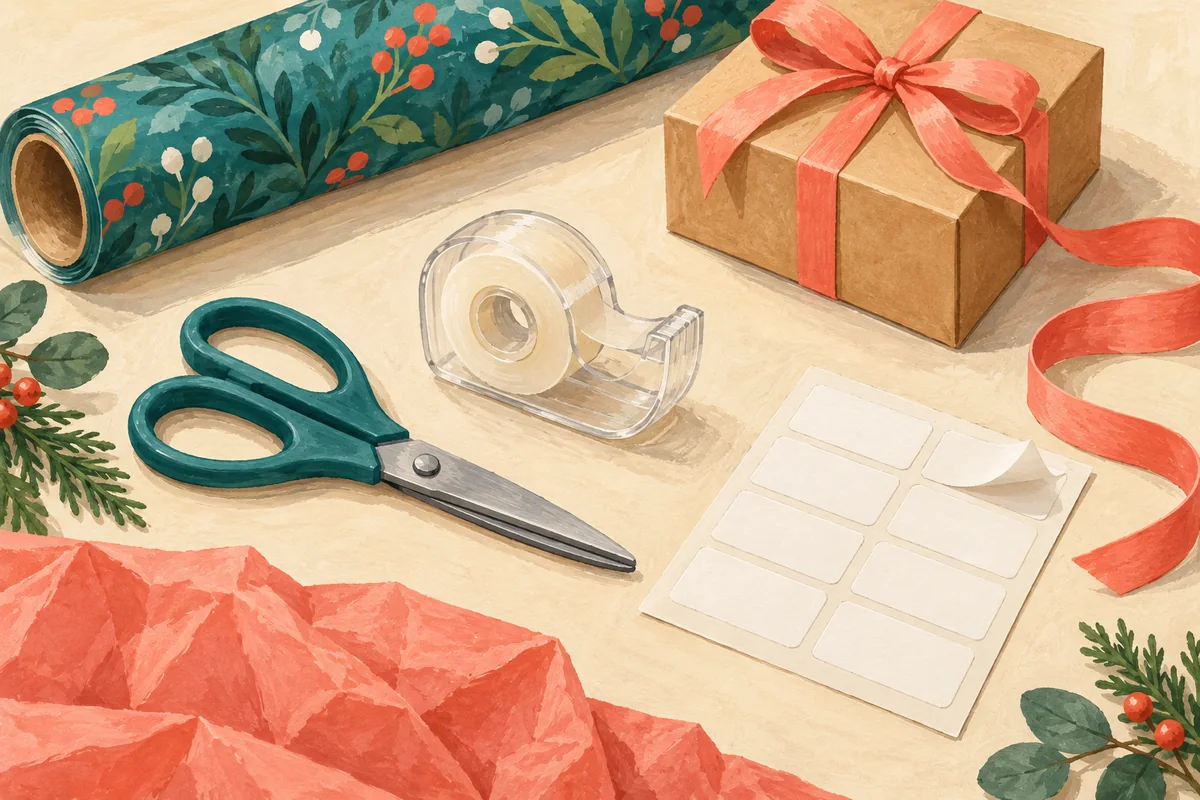
Illustration: AI-generated editorial artwork, not a product photograph or cutting-test result.