For a gardening gift, choose bypass pruners for routine cuts on living stems; consider anvil pruners when the recipient specifically needs to cut dead, dry wood. Neither label tells you whether the handles fit the person or whether the tool can handle their usual branch size. Start with the task, then approve the exact model.
For a community garden’s volunteer thank-you, “gardening tools” is still too broad a brief. Someone harvesting herbs, someone tending roses and someone clearing dead twigs may appreciate different cutting tools. A short question before ordering can prevent a well-presented gift from being the wrong tool.
What changes between bypass and anvil?
In a bypass pruner, the cutting blade passes its opposing support. In an anvil pruner, the blade closes onto a surface beneath it. Burgon & Ball’s cutting-tool guide recommends bypass action for live green growth and anvil action for old, hard or dead wood; it explains that the latter can crush soft green stems.
Do not translate that into “anvil is the premium upgrade.” It is a different cutting action. Nor does “woody” automatically mean “dead”: a living shrub can have woody stems. Ask what material the recipient actually intends to cut.
Fiskars South Africa’s comparison likewise separates living growth from dry or dead branches and advises against twisting or forcing a cut. Those distinctions are useful purchasing guidance, not proof that a particular model will suit every user.
A three-route gift-selection rule
- Routine care of living shrubs and stems: start with a bypass model. Ask the supplier for its documented cutting capacity and intended use.
- Dedicated dead-twig cleanup: consider an anvil model, still within that model’s stated capacity. Confirm that this is an additional task-specific tool rather than an unwanted replacement for a favorite pruner.
- Delicate harvesting, unknown tasks or larger branches: pause the pruner choice. Fine snips may be more appropriate for some harvesting tasks; larger material may require a different tool altogether. Let the recipient or garden lead specify the need instead of buying the strongest-looking hand tool.
Burgon & Ball distinguishes fine flower-and-fruit snips from its secateurs. Its range also includes different handle sizes and model-specific cutting capacities. That is why a photograph of a gardening gift set is not enough to approve its contents. These manufacturer references explain tool types; they are not a Brand Sauce stock list or evidence of hands-on testing.
The sample check: can this person use this model?
Our recommended approval process is to review one sample before committing to a batch. Have an intended user or the garden lead follow the manufacturer’s instructions and record these five checks:
- Reach and grip: can the person comfortably grasp the open handles and close them without shifting to an awkward grip? Check with the gloves they normally use, if applicable.
- Handedness and controls: confirm the manufacturer’s stated hand suitability and whether the user can operate the lock. A comfortable handle in one person’s hand is not a universal fit claim.
- Representative task: identify the actual plant material and diameter, then compare them with the exact model’s instructions. If a cut needs forcing or twisting, stop and reassess the tool rather than treating the advertised maximum as a target.
- Storage and handoff: check the supplied blade protection, closure and packaging. Keep the original instructions with the gift, including the model’s cleaning and maintenance guidance.
- Branding: approve a proposed decoration location only after confirming it does not obstruct the grip, lock, moving parts, identification or instructions. A branded outer sleeve may be a better brief than demanding a logo on the tool itself.
This is a purchasing acceptance check, not a product test result. For a gift sent directly to an individual whose grip preferences are unknown, offer a choice or a non-tool alternative instead of declaring a single sample suitable for everyone.
Copy this into the supplier brief
Recipient’s main task: ___. Living stems / dead wood / delicate harvesting / not yet known: ___. Typical material and diameter: ___. Proposed tool type and exact model: ___. Manufacturer instructions and capacity: ___. Handedness and grip requirements: ___. Sample reviewer and outcome: ___. Packaging and approved decoration location: ___. Destination country, confirmed availability, delivery timing and quoted total: ___. Any substitute must repeat the task-and-fit check.
Keep unconfirmed pricing as quote-needed. A manufacturer’s regional website does not establish that a model can be supplied, decorated or delivered through your gift program in another country. Confirm those details before adding a product to an invitation.
Example: a volunteer thank-you is not a tool-issue program
Illustrative scenario, not a customer case: a community garden wants to thank its volunteers. The garden lead maintains a shared set of tools for assigned work, while volunteers have different interests at home. Rather than sending every person an anvil pruner because autumn cleanup is approaching, the organizer asks whether they want a home-gardening tool and what they would use it for. Living-stem care routes to a bypass sample; herb harvesting triggers a snip discussion; volunteers who do not want another tool choose something else.
A short gift preference survey can collect that distinction without promising an unconfirmed model. If the tool is expected to last beyond the event, settle the repair and replacement route using our branded gift warranty checklist.
The buying decision: match the cutting action to the material, then match the tool to the hand. The logo and gift wrap come after both checks.
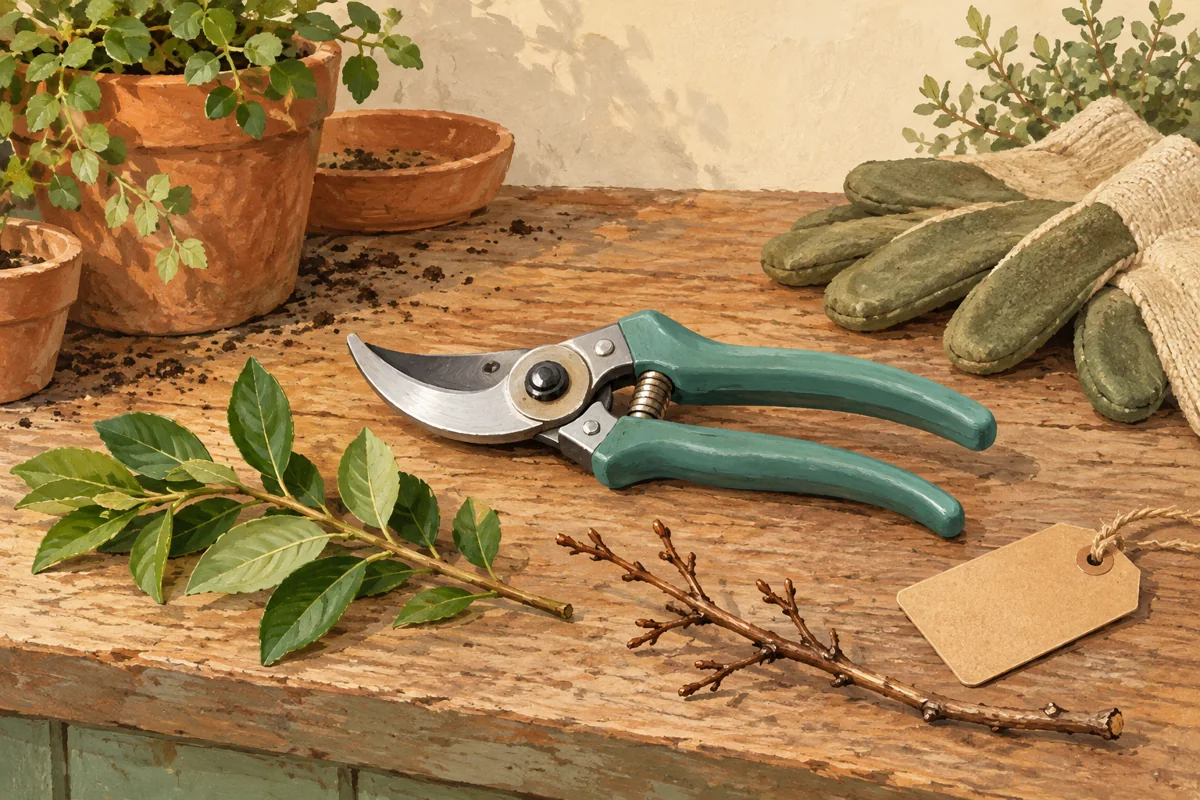
Editorial illustration: AI-generated conceptual artwork, not an offered product photograph or evidence of testing.