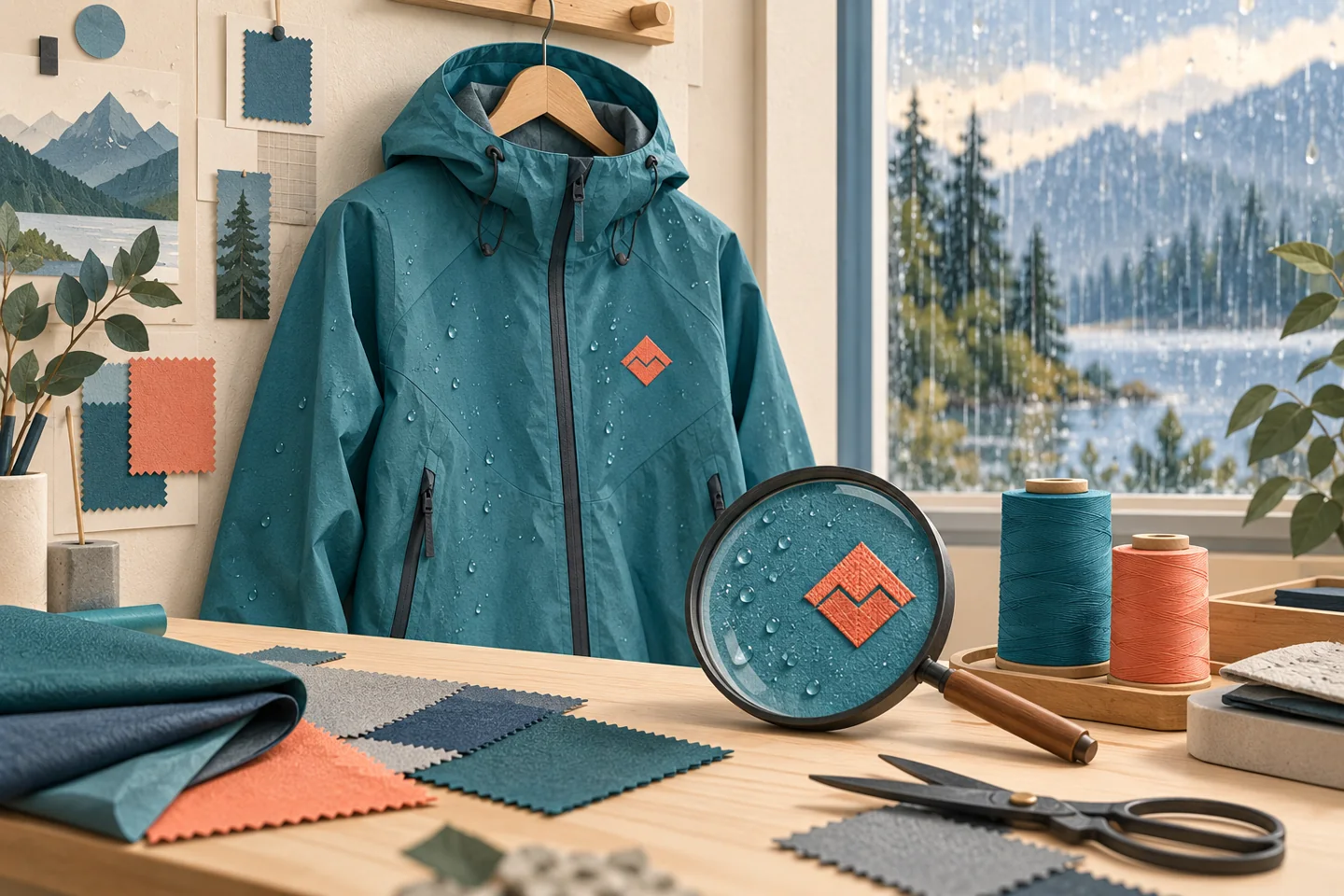
Yes—embroidering a logo can compromise a rain jacket’s waterproof protection if the stitching penetrates its waterproof barrier and the holes are not appropriately sealed. That does not mean every branded rain jacket will leak. It means the blank jacket’s specification is not enough: approve the exact garment, logo location and decoration process together.
For a landscaping team, campus staff or employees walking between buildings, the useful buying question is: “What rain protection can the supplier stand behind after adding our logo?” Here is how to get a usable answer before ordering.
What changes when a needle goes through the shell?
GORE-TEX’s official FAQ warns that alterations can compromise waterproofness and that unsealed embroidery needle holes can let water through. For its garments, logo embroidery requires seam sealing at a GORE-TEX-authorized facility; it recommends contacting the company before making alterations.
That is a specific manufacturer requirement, not a universal certification system for all jackets. With another waterproof construction, obtain that garment manufacturer’s instructions. A decorator’s general ability to embroider polyester does not answer whether a particular waterproof shell can be decorated while retaining its stated performance.
Nor does water beading on the outside settle the question. The same FAQ explains that a durable water-repellent finish helps water roll off the outer fabric, while a saturated outer layer can feel clammy without a leak. For purchasing, treat surface repellency and protection at the decorated area as separate checks.
Is a heat-transfer logo automatically safer?
A transfer avoids the stitching step, but “use a transfer” is not a complete specification. The material and application process still need approval for the exact jacket. For example, STAHLS’ GORILLA GRIP II page identifies particular recommended fabrics and its own application settings. It is not permission to apply that material to every waterproof garment.
There are also jackets marketed with decoration options: Stormtech’s Waterford WXJ-1 page lists a waterproof shell, sealed seams and both embroidery and heat-transfer options. That is a reason to ask about the supported process—not to infer that any logo, location or third-party method preserves performance.
These manufacturer examples explain the decision; they are not a Brand Sauce product shortlist or a claim of current country availability. Keep pricing quote-needed until the exact decorated style and destination are confirmed. For the broader visual and fabric tradeoffs, see our embroidery-versus-printing guide.
Use this rain-jacket decoration approval sheet
Copy these fields into the sample request. This is an original buyer decision aid, not a waterproofness test standard.
- Identify the finished item: manufacturer, style number, color, size range, logo file/version, dimensions and exact position. “Left chest” alone is not a complete placement reference.
- State the job: ordinary commuting, repeated outdoor visits or another defined use. Record the rain-protection claim you intend to show employees. Do not quietly substitute “water-resistant” for a required waterproof shell.
- Get the permitted method: written manufacturer or authorized supplier approval for the proposed decoration on this style. Ask whether the process penetrates the waterproof layer and, if so, how that area is restored.
- Name the process owner: identify who decorates and who performs any required sealing. For a GORE-TEX garment, specifically resolve its authorized-facility requirement before release.
- Request finished-item evidence: ask what verification supports the rain-protection claim after decoration, what area or configuration it covers, and whether care or laundering affects that claim. A blank-fabric specification is not an answer about the finished logo area.
- Resolve warranty and care: obtain written terms for the decorated garment and compatible care instructions. Name the contact responsible if water enters at the logo. Do not assume retail warranty language covers an added company emblem.
- Approve the reference: retain a decorated sample, photographs of both sides of the logo area and the agreed specification. Changes to the garment, placement or method trigger another review.
Use the general apparel sample-approval checklist for appearance and fit alongside this sheet. An attractive stitch-out or a quick splash demonstration should not be recorded as proof of a performance claim it did not establish.
Make a release, revise or hold decision
- Release: the exact decorated configuration has documented approval, an agreed performance claim, compatible care and a named remedy owner.
- Revise: the jacket works for the intended use, but the logo process does not. Request a manufacturer-approved alternative placement or method and review the revised sample.
- Hold or choose another item: the supplier can show the blank’s waterproof specification but cannot explain the finished decoration. Do not launch it with an unsupported waterproof promise.
Illustrative decision: a campus team wants rain shells for regular walks between buildings. The proposed embroidered chest logo looks good, but the quote contains no answer about needle holes or sealing. The buyer holds the order and requests a supported decorated configuration. If none is available, the team can choose a different shell or put the company branding on a separate layer instead. This is a hypothetical purchasing example, not a customer result.
Start with our company-jacket selection guide if the rain shell itself is still undecided. Once the style is selected, approve what employees will actually receive—not just the undecorated garment’s reputation.
Manufacturer sources checked September 29, 2026. The hero is an AI-generated editorial illustration, not a catalog product or a waterproofness test.