“Cup-holder compatible” is a useful starting point, not a promise that a gift tumbler fits every vehicle. For a field-sales team, regional service crew or commuter gift program, approve the part of the tumbler that enters the holder—and the space its handle needs above it. Ounce capacity and maximum outside width cannot answer those questions.
A base measurement and a holder requirement are different specifications
Stanley’s US page for the 40-ounce Quencher H2.0 FlowState lists a 3.1-inch base diameter separately from its overall dimensions. YETI’s US 35-ounce Rambler Straw Mug page gives a minimum cup-holder diameter of 3 inches and asks buyers to measure for fit. Do not turn either number into a universal standard, or apply it to another size or generation.
These are manufacturer specification examples, not a tested comparison or a Brand Sauce availability shortlist. The distinction to carry into a sourcing request is simple: ask whether a quoted measurement describes the vessel’s base, its widest point or the holder it needs.
Why a narrow base can still leave the tumbler perched
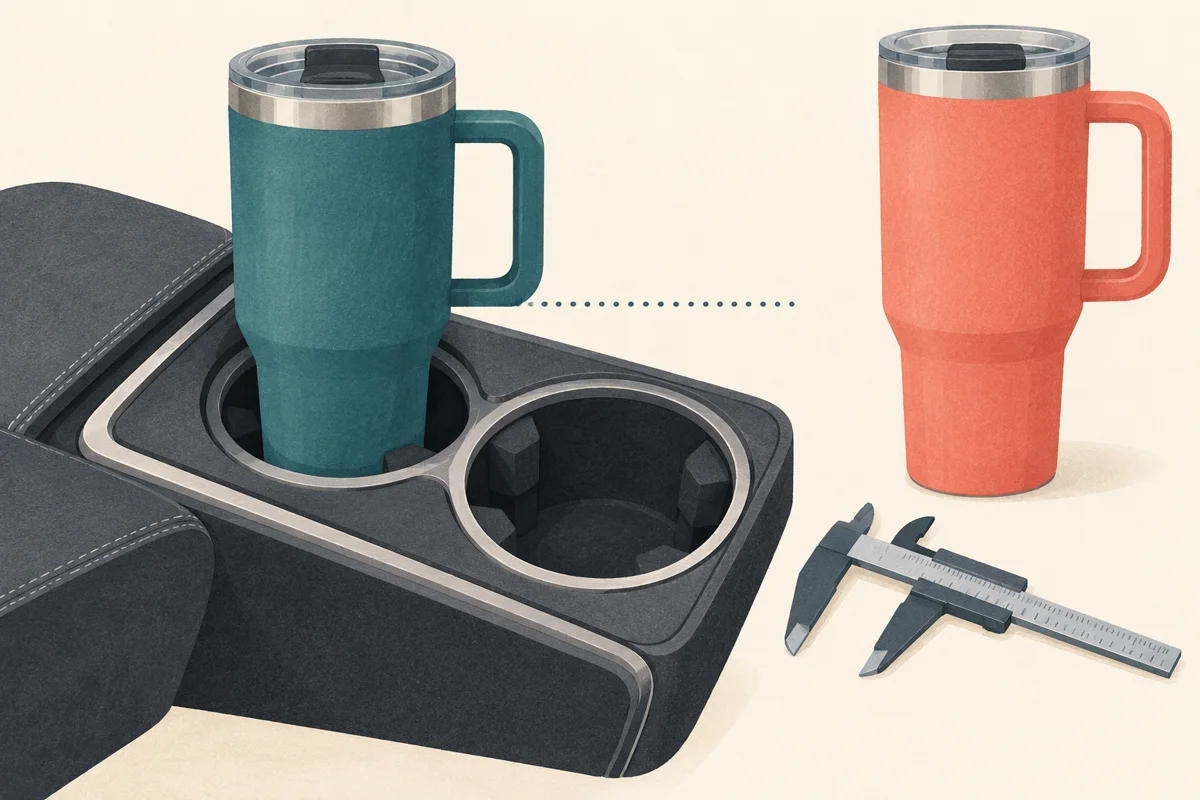
A tapered tumbler widens as you move up from its bottom. A deep holder can meet that wider section before the base reaches the intended support surface. Meanwhile, the holder itself may narrow below its opening or have flexible retaining tabs. Measuring only the visible opening misses both possibilities.
The handle creates another clearance problem. Its lowest point may contact the console rim before the tumbler seats. Even when one cup fits, two handles can compete for the space between adjacent holders. A protective boot or sleeve changes the fit again; check the gift as supplied, not the bare vessel shown in a photo.
For a shared vehicle fleet, record the vehicle model, model year and console configuration. For employees’ personal cars, do not request a vehicle inventory just to distribute a gift. Give recipients the verified dimensions and an alternative selection instead. One successful sample in the buyer’s car does not support “fits everyone’s commute.”
The parked-vehicle approval card
Use this original checklist with an empty sample and a safely parked vehicle. It is a purchasing screen, not a driving-safety test or evidence of testing by Brand Sauce.
- Identify the exact pair. Record tumbler model, size, lid, handle version and any included boot; then record the vehicle and holder position being checked.
- Inspect the insertion path. Measure the holder opening, usable depth and narrower sections you can access without dismantling anything. Ask the supplier for the tumbler’s base diameter, taper dimensions and height to the underside of the handle. Mark missing measurements as unresolved.
- Seat the sample normally. It should enter and come out without forcing, wedging or removing vehicle components. Note whether the base rests on the intended support or the body is hanging on the rim. Reject a fit that relies on balancing at the opening.
- Check neighboring space. Put the usual second vessel in the adjacent holder. Try the intended handle orientation. Confirm that the gift does not obstruct controls, storage access or the normal use of the console. Do not operate or test-fit while driving.
- Record the outcome precisely. Use “sample fits this configuration,” “does not fit” or “unresolved.” Keep a photograph and note any accessory used. Do not broaden a result to other vehicles or tumbler sizes.
Turn failures into a buying decision
- Base enters, body stops high: request a longer narrow lower section or a different vessel profile. A lower ounce capacity alone is not a specification.
- Handle contacts the console: investigate a higher handle attachment or a handle-free option; repeat the adjacent-holder check.
- Fit depends on an adapter: treat the adapter as a separate item requiring approval, not an automatic fix. If the gift needs unverified vehicle accessories to work, choose another gift.
- Personal-car fit is unknown: offer a choice instead of a compatibility promise. The employee gift-preference guide can help distinguish people who want commuter drinkware from those who would rather choose something else.
Finally, cup-holder fit says nothing about leak resistance or suitable drink temperature. YETI specifically excludes hot beverages with the Straw Lid on the linked model. Approve the exact lid-and-drink combination separately using our employee drinkware lid guide. For a branded order, confirm destination-country availability, decoration and delivered pricing with the supplier; those remain quote-needed until verified.
Manufacturer pages checked October 24, 2026. Image: AI-generated editorial illustration of generic drinkware and a console, not a product photograph or fit-test result.