
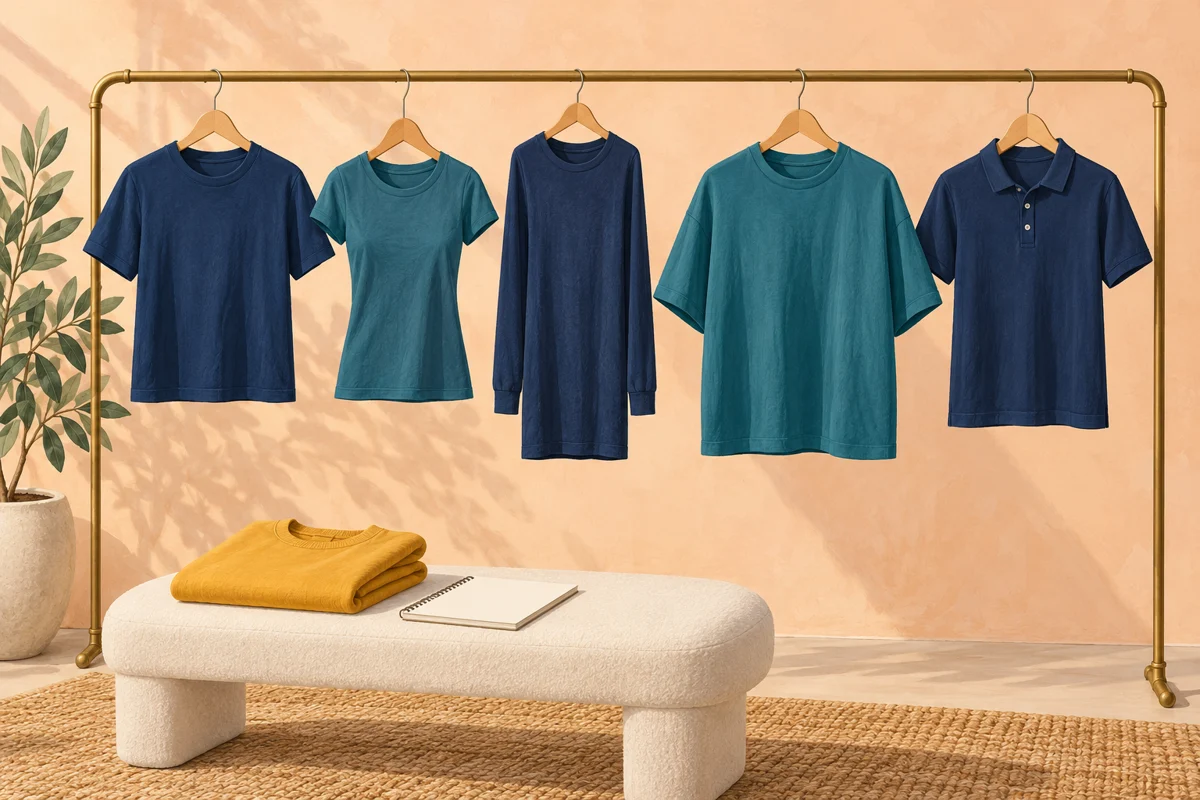
A size-inclusive employee apparel program needs more than one shirt with a long size list. It needs a comparable, fully funded choice that each recipient can actually order. Audit the intersection of fit, size, color, decoration, destination and delivery timing before announcing the gift. When that intersection fails, fix the assortment or fund a comparable alternative—not a compulsory downgrade.
This is a decision guide for recognition gifts and optional company-store apparel, not a specification for required uniforms or protective clothing. The question is whether your promise of employee choice survives the size selector. Brand Sauce publishes this guide from an employee-gifting perspective. The audit framework below is our operational recommendation, not an industry certification or a claim about a particular store’s capabilities.
Define parity as an experience, not an identical SKU
“Everyone can choose a sweatshirt” sounds simple until one employee sees four colors and another sees no orderable size. An assortment can contain dozens of products while still offering a poor experience to a particular recipient. Count usable choices, not product tiles.
For this guide, size-range parity means preserving the gift’s intended purpose, funding treatment and reasonable selection experience across the fit requirements the program serves. It does not mean that every style must come in every conceivable size. Nor does it mean a manufacturer’s largest size guarantees a fit for every person.
Set a concrete program promise. For example: “Every recipient can select a funded everyday layer, with a private route to another comparable layer if the listed options do not fit.” That is more actionable than “inclusive merchandise.” It identifies what the team must deliver when the standard assortment falls short.
A non-apparel gift should be a genuine preference, not the only escape from an unavailable clothing size. Offer it openly to everyone. If someone wants the apparel category but cannot use its options, keep an apparel-resolution route available where feasible. Our broader guide to letting employees choose their gifts explains the underlying choice principle.
Why a matching product family is not enough
SanMar’s 2026 Tee Navigator provides a useful real example. It lists the Port & Co Essential Tee PC61 in adult S–6XL, PC61T in tall LT–4XLT and LPC61 in women’s XS–4XL. The listed color counts differ, too. The document cautions that sizes and fabrication may vary for some colors.
Those are catalog specifications, not a live inventory check or confirmation that Brand Sauce can supply every variant. Their practical lesson is narrower: a shared family name does not establish identical size or color coverage. Build the actual variant matrix before choosing the campaign color.
Length and silhouette also deserve separate consideration. Carhartt’s official men’s size and fit guide distinguishes fit descriptions and provides separate sizing information for different garment categories. Use the exact product’s applicable guide rather than treating a letter size as a universal measurement. Neither a roomy cut nor a larger chest measurement automatically solves a length requirement.
The two primary references were checked October 28, 2026. They illustrate the approval problem; they are not a recommended product shortlist. Exact finished-item availability, decoration, destination-country service and pricing remain quote-needed.
Build a coverage matrix around real ordering paths
Start with the garment roles you intend to promise: everyday tee, warm layer, lightweight outer layer, for example. For each role, record the fit options and size ranges you have actually verified. Do not infer an employee’s fit preference from their name, department or gender. Let recipients choose from clear product descriptions and measurements.
| Audit field | Evidence to retain | Failure to catch |
|---|---|---|
| Style and fit | Exact model, cut and applicable measurement guide | A nominally equivalent style has a different silhouette |
| Size and length | Orderable variants, including relevant length options | A tall option disappears at the required width |
| Color and branding | Approved color and decoration for each variant | The campaign color exists only in part of the range |
| Recipient cost | Checkout total after the employer’s funding rule | A size-related price difference requires personal payment |
| Destination and timing | Supported destination and current delivery estimate | A listed item cannot reach that employee in the campaign window |
| Recovery route | Named owner and comparable alternative | A fitting problem becomes an unresolved support ticket |
Use explicit statuses: verified, needs quote, temporarily unavailable, or not offered. An empty cell should never silently mean yes. Date the matrix and record who confirmed it. If you cannot inspect the store’s orderability directly, ask the provider to demonstrate the proposed configuration; do not present a planning spreadsheet as checkout evidence.
Measurements answer a different question from range coverage. A size label being available does not prove that it will fit. Link the correct guide at the point of selection and distinguish body measurements from finished-garment measurements. Our company-store size-chart guide covers that interpretation task.
Choose one of three assortment designs
A broad-range core style is the simplest option when one approved garment genuinely covers the relevant needs. It reduces the number of product, color and decoration combinations to maintain. The tradeoff is less silhouette variety; a broad size range does not make one cut universally comfortable.
A coordinated family of styles can provide more fit and length choices while preserving a common visual identity. Treat each family member as its own approval. Check whether the shared color is actually offered, compare material and care specifications, and approve decoration placement for the different garments. Similar names are not a substitute for this work.
An equivalent-choice collection offers different products that serve the same gifting role. This works when no single family provides sufficient coverage. Agree what makes the alternatives comparable: warmth, material feel, care burden, brand treatment and delivery experience. Do not use equal invoice price as the only measure of value.
These designs can coexist. A small core can carry the main program, while a clearly described alternative path handles gaps. Avoid adding ten nearly identical items just to make the collection look larger. Add the item that closes an actual coverage gap.
Decide who pays for size-related differences
Ask for finished-item quotes across the full proposed range, including decoration, shipping and applicable charges. Do not price the campaign from a single sample size. If costs vary, decide how the employer will fund the difference before inviting employees.
Our recommendation for an employer-funded recognition gift is to cover the approved size or fit variant within the promised gift role. Keep that separate from a voluntary upgrade to a different premium product. Otherwise two employees can receive the same advertised gift but face different personal payment requirements solely because their orderable variants differ.
A fixed allowance is not automatically sufficient. Test whether the allowance covers the highest delivered total among the approved base choices in each supported destination. If it does not, adjust the funding, negotiate a program price, narrow the promise honestly or arrange a funded exception. Confirm what the actual platform can implement; do not assume size-specific subsidies are a standard feature.
Record any manual adjustment against the original entitlement. That preserves reconciliation and avoids treating a support-assisted order as a second gift. Employees should receive an understandable order summary, not an unexplained request to pay a difference and seek reimbursement later.
An illustrative audit that changes the launch decision
Imagine an employer planning a navy sweatshirt gift with three approved fit pathways. This is a hypothetical example, not a Brand Sauce customer result. The initial assortment looks complete because every pathway has a product page.
| Pathway | Finding in the audit | Decision before launch |
|---|---|---|
| Core fit | Required variants are funded and orderable | Retain, subject to the final availability check |
| Alternative silhouette | Comparable garment is available only in charcoal | Approve charcoal as an intentional collection color, or source another option |
| Tall fit | Orderable garment exceeds the base allowance | Fund the approved variant and test the zero-payment checkout |
The employer does not have to cancel the entire collection or pretend the products are identical. It must decide whether navy is essential to the gift’s purpose. If not, a coordinated two-color collection may preserve more meaningful choice. If it is essential, sourcing must continue before the invitation promises a navy layer to everyone.
The key improvement is not a numerical score. Two unresolved cells became named decisions with owners. A launch-ready matrix should explain what happens when a recipient falls outside the listed paths, not merely demonstrate that the most common path works.
Bulk, on-demand and hybrid each have a place
On-demand ordering can let recipients select variants before finished apparel is produced. It does not create sizes the manufacturer does not make, guarantee blank inventory or eliminate size-related price differences. Verify the exact model and decoration at the intended order quantity.
Bulk can work well when people choose first and the program then consolidates confirmed selections. A fixed event deadline or a decoration process with setup costs may favor that approach. Keep any reserve stock deliberate; ordering a guessed size curve is not the same as collecting recipient selections.
A hybrid can combine a planned bulk order with an ongoing, funded route for later hires and unresolved fit needs. Establish who owns that second route and how delivery expectations differ. Do not quietly relegate less common variants to indefinite waiting while the main order ships.
Compare total program cost with actual quotes, including exceptions, shipping and administration. None of these fulfillment models guarantees the cheapest or most equitable result by itself.
Run six acceptance checks before invitations go out
- Test the edges. Check the smallest and largest offered sizes in every approved fit, plus relevant length variants—not just the sample size.
- Change the color. Confirm that unavailable combinations are explained and that changing color does not silently reset the selected size.
- Apply the funding. Test a representative funded checkout for each pricing path, stopping before a production order is placed unless a test order is authorized.
- Check the destination. Verify the actual supported country and delivery route. A domestic catalog listing is not global coverage evidence.
- Try the exception route. Confirm that a private inquiry reaches someone authorized to source or fund a comparable option.
- Recheck before release. Refresh availability and unresolved quotes, then retain the approved matrix with the invitation copy.
After launch, distinguish “preferred another gift” from “could not find an apparel option.” Offer an optional private way to report the latter without requiring body measurements in a public form. Review aggregated assortment gaps, not individual bodies. Use those findings to change the next collection.
Agree the post-delivery process as well. A broad range does not eliminate fit mistakes, and decorated items may have different return terms. Explain the actual policy before ordering; our size-exchange policy guide addresses replacement responsibility and recipient communication.
Frequently asked questions
Does every garment need the same size range?
No. The collection needs an honest coverage plan and a comparable resolution path. Different products can satisfy that plan if the differences in fit, use, funding and timing are disclosed and approved.
Can a tote or tumbler solve an apparel size gap?
It can be a welcome voluntary choice. It should not automatically become the compulsory substitute for someone who wanted clothing but could not order a fitting option.
Should managers collect everyone’s measurements?
That is usually unnecessary for an optional gift-selection program. Give recipients usable product guides and a private support route. Collect only the order information the program actually needs, rather than circulating a team sizing spreadsheet.
What is the simplest supplier brief?
Specify the gift role, desired fit and length coverage, acceptable colors, decoration, destinations, delivery window and employer funding rule. Request a variant-level quote, applicable measurement guides, availability limitations and a proposed alternative for each gap.
The decision rule: approve the least-served ordering path as carefully as the easiest one. Employee choice becomes credible when the assortment, funding and recovery process all preserve it.