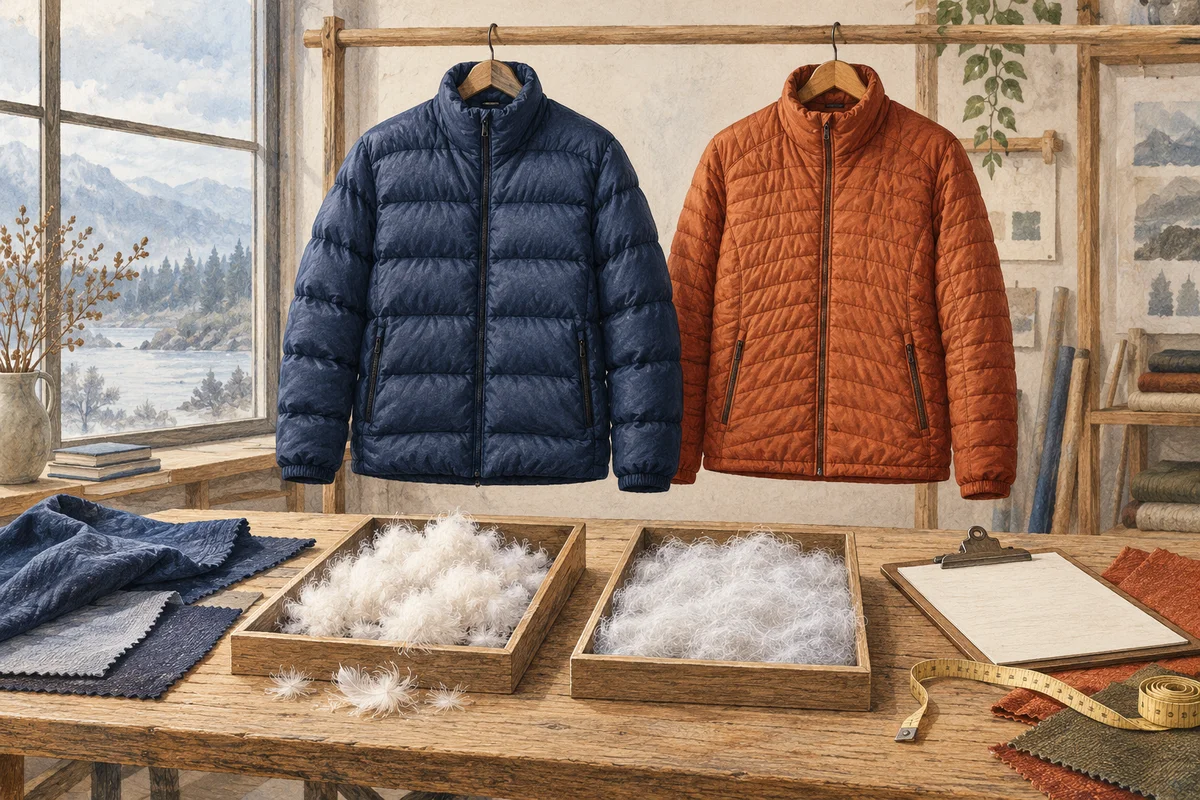

Curate a company store by giving every product a clear role, selecting for recipient usefulness, and checking decoration, sizing, availability, and delivery before launch. A smaller assortment with meaningful choices is a better starting point than a large catalog full of near-duplicates. Add products when they solve an unmet need, not just because they can carry a logo.
A merchandise catalog is a supply list. Your company store should be an edited collection. The difference is judgment: why this item, for this audience, at this price position, with this decoration? If you cannot answer, the item probably needs more evaluation before it earns a place.
Give each product a job
Start with the situations recipients encounter. An everyday layer, a travel bag, a desk companion, and an event garment represent different needs. “Another black hoodie” may not add a new role even if it comes from a different supplier.
Write a role statement for every proposed item: “A lightweight layer for employees who want subtle branding,” or “A practical carry option for people who do not want apparel.” These are illustrative briefs, not endorsements of particular products. Role statements make approval discussions more useful than asking everyone which item they personally like.
Separate permanent essentials from seasonal experiments. Essentials should have an ongoing reason to exist. A seasonal item can be tested for a limited period, with a clear decision about whether to keep, replace, or retire it afterward.
Build an assortment architecture
| Product role | Recipient need | Selection question | Common mistake |
|---|---|---|---|
| Everyday apparel | Comfortable, easy regular use | Does fit coverage match the audience? | Choosing only for the buyer's preferred cut |
| Layer | Temperature flexibility | Is the weight appropriate for likely use? | Treating one climate as universal |
| Carry | Commuting, errands, or travel | Do dimensions and organization fit the intended job? | Describing every bag as a laptop bag |
| Drinkware | A repeat daily ritual | Are capacity, closure, and cleaning practical? | Choosing appearance without considering use |
| Non-apparel alternative | Useful choice without sizing | Would someone want it without the logo? | Adding a low-value filler to complete a list |
| Recognition upgrade | A more substantial milestone gift | Does it offer a meaningful improvement? | Assuming higher price alone creates significance |
Use a product scorecard before approval
Rate each candidate from one to five using the criteria below. The score is a discussion tool, not a scientific quality claim. A serious problem in fit, decoration, or fulfillment can disqualify a product even if its total looks good.
- Usefulness: a clear audience and repeat-use occasion.
- Inclusivity: suitable sizing, fit choices, or a credible non-apparel alternative.
- Brand fit: an aesthetic and quality level consistent with your organization.
- Decoration suitability: approved artwork works at a practical size and placement.
- Operational fit: minimums and production requirements match the program.
- Information quality: dimensions, materials, care, and limitations can be explained.
- Replacement resilience: there is an acceptable plan if the style changes or disappears.
Add a final field: “What would make us reject this product?” Writing the failure condition before seeing the sample helps prevent enthusiasm about a famous brand or a good-looking mockup from overriding practical concerns.
Treat apparel fit as product information
Letter sizes are not a complete sizing system across brands and styles. Provide the actual product's measurement guide and explain whether the measurements describe the garment or the wearer. Do not convert every product into a generic chart just to make the site look consistent.
Evaluate the assortment across the full size range you intend to offer. Ask whether every color and size shares the same availability and price conditions. If there are differences, communicate them clearly. A store should not advertise a broad range while the approved branded color excludes part of it.
Ask sample testers to describe fit rather than simply approve it. Useful notes include sleeve length, room through the body, fabric feel, and layering comfort. Avoid turning personal fit opinions into universal promises. “This sample felt relaxed to this wearer” is not the same as “everyone should size down.”
Design for the physical object
A logo that looks crisp on a large screen may not work as small embroidery. Thin lines, tiny lettering, and dense detail need a production conversation. Ask for guidance from the actual decorator and review a representative sample where feasible.
Choose placement with the product's construction in mind. Seams, pockets, closures, and fabric thickness can constrain what looks balanced and what is practical to produce. Resist treating every blank surface as advertising space. Subtle branding may make an item more wearable, while a campaign event may justify a more prominent treatment.
Record approved artwork versions, dimensions, colors, and placements. That record becomes especially important when a product is reordered or substituted. “Use the same logo as last time” is not an adequate specification if several versions exist.
Use brands as a signal, not a substitute for evaluation
A recognized brand can help a recipient understand the intended quality or use of an item. It does not automatically establish that the specific style fits your audience, that decoration is permitted, or that your supplier can provide it under your program's terms.
Link product information to the relevant manufacturer's guidance when useful. For example, Patagonia's repair and care resources illustrate how a brand can support use after purchase. That reference is not a claim that every Patagonia item is available through Brand Sauce or eligible for corporate decoration.
Use the same discipline with less familiar brands. Evaluate the physical product, information, service terms, and suitability. A company store can combine recognized names and thoughtfully selected alternatives without making brand recognition its only definition of value.
Make care part of the buying decision
Care requirements affect whether a recipient will use an item. If a product needs special treatment, say so before selection. Do not invent a universal washing instruction for all branded apparel; use verified guidance for the finished product and its decoration.
The FTC's care-labeling guidance explains the role of care instructions for covered garments. For a store editor, the practical takeaway is simple: preserve relevant care information and obtain accurate guidance rather than replacing it with generic marketing copy.
For non-apparel items, apply the same principle to cleaning, maintenance, dimensions, and intended use. A useful product page helps someone avoid a poor choice. It should not hide limitations behind a list of adjectives.
Approve replacement rules before they are needed
On-demand does not mean every blank is permanently in stock. Ask what happens when a size, color, or style becomes unavailable. Can the item be paused? Who approves a substitute? What does the recipient hear if an order is already placed?
Write an equivalence brief for essential products. Include the role, material expectations, fit requirements, color family, decoration constraints, and price position. A substitute should satisfy that brief, not merely belong to the same broad category.
Never quietly replace a chosen item with a materially different one simply because it is convenient. Establish the communication and approval process with your provider. The time to decide what counts as acceptable is before an urgent order creates pressure.
Edit the collection after launch
Review views, selections, questions, support issues, and recipient feedback together. Low orders can mean an item is poorly suited, but they can also mean it is hard to find or badly described. A high-order product with repeated fit complaints may need attention more urgently than a quiet specialty item.
Retire redundant products thoughtfully. Preserve a record of the old style and its replacement so support can answer questions from previous recipients. Keep evergreen essentials stable where practical, while allowing a clearly labeled space for new ideas.
Curation questions
How many products should we launch with?
Enough to cover distinct recipient needs without repetition. Let the assortment roles determine the count rather than choosing a large number as a launch milestone.
Should everything have the same logo placement?
Consistency matters, but physical products differ. Use a coherent decoration system with approved variations, not one placement forced onto every item.
What should we bring to a provider?
Bring the role table, scorecard, audience, and known constraints. Ask Brand Sauce to help turn that brief into a considered collection rather than starting with an unfiltered catalog.
Continue with our company-store launch checklist, program cost worksheet, or talk to Brand Sauce about your store.