Choose a reading-light gift by its lowest useful setting and its grip on a real book—not by the largest LED count. For a library volunteer thank-you or a staff book-club gift, the purchase succeeds when someone can turn pages, illuminate the bottom lines and reposition the light without fighting the clip.
A compact light is not automatically suitable for every paperback, large-print edition or shared bedroom. Ask recipients whether they read printed books before making it the only gift option; our gift-preference survey guide helps separate an appealing theme from an item people will use.
Read the dimming specification, not just “warm light”
Color temperature and brightness are different controls. An amber setting tells you about the color of the light, not how dim it can go. Look for the minimum output and how the controls reach it: separate buttons, stepped settings or press-and-hold dimming.
Two manufacturer specifications show why the distinction matters. Mighty Bright's Recharge page lists continuous dimming from 2 to 10 lumens and a 3000K light. It also distinguishes battery life at low and high settings: 60 hours versus 10 hours. Those are manufacturer ratings, not our measurements; the page showed the model as sold out when checked.
Glocusent's 13 LEDs Plus page instead lists three color temperatures, five brightness levels and a 3–60 lumen range. It specifies a clip opening up to 1.6 inches and a USB-C cable, with no adapter included. These are specification examples, not a Brand Sauce catalog shortlist or a claim that either model is available for branded orders.
Do not rank the two by maximum output alone. Lumens do not tell you how evenly a particular book's pages will be lit, or how much light a nearby person will see. Likewise, an “up to” runtime is not a promise at every setting. Request runtime conditions for the brightness your recipients actually need.
A five-minute book-and-light sample check
This is an original buyer acceptance checklist, not a report of testing we have performed. Use an ordinary expendable book rather than a valuable or borrowed copy. Test the exact proposed model and any decoration that could affect its grip or controls.
- Grip the intended attachment point. Try the back cover or the attachment location specified by the maker. A maximum jaw opening measures capacity, not whether a thin flexible cover can support the lamp. Check for slipping, cover bending and pressure marks after removal.
- Turn several pages. Read near the beginning, middle and end of the book. Confirm that the clip does not trap the pages you need to turn or force constant removal. Note whether the reader must hold the book differently to balance the light.
- Check the bottom corners. In the intended room lighting, adjust the neck and read the top, gutter and bottom of both pages. Use the largest common book in the group as well as a paperback. Reject an arrangement that requires bending the neck into the reader's view to reach the last lines.
- Start low and check spill. Begin at the lowest setting and increase only as needed. Have another person observe from the neighboring seat or pillow position. Record whether the bright lamp head is directly visible; do not convert a marketing promise about undisturbed partners into your own guarantee.
- Operate it without a tutorial. Try switching off, restoring a preferred setting and connecting the supplied charging cable. Record connector type, included power accessories and any confusing button sequence. Confirm that the proposed logo will not cover buttons, indicators or required markings.
Let the failed check determine the next choice
- The cover bends or the book feels top-heavy: try a lighter book-mounted design, or offer a separate tabletop light where the reader has a surface. A larger clamp is not necessarily the fix.
- One page stays dark: seek more adjustable reach or a different beam arrangement, then repeat the coverage check. More LEDs alone do not establish coverage.
- The neighboring reader sees the lamp head: try repositioning and lower output. If acceptable page lighting still causes unwanted spill, do not approve it for that shared-space use.
- Most recipients already use an illuminated e-reader or audiobooks: offer another gift. Do not clip a lamp to a device screen simply because a listing mentions e-readers; follow the exact device and light instructions.
Illustrative decision: a volunteer coordinator has one small paperback and one wide-format reading-group edition in the sample kit. A light works on the paperback but leaves the wide book's lower outside corners dim. The decision is not “buy the brighter version” yet: first request a sample with better positioning or coverage, then repeat the same two-book check. If only the paperback use passes, describe that limitation and keep an alternative gift available.
The approval note to keep with the order
Intended reading format and setting: ___. Model and decoration location: ___. Books used for approval: ___. Attachment point and page-turn result: ___. Lowest useful brightness and coverage result: ___. Neighbor-position spill result: ___. Charging connector and included accessories: ___. Supplier runtime conditions: ___. Confirm destination-country availability, decoration permission, delivery timing and delivered quote before release. No substitution without repeating the relevant checks.
For the last sentence, use our gift-substitution approval guide: a similar-looking lamp can have a different clip, dimming sequence or charging port. Pricing, branded-order eligibility and country availability remain quote-needed; a manufacturer's retail page does not confirm your company-store offering.
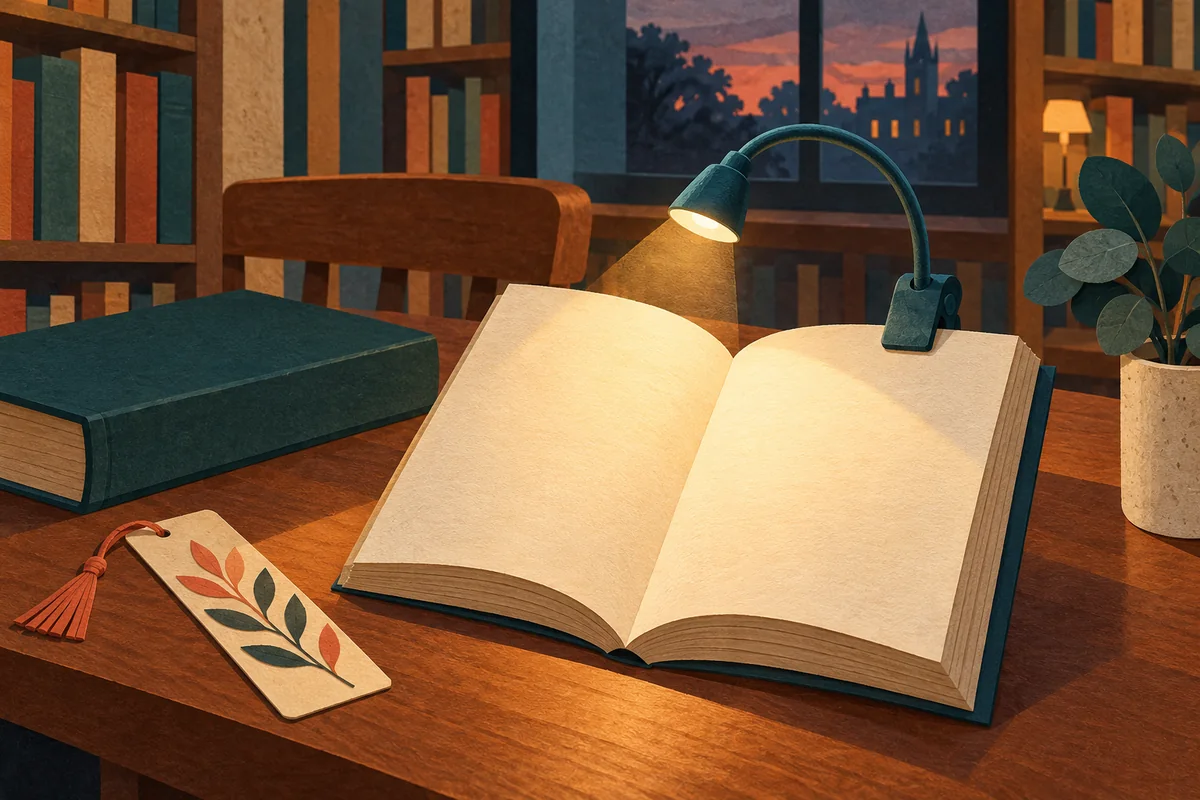
Manufacturer pages checked October 25, 2026. Image: AI-generated editorial illustration of a generic book light, not a product photograph or test result.