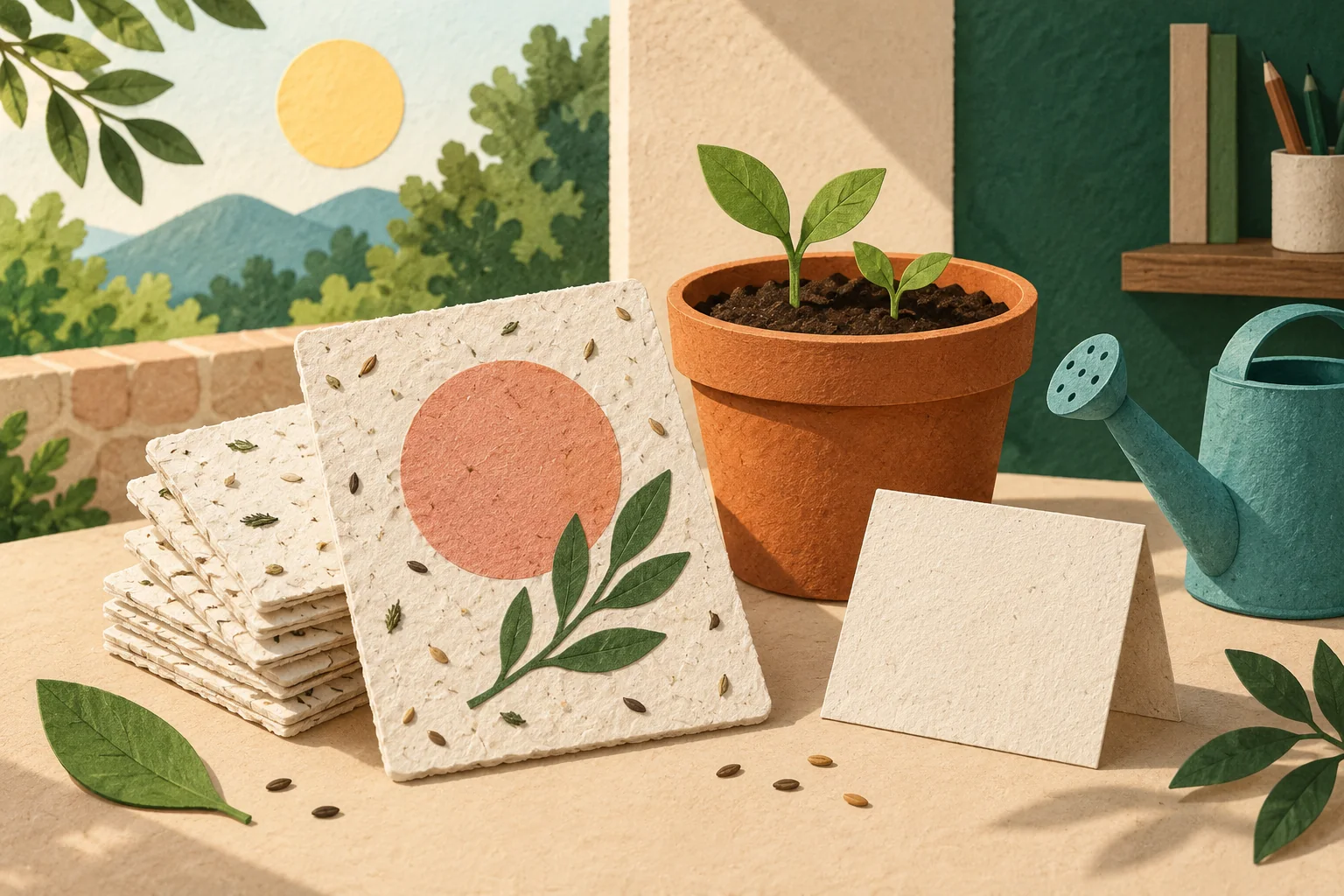
Plantable seed paper can make sense for an event with a known planting destination. It is a poor default for an audience whose growing conditions and onward travel are unknown. Before approving a branded card, bookmark or hang tag, confirm the seed species, where recipients will plant it and how the seeds will reach that location. A nice print proof does not answer those questions.
For a community open house, that may be a manageable brief. For an international conference, a seed-free giveaway may be easier to hand out responsibly. Use the approval card below to make that choice before ordering.
Start with the seed mix, not the paper color
Ask for the actual species list, preferably with scientific names, rather than accepting “wildflower blend” as a complete specification. If the campaign promises native plants, ask: native to which region?
The Xerces Society’s pollinator seed-mix guidance is organized by region and describes different mixes for different conditions. It advises seeking nursery recommendations for unusually wet, dry or shady sites. That is a useful distinction for promotional buying: a seed mix’s suitability is not established by the word “wildflower” or by a green-colored package.
Our recommendation is to have a local native-plant nursery or relevant horticultural specialist review the proposed species for the intended planting area. Do not tell recipients to scatter an unidentified mix in parks, roadsides or other land they do not manage. A giveaway should come with a defined planting use, not a suggestion to spread it anywhere.
Check the whole delivery route
A supplier shipping seed paper to your office is not the same as your team mailing it onward to another country. Botanical PaperWorks’ shipping guidance specifically warns against internationally forwarding its products after receipt: its export documentation is valid for shipments from that supplier, and requirements vary by country. Treat the receiving office, event venue and recipient’s final destination as separate points in the brief.
For U.S. imports, USDA APHIS distinguishes obscured seeds from ordinary small lots of seed. Seeds embedded in materials that prevent inspection have specific import conditions, including a permit, phytosanitary certificate and an official bare-seed sample. The small-lots conditions exclude seeds embedded in tape, cloth or similar materials. A small promotional card is therefore not automatically exempt just because it contains few seeds.
Have the supplier or importer confirm the applicable route and documentation for the exact product; this paragraph is not shipment clearance. If guests may take giveaways across borders and destinations cannot be checked, offer a seed-free alternative instead of promising unrestricted travel. For a distributed program, use the same country-by-country planning discipline described in our global employee-gifting guide.
Make the planting instructions part of the artwork
Recipients need more than “plant me.” Reserve space for the seed identity, suitable planting location and season, depth, moisture and light instructions, plus any storage guidance supplied for that particular paper. Confirm whether attached labels or packaging must be removed. Keep a readable instruction page available if the printed piece is small.
For example, Botanical PaperWorks’ own planting instructions specify a thin 1/8-inch soil covering, moisture during germination, good drainage and plenty of sunlight. The company advises choosing indoor or outdoor planting according to conditions, rather than planting outside in extreme cold or heat. Those are instructions for its paper—not universal directions for every species or seed-paper manufacturer.
Do not promise that every card will germinate, flower by a fixed date or create measurable habitat. If the campaign depends on seeing plants at a later event, arrange an appropriately timed trial of the actual finished piece and record the conditions. No such trial was performed for this post.
Copy this seed-paper approval card
Complete one record for each product-and-destination combination. Use confirmed / unresolved / not suitable for each line.
- Seed identity: supplier, product code, full species list and available batch or lot reference.
- Planting destination: region and intended setting; who reviewed the mix’s suitability, and any restrictions on planting.
- Delivery route: origin, receiving address and any onward border crossing; who owns required documentation.
- Recipient instructions: supplier-approved season, location, depth, water, light and storage directions; a readable printed proof or linked page.
- Finished construction: confirmation that the chosen printing, attachments and packaging are compatible with the supplier’s planting instructions.
- Fallback and decision: seed-free option, unresolved questions, approver and approval date. Keep the order on hold if the mix or route remains unknown.
Copyable order note: “Approve only product ___ with seed mix ___ for planting in ___, delivered via ___. Instruction proof version ___ is attached. No seed substitution or onward international redistribution without a new review.”
Keep recycled-paper and environmental claims separate from the planting decision. If those claims appear on the card, request evidence for the actual item using our recycled-content evidence guide. Plantability alone does not establish recycled percentage or an overall environmental benefit.
Worked example: a local open house with visiting guests
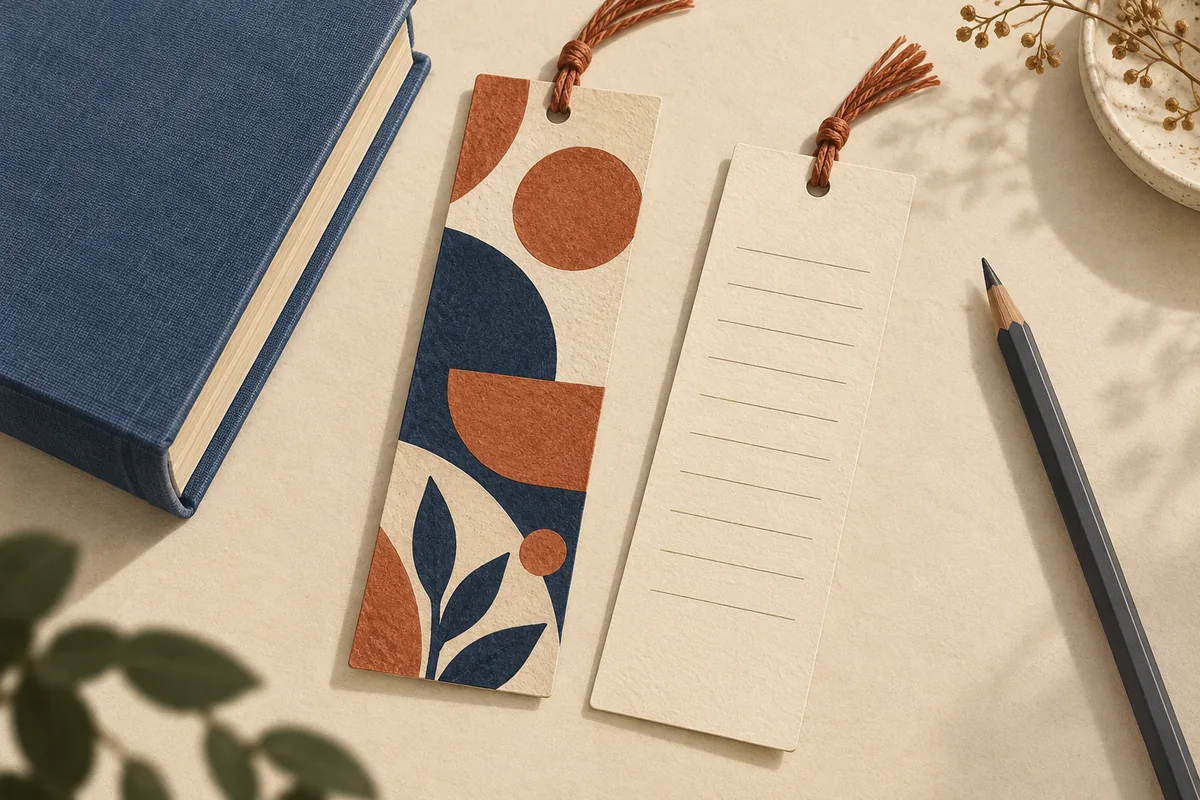
Illustrative decision, not a customer result: a community organization expects local gardeners and several overseas visitors. It approves a seed-paper bookmark only after the supplier identifies the mix and a local specialist confirms the intended planting use. The reverse carries the approved directions. Overseas visitors can choose a seed-free bookmark with the same artwork; staff do not describe either option as a universal travel-approved item.
If the supplier cannot identify the seeds before the order deadline, the organizer uses seed-free bookmarks for everyone. That preserves the event’s useful takeaway without making an unsupported planting promise. Product availability, destination eligibility, lead time and price remain quote-needed; the cited manufacturer examples are not a claim of Brand Sauce catalog availability.
AI-generated editorial illustration, not a product photograph or germination test. Primary sources checked October 4, 2026.