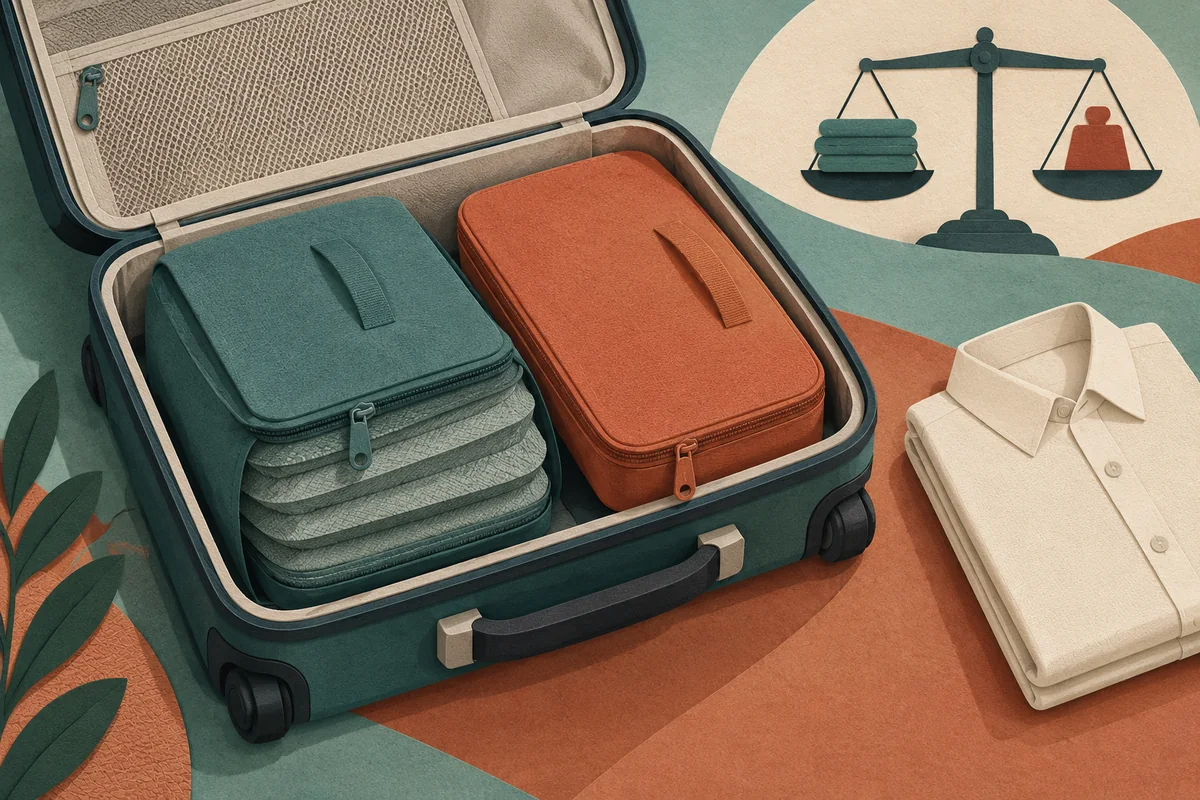
A compression packing cube can make clothing take up less space; it does not make the clothing lighter. For a sales team or field-training group that travels, choose compression only when bulky clothing is the problem. If people mainly want to find socks and separate outfits, a regular organizer may be enough.
The buying mistake is approving a cube because it looks impressively flat in a product photo. Your recipients need it to fit their bags, hold their actual trip clothing and reopen without an awkward repacking routine.
What the extra zipper actually does
A regular packing cube contains and organizes belongings. A compression cube adds a mechanism that draws the packed bundle tighter. Eagle Creek describes its compression cubes as reducing clothing volume by compressing air out of the packed items. That is a volume benefit, not a reduction in the mass of the garments.
For a concrete construction example, Thule’s small compression cube, model 3204858, has a compression zipper and a listed empty weight of 0.18 lb. Thule also advises against overfilling. Those details matter together: the organizer itself adds weight, and the zipper is not an invitation to force an unlimited load into a small space.
These manufacturer examples explain the feature; they are not a verified Brand Sauce catalog shortlist or a promise of decorated availability. Do not turn a manufacturer’s space-saving percentage into a guaranteed result for your gift program.
Choose by the packing problem
- Finding items quickly: prioritize a useful opening, visible contents or distinguishable colors. Compression is optional. A simple organizer can meet the brief.
- Bulky, compressible clothing: trial a compression cube with the intended garments. Evaluate the loaded shape, not just the empty dimensions.
- A bag already near its weight allowance: do not sell compression as the solution. Fitting more clothing can make that problem worse. Reduce the load and check the traveler’s actual itinerary; our luggage-scale buying checklist covers the separate weighing question.
- Presentation-ready shirts: inspect the unpacked garments after a realistic trial. A compact bundle is not evidence of a wrinkle-free result; an organizer with less compression may better suit the wearer’s routine.
- Wet items or spill containment: specify that requirement separately. Neither a compression zipper nor a water-repellent fabric description establishes a leakproof enclosure.
The same-load comparison card
Use this original worksheet to compare a regular cube with a compression candidate. It is a proposed purchasing exercise, not a product test we have performed.
- Fix the load: list the garments, quantities and folding method. Use the same actual items in both candidates. Do not compare one tightly rolled load with another loosely folded load.
- Record the empty weight: weigh each organizer on the same suitable scale. Note the model, size and sample revision.
- Pack normally: follow each manufacturer’s instructions. Close the main compartment and then use the compression mechanism as directed. Record snags, trapped fabric or excessive effort; do not force a resistant zipper.
- Check the real bag: place each packed candidate into the same suitcase with the other trip essentials. Record whether the case closes normally, whether useful space remains and whether a bulging center blocks another compartment.
- Retrieve and repack: remove one needed garment and put the rest back. Ask a representative traveler to try this, rather than judging usability only from the buyer’s hands.
- Inspect the finish: check the garments after your chosen trial duration. On the decorated sample, check that branding does not obstruct either zipper, stiffen a fold needed for compression or obscure useful contents visibility.
Approval rule: choose compression only if the same load fits more usefully in the intended bag and the operating effort and garment condition are acceptable. If both candidates fit equally well, decide on access, empty weight and the complete decorated quote—not a headline compression claim. Keep unresolved fit or zipper problems on hold.
A weight example, not a savings claim
Suppose a traveler’s clothing weighs 2.00 kg and the proposed cube weighs 0.12 kg. The packed combination weighs about 2.12 kg whether its compression zipper is open or closed. If the traveler uses the freed space for another 0.30 kg of clothing, the combination becomes 2.42 kg. These are illustrative inputs, not measurements of either manufacturer’s product.
For a team gift, confirm exact SKU, logo method, care instructions, destination-country supply and delivery timing before ordering. Prices remain quote-needed. If a backpack is part of the bundle, assess its required work equipment first using our employee-backpack fit guide; packing cubes should use the remaining space, not displace the laptop or charger the traveler needs.
Primary manufacturer sources checked October 15, 2026. The hero is an AI-generated editorial illustration, not a catalog photograph or evidence of a compression test.