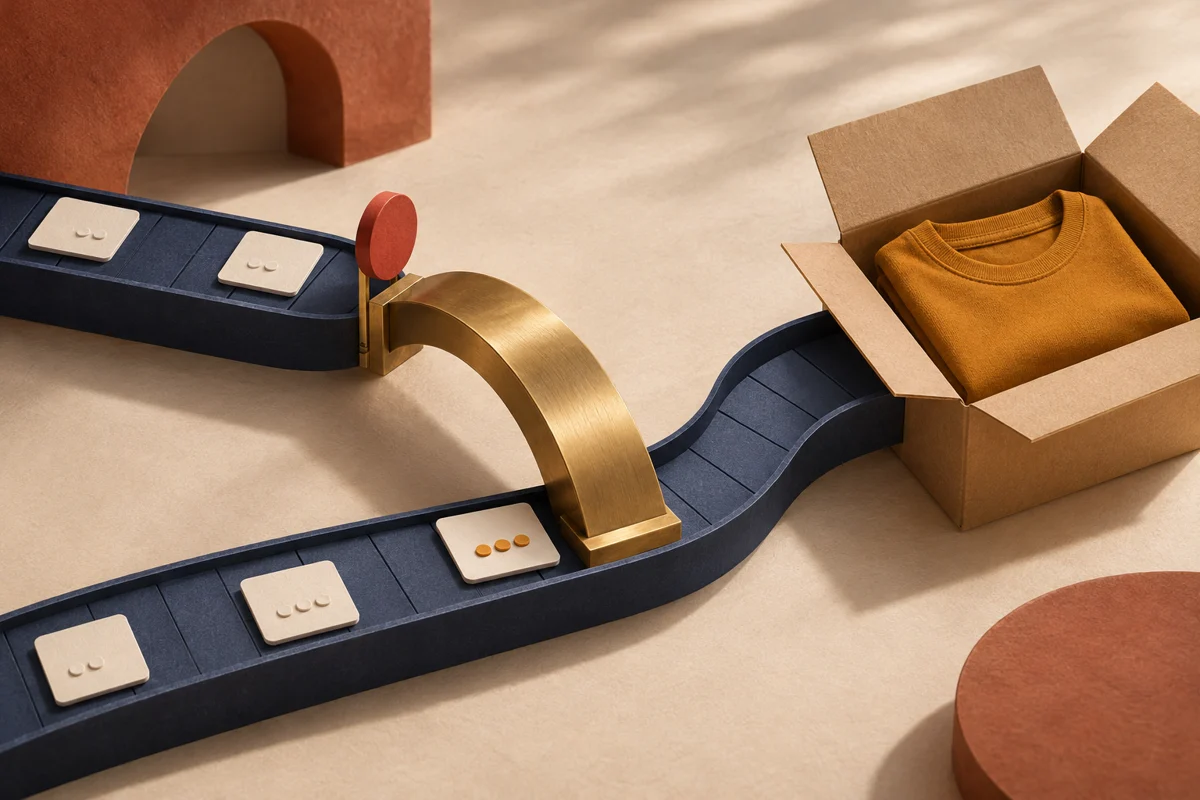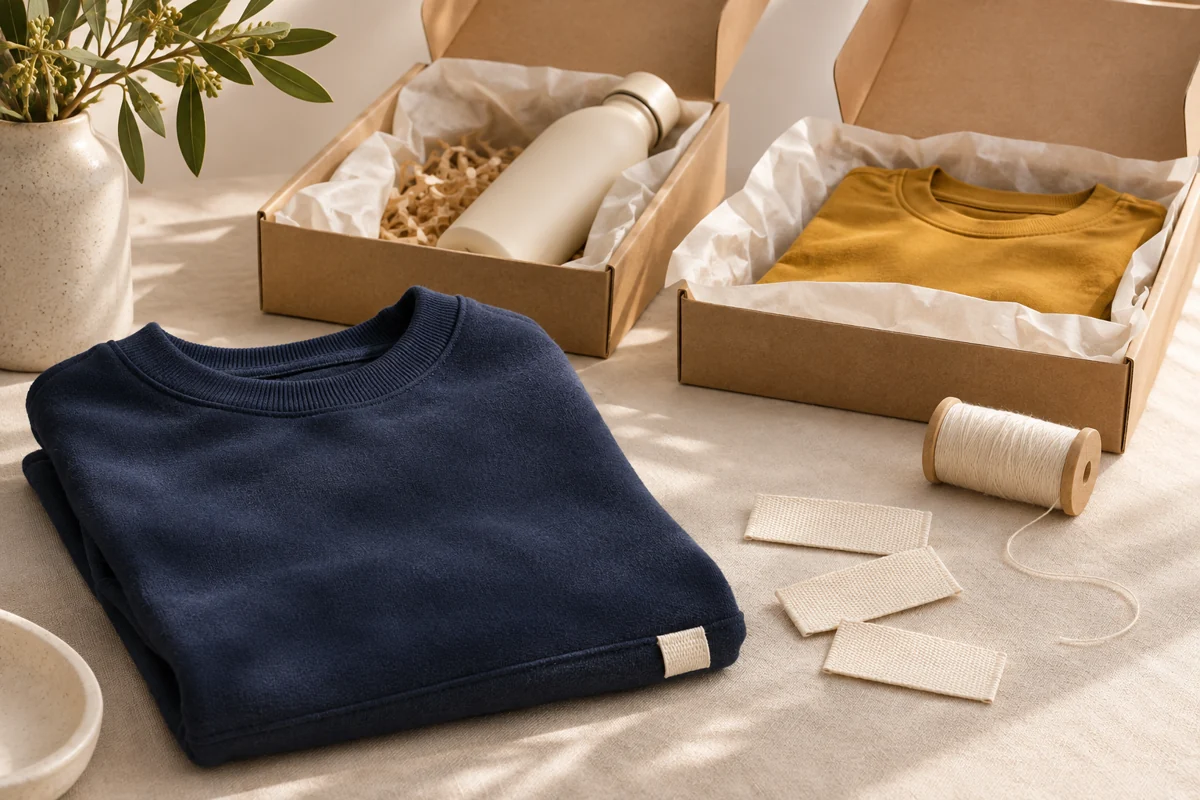
Choose Apliiq when the central job is building a distinctive apparel line and your team wants to own the selling experience. Shortlist a managed company store when the central job is giving employees an approved selection with a defined funding and support process. A sewn label and an employee gift allowance solve different problems. A good comparison must test both the finished garment and the complete recipient journey.
Apliiq is particularly worth evaluating when hem labels, inside branding and apparel finishing are essential to the concept. A managed program can be the better fit when merchandise is one part of an HR or marketing operation and nobody wants a second job running an apparel business. Neither approach automatically costs less or eliminates every inventory commitment.
Publisher perspective: Brand Sauce sells managed company-store services and publishes this comparison. This is a fit-based buying guide, not an independent ranking or a hands-on product review. Official sources were checked November 4, 2026. Exact product, decoration, country coverage, service scope and delivered pricing need written confirmation.
Start with two different buying briefs
Consider two hypothetical requests. A creative team wants a sweatshirt that feels like its own clothing label: a selected silhouette, a restrained print and a small woven detail. It already operates an ecommerce site and has someone responsible for merchandising. Another employer wants new hires to choose a useful gift, including a non-apparel option, without collecting money from the recipient.
Both requests might start with “we need an online merch store.” But the first is primarily a product-development and commerce problem. The second is a funded-recipient-program problem. Comparing only shirt prices hides the work that makes either store useful.
Write a one-sentence success condition before requesting demos. For the apparel project: “We can sell the approved finished design through our existing storefront and handle exceptions.” For the employee project: “An eligible recipient can select an approved gift, understand any personal payment, and get help without HR reconstructing the order.” If both matter, keep two acceptance tracks rather than blending them into a vague feature score.
Compare the operating model, not just the catalog
| Decision | Apliiq evaluation | Managed-store evaluation |
|---|---|---|
| Apparel identity | Test the exact garment, decoration and sewn-label combination | Confirm whether the desired finishing is offered; do not assume equivalent customization |
| Store ownership | Name the team maintaining the connected commerce experience | Specify which setup and ongoing changes the provider owns |
| Employee funding | Demonstrate the funding rules across the storefront and production order | Demonstrate the actual allowance or gift-code experience, including exceptions |
| Inventory exposure | Separate finished garments from labels, packaging and other committed supplies | Separate on-demand items from any stocked or bulk components |
| Support | Define who bridges recipient, storefront and fulfillment issues | Define the escalation owner and what remains with the employer |
Apliiq's official print-on-demand overview describes printing, embroidery, private labeling and branded packaging, with support for Shopify, WooCommerce, Etsy, manual orders and API workflows. That establishes a production-and-commerce proposition. It does not, by itself, establish a particular employee eligibility, allowance or HR reporting workflow.
Brand Sauce's company-store overview and examples describe public and private stores, curated collections, decoration rules, gift cards, coupon codes, bulk orders and direct shipping. Those are relevant reasons to shortlist Brand Sauce for an employer program. They are not evidence that every requested approval rule, integration or special apparel treatment is included. Require a demonstration and scoped quote for those details.
On-demand garments can still involve label inventory
The most useful Apliiq-specific distinction is between making a garment after an order and buying the components that make that garment distinctive. Its woven-label service description specifies a 100-label starting minimum, storage of labels for future orders and sewing onto products after the label inventory is ready. It describes initial label production as approximately three to four weeks. Confirm the current schedule for your artwork before setting a launch date.
That is not the same as buying 100 finished sweatshirts. The labels can support later orders rather than forcing an immediate size assortment. But it is still a branded-supply commitment. If the employer changes its logo or abandons that apparel concept, remaining labels need a decision. On-demand finished goods reduce one kind of forecasting; they do not make the branding components disappear.
Use a simple component register. Record the label design, approved garments, amount committed, current balance, owner, replenishment trigger and what happens when the program closes. Apply the same discipline to custom mailers or inserts if your proposed configuration requires them. Ask the supplier which materials are purchased, which are charged per use and which carry storage or renewal terms.
Illustrative planning example: a team commits to 100 labels and fulfills 36 garments with one label each. Assuming no other consumption, 64 labels remain. If a later garment uses two labels, that same balance supports 32 garments, not 64. This is inventory arithmetic, not a claim about an actual customer's demand, supplier waste or savings.
Our no-minimum-order guide explains why quantity should be checked at the product, decoration and component level. For this comparison, ask both suppliers to make those levels visible on the quote.
Approve a finished specification, not an attractive label mockup
A woven label is a physical design decision. Apliiq's artwork guidance calls for flat colors rather than gradients and explains that fine artwork may need adjustment for weaving. It also discusses folding direction and leaving room for stitching. These are useful reasons to review the actual placement and production artwork rather than only the original logo file.
Create one approval card for each finished combination: blank model, color, size range, exterior decoration, label design, label position and care information. A hem tab and an inside neck label are not interchangeable just because they use the same artwork. Ask what remains visible from the original manufacturer and what information accompanies the finished item. Do not assume that adding your brand permits removal of every existing label.
Apliiq's sample-order instructions allow a quantity-one designed sample and also describe ordering blank samples. Use that distinction deliberately. A blank can help select fabric and fit; it cannot approve the final print, sewing or interior feel.
Evaluate the finished sample for the intended wearer, not just the photographer. Check whether the label sits comfortably, whether the artwork remains legible at its actual size and whether the final care instructions are coherent. Record observations without presenting a short internal review as laboratory testing. Our custom neck-label guide covers the separate question of inside branding and garment information.
Prove the funded order separately from the garment
An employee seeing a zero-dollar checkout does not mean the production order has no cost. The employer's commerce setup and supplier billing still have to agree on what was ordered and who pays. In a connected-store arrangement, explicitly identify the party charged for fulfillment and the event that releases the order.
Apliiq's order-processing documentation says automatic processing can be disabled for manual review. Orders still arrive from the store, but automatic card charging is not attempted while they remain unprocessed. The documentation also describes using this mode to inspect Shopify order flow during testing. That is a useful production-control option; it should not be confused with proof of an employer's complete approval policy.
For either model, trace one employee order from invitation to supplier release. Then trace an exception. If the recipient cancels before production, who stops the fulfillment instruction and restores any usable gift balance? If the employee pays an upgrade amount, who handles that payment separately from the employer's contribution? If the address is rejected, who contacts the recipient?
Do not mark an undocumented feature “unavailable.” Mark it “demonstration required.” Apliiq plus an existing commerce stack may meet a company's requirements well. A managed provider may still need a configuration change or manual exception process. The distinction is who implements, tests and operates the complete path.
Price the finished program in comparable units
Ask for a current quote rather than importing old component prices into a spreadsheet. Apliiq's May 2026 woven-label update distinguishes new-design pricing from reorders of previously purchased designs. That is a concrete reason two apparently similar label purchases may not carry the same terms. This guide does not treat a public component price as a delivered garment or program quote.
| Cost bucket | What to put in the comparison |
|---|---|
| Finished item | Same approved garment or clearly documented alternative, all decoration and labels |
| Committed supplies | Initial purchase, unused balance, replenishment and renewal/storage terms |
| Commerce and service | Store, apps, setup, changes and provider support within the proposed scope |
| Delivery | Destination-specific shipping, packaging and applicable tax or import charges |
| Internal operation | Named staff time for merchandising, funding, reconciliation and exception handling |
Keep cash commitment separate from per-order consumption. If the budget already includes an initial label purchase, do not add the full purchase again as a second expense under every shipment. Conversely, a low per-label allocation does not erase the initial cash outlay. Show both views so finance can compare an ongoing program with a short campaign.
Do not assign an arbitrary “zero admin” value to managed service. Some employer decisions remain: eligibility, funding, brand approval and escalation ownership. Likewise, do not assume a connected apparel platform requires constant manual work. Measure the proposed workflow during the pilot.
Run a two-track pilot before choosing
- Product track: approve one finished apparel item, including its smallest important sewn detail; retain the specification and photographs.
- Funding track: show one fully employer-funded order and, if offered, one employee-paid upgrade with clear totals.
- Exception track: demonstrate a preproduction cancellation, a rejected address and the handling of an unavailable variant.
- Component track: show where label availability is checked and what happens when supplies run low.
- Destination track: confirm the exact product and delivery route for every country in scope; a general shipping statement is insufficient.
- Ownership track: record who resolves each failure and who can authorize changes.
Use controlled test orders with the provider's agreed release procedure. A screenshot of a connected app is not an accepted order, and an accepted order is not a delivered sample. Preserve evidence at each boundary. For broader rollout gates, use our company-store pilot acceptance checklist.
When bulk or a hybrid arrangement is sensible
Bulk can make sense for a known event quantity, fixed decoration and one delivery location, provided the actual quote and deadline support it. An always-on store can serve uncertain sizes or later replenishment. A hybrid can keep the identity-building apparel capsule separate from a broader employee gift assortment.
That hybrid needs boundaries. Give each item one fulfillment owner, disclose split shipments and prevent recipients from assuming two different systems share one allowance. Do not split a program merely to use two suppliers; split it when the product advantage is worth the additional administration.
Frequently asked questions
Is Apliiq a poor fit for employee merchandise?
No. It can be a strong candidate when apparel finishing is central and the employer can operate the surrounding commerce and funding workflow. Test that workflow instead of rejecting the platform because its primary positioning is apparel brands.
Does buying woven labels mean I must buy all the garments upfront?
Not under the described sewn-on-demand approach. Label inventory and finished-garment inventory are separate commitments. Confirm readiness, replenishment and storage terms for the exact label service.
When should Brand Sauce lead the shortlist?
When the priority is a managed, curated company-store program with gift cards or coupon codes and direct fulfillment, rather than developing a specialized apparel label. Confirm every required control and product treatment in the scoped proposal.
Which option is cheaper?
There is no defensible universal winner. Compare finished specifications, committed supplies, destination costs and operating responsibility. Choose the arrangement that passes both the product and recipient-workflow tests at an acceptable total cost.